Trails and Tales Contest Honorable Mention
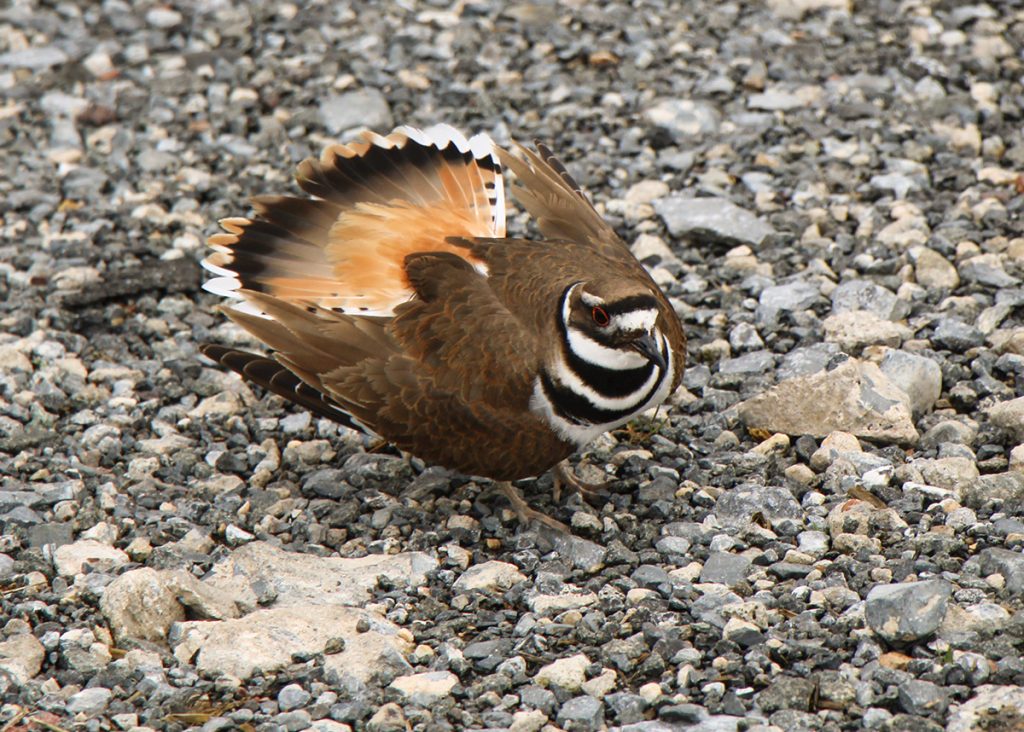
Desperate to protect, the brave, feathered guard rushed at me, its tail fanned wide. I backed off. But I had waited for weeks for this moment! I was determined to get a picture. I edged forward again…
It all began the afternoon Bernell discovered a Killdeer’s nest on his way out to the chicken barns. He described the location… “Look on the left side of the driveway, and halfway out to the barns you’ll see a concrete block. The nest is about 10 feet (3 m) before that block.”
The next morning the little girls and I followed his directions. Sure enough, as we neared the spot, a bird flew up with a kiy-dee, kiy-dee.
“That’s a Killdeer,” I informed the girls. “We want to find its nest. Just stay right here.” I didn’t want any eager steps to carelessly crush an egg.
I moved cautiously forward, scanning the ground in all directions. I didn’t THINK I was stepping on the nest, but where WERE those eggs!
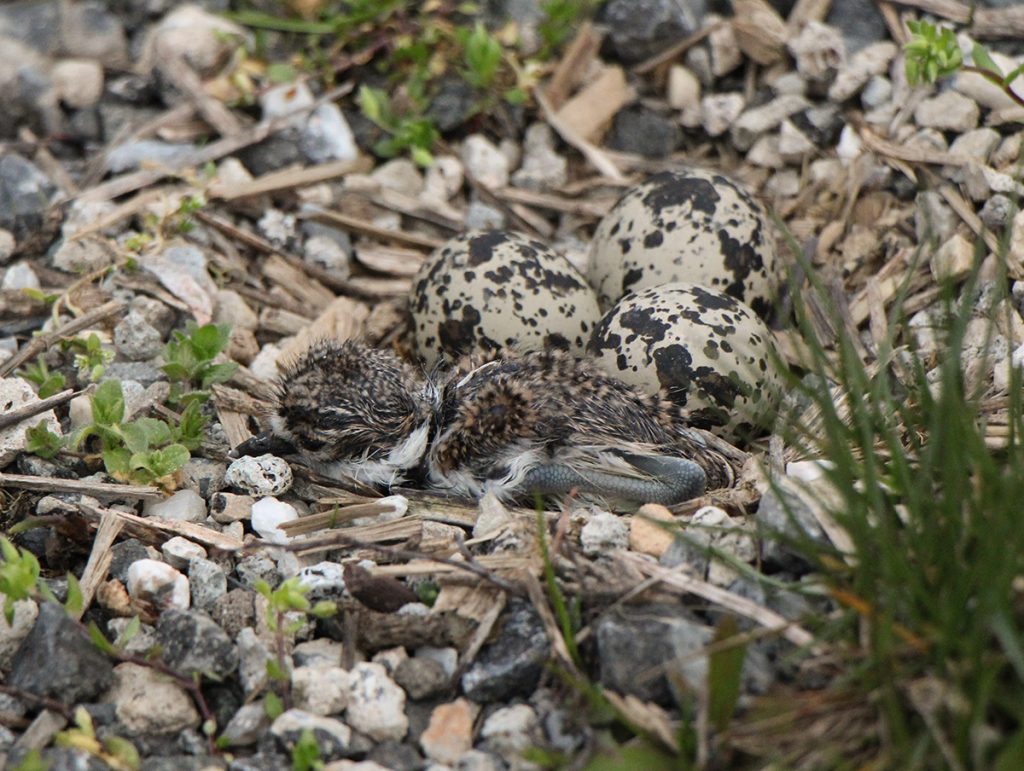
Then, ah! There they were! Four speckled ovals nestled in a slight depression on the ground—the usual number of eggs in a typical Killdeer’s nest. Bits of fodder stubble and small stones lined the interior. The nest was thoroughly camouflaged.
The mama Killdeer showed and sounded her anxiety about these threatening spies. Kee-e-e-e, dee, dee, dee. Kee-e-e-e, dee, dee, dee. Her calls, nervous and shrill, filled the air. She flapped a helpless wing on the ground several yards away.
“Look, girls, she wants us to follow her. She doesn’t want us to be close to her nest.” We trailed her alluring antics. Each time we came close to her, she would run a little farther, then again flop and flounder about. Once we had followed her to a safe distance from her nest, she flew off.
We wanted to see these Killdeer chicks when they hatched! How often would we need to check the nest?
“You’ll have to be quick!” friends told us. “It’s only a few hours from the time they hatch until they leave the nest.”
Surely three times a day would be enough. Morning, noon, and evening one of us checked for any important activity. Sunday. Monday. Tuesday. Wednesday. Thursday. Friday. Saturday. For. Three. Weeks.
At three-and-a-half weeks, the eggs remained uncracked. “You must have seen the nest the first day she laid those eggs,” I told Bernell. We didn’t know how long the incubation period was for Killdeer eggs.
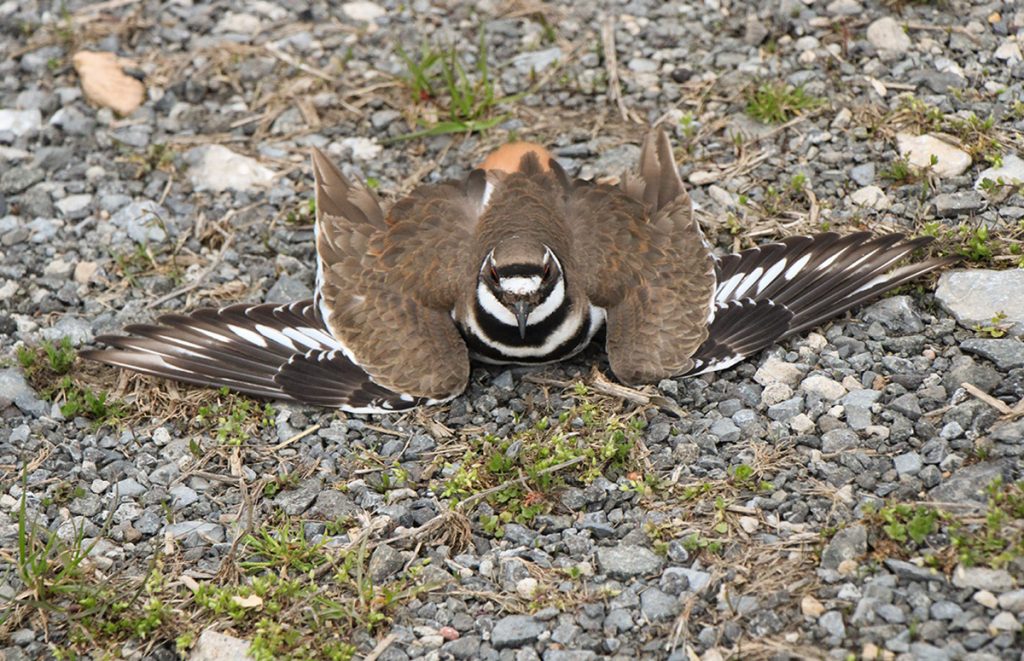
At first, each time we neared her nest, the Killdeer flew off with piercing cries of alarm and “crippled” wings, desperate to avert our attention. Now she hardly even stood up. Was it because she was getting used to us or because her chicks were close to the hatch date?
Two days before the four-week mark, I paused again during the evening milking to snatch the camera and some hope…just in case. I wanted to check the nest before daylight disappeared. This time both parents edged away from the nest, fussing incessantly and… THAT’S A CHICK!
I dashed the rest of the way to the egg-packing room to tell Bernell. “Here, you take some pictures.” I handed the camera to him. “The way those parent birds came rushing at me scared me.”
He snapped pictures while feeling the breath of agitated wings, and shrieks from the valiant defenders echoed in his ears. With both wings and tail fanned wide, one of them would rush toward the “enemy,” stopping only inches away. The flaming red-orange rump and tail and wide-spread wings impressively delivered the message. The other Killdeer continued the “broken” wing act, adding to the ruckus.
A check at daybreak the next morning revealed two chicks, and a crack in the third egg. Within half an hour, the last two chicks had left their prison shell.
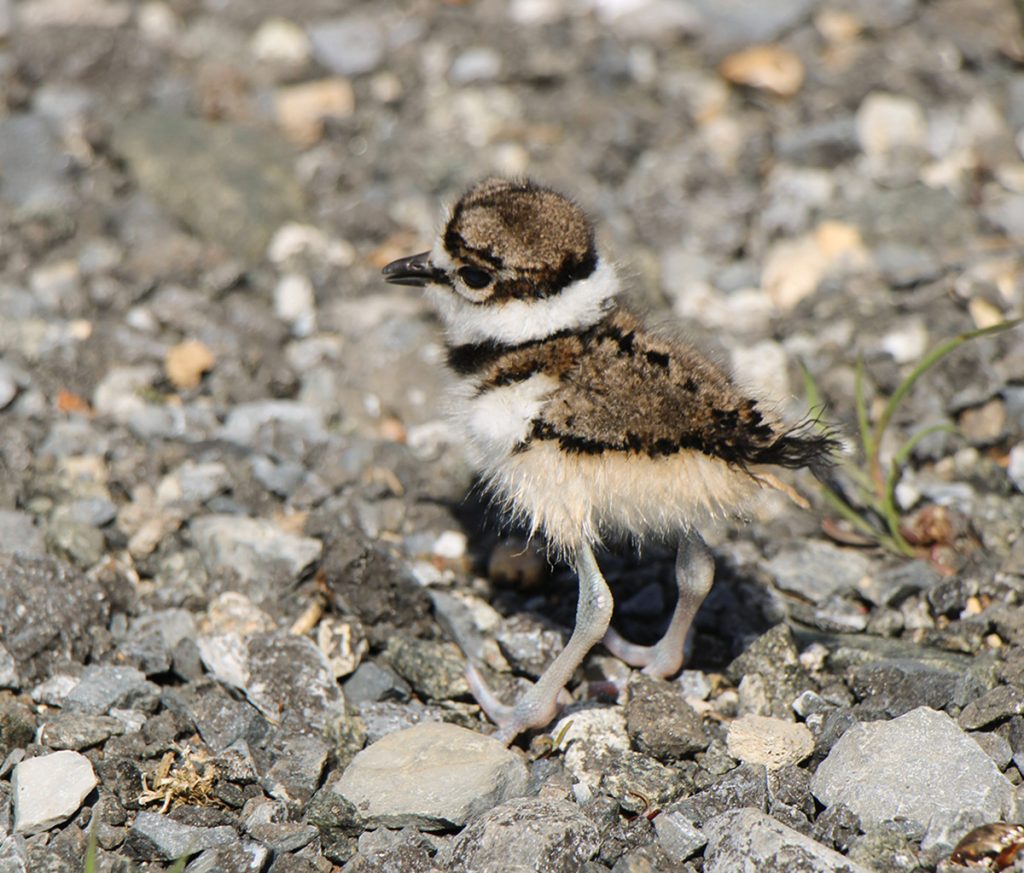
We came back five hours later, but the nest was empty! The parents scolding nearby indicated the chicks weren’t far away. Our search ended 100 feet (30 m) from the nest. The chicks squatted together on the stones. They still looked so helpless, but once they stood up on their long legs, away they could scuttle fast!
They already bore the markings of an adult—two black bars marching across the chest, a white collar, a flash of white on the forehead, highlights of white behind the eyes, and a streak of white across the out-stretched wings.
We discovered the first wet chick on April 8. Earlier that day we had donned eclipse glasses to view the solar eclipse. That made this day extra special!