

From an awkward shuffle along the shore, a flock of pelicans launches into the air. Then, flying wing-to-wing, they ride air currents over the ocean. Spotting a school of fish, the pelicans go into steep dives. Scoop-shovel fashion, each pelican fills its bill with a load of fish. Then it comes to the water surface, where it drains out gallons of water before swallowing its catch.
You will need:
- Sketch paper
- Bristol paper
- Ruler
- Prismacolors

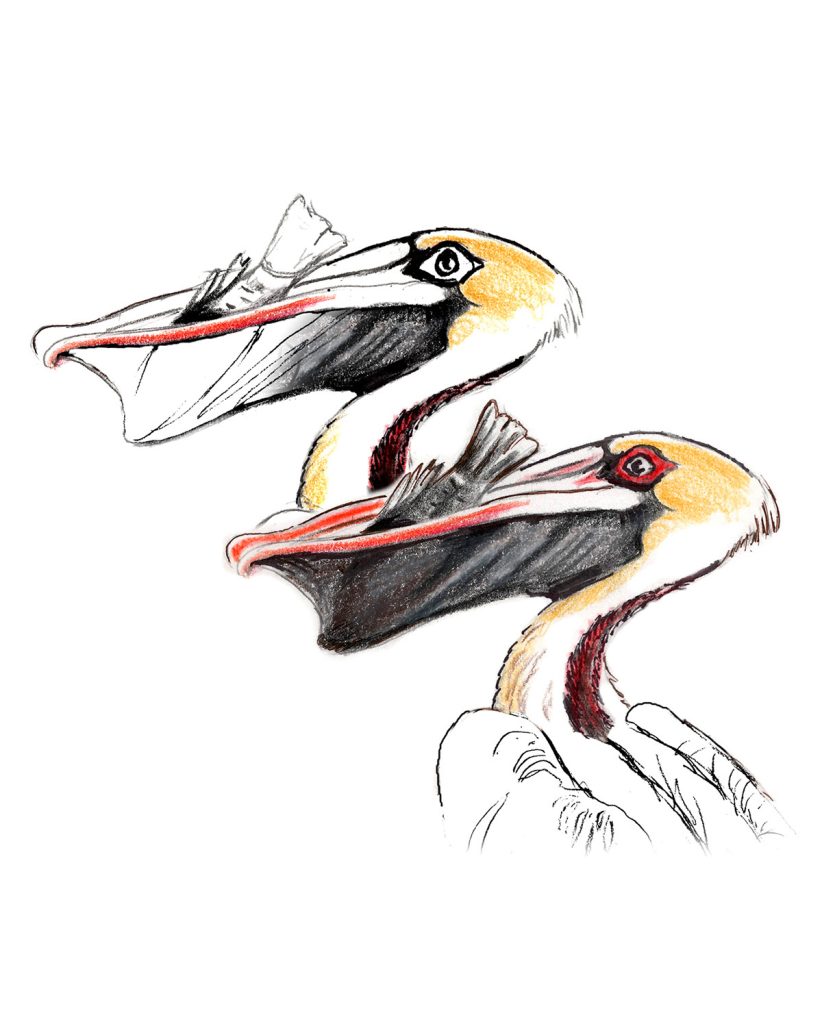
- On sketch paper, draw a proportion rectangle twice as high as wide. Place a circle for the head and an oval for the body. Add details. Then, using a light table or window, trace your sketch onto Bristol paper.
- The head and neck take on brighter colors during breeding season. Color in yellow markings on the head and neck. Add red to the bill and eye.
Color the back of the neck red, and go over it with black. On the bill pouch, stroke in black slanting lines. Burnish with white, followed by a layer of black.
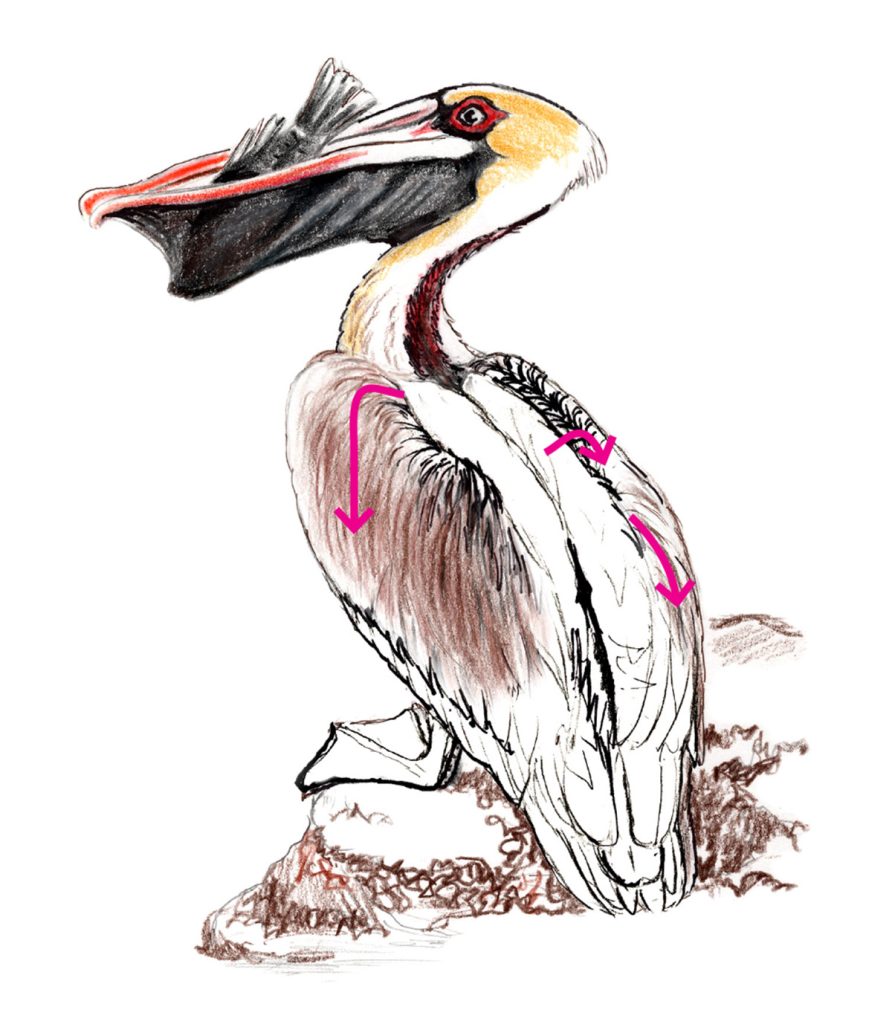
Shade the fish. - Go over wings with white. Then, following the direction of arrows, add light brown with a feathery touch.
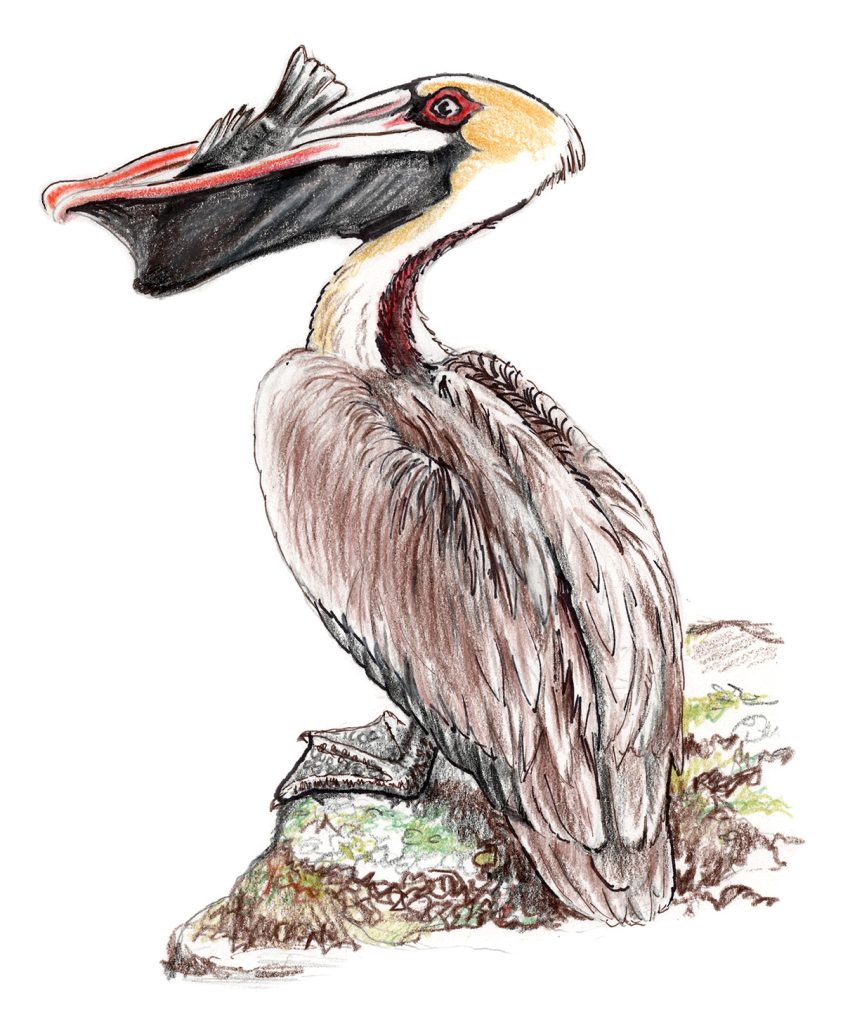
Use dark brown scribbling strokes for shadows on the rock. - Finish the wing feathers, including the black ones at the tips of the wings. Use light brown for the tail.
Outline the toes, and then scribble in the webbed feet.
Tint the top of the rock with touches of green. - Cover the sky evenly with your white Prismacolor. Go over this with soft scribbling strokes of your light blue pencil. Burnish again with white.
With this same blue pencil, add horizontal ripples of ocean waves.
Bring a few dark brown reflections into the water below the rock.
Both parents incubate two or three eggs until they hatch a month later. Then they feed these naked pink babies with regurgitated liquid from their bills. It takes several months for the chicks to reach the flying stage. By then the young have become heavier than the adults, and the parents stop feeding them.
