Every good cook knows to sprinkle a little salt over fried eggs. As the old saying goes, salt “brings out the flavor.” Job 6:6 says, “Can that which is unsavoury be eaten without salt? or is there any taste in the white of an egg?” You actually need salt in order to stay healthy.

SODIUM CHLORIDE: We have thus far been referring to the most common salt for human consumption, called table salt, rock salt, or sea salt. Table salt is technically known as sodium chloride (NaCl) or halite, its natural mineral name. Sodium chloride is also necessary for livestock; cows and other farm animals need large quantities of salt, which farmers provide in the form of large blocks for the animals to lick. Sodium chloride is also used in the manufacture of baking soda (sodium bicarbonate), hydrochloric acid, chlorine, and other chemicals. Large quantities of sodium chloride are needed for the production of soap, glass, and enamel. Metallurgists use sodium chloride during the processing and melting of certain metals.
Sodium chloride is found in nature across the globe in various places, the largest source being earth’s immense quantities of seawater.
Additionally, on every continent there are other huge sources of salt. Large salt mines contain gigantic underground natural salt deposits. One of the largest operating salt mines in the world is located in Ontario, Canada. The mine, situated 1,800 feet under Lake Huron, is known as the Goderich Salt Mine. In addition to mines, there are also vast areas of desert where layers of salt are found.
Did you know that sodium chloride is not the only salt? Interestingly, there are many other different natural salts.
A salt is a chemical compound formed in a neutralization reaction when a base neutralizes an acid. Keep in mind that an “ion” is simply an atom or a group of atoms (a molecule) that has either a positive or a negative electrical charge. A salt is defined as an ionic compound, which means that it consists of a combination of positively charged ions, known as cations (the base), with negatively charged ions, known as anions (the acid). This type of bond occurs naturally due to the attraction of positive and negative charges. A salt is held together by the forces between the two oppositely charged types of ions.
THROUGH THE MICROSCOPE: You have tasted sodium chloride (table salt), but have you ever seen any salts under a microscope?
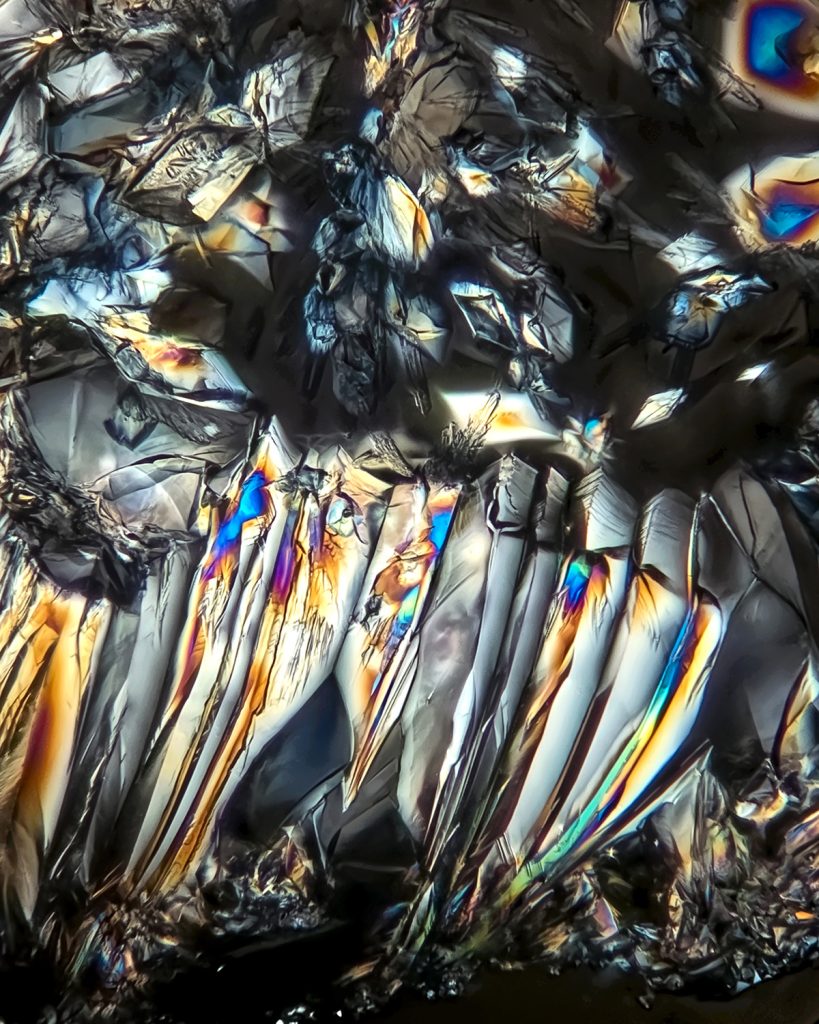
God has designed fantastic shapes and incredible mathematical patterns in which crystals grow. Salt crystals are unique and very beautiful. Some types of salt crystals can even show amazing, brilliant colors! These can only be seen when the crystals are viewed with the use of two polarizing filters. When polarizing filters are used in combination with a microscope, the technique is known as cross-polarized light microscopy. One filter is placed on the light source, and the other is placed over the microscope eyepiece.
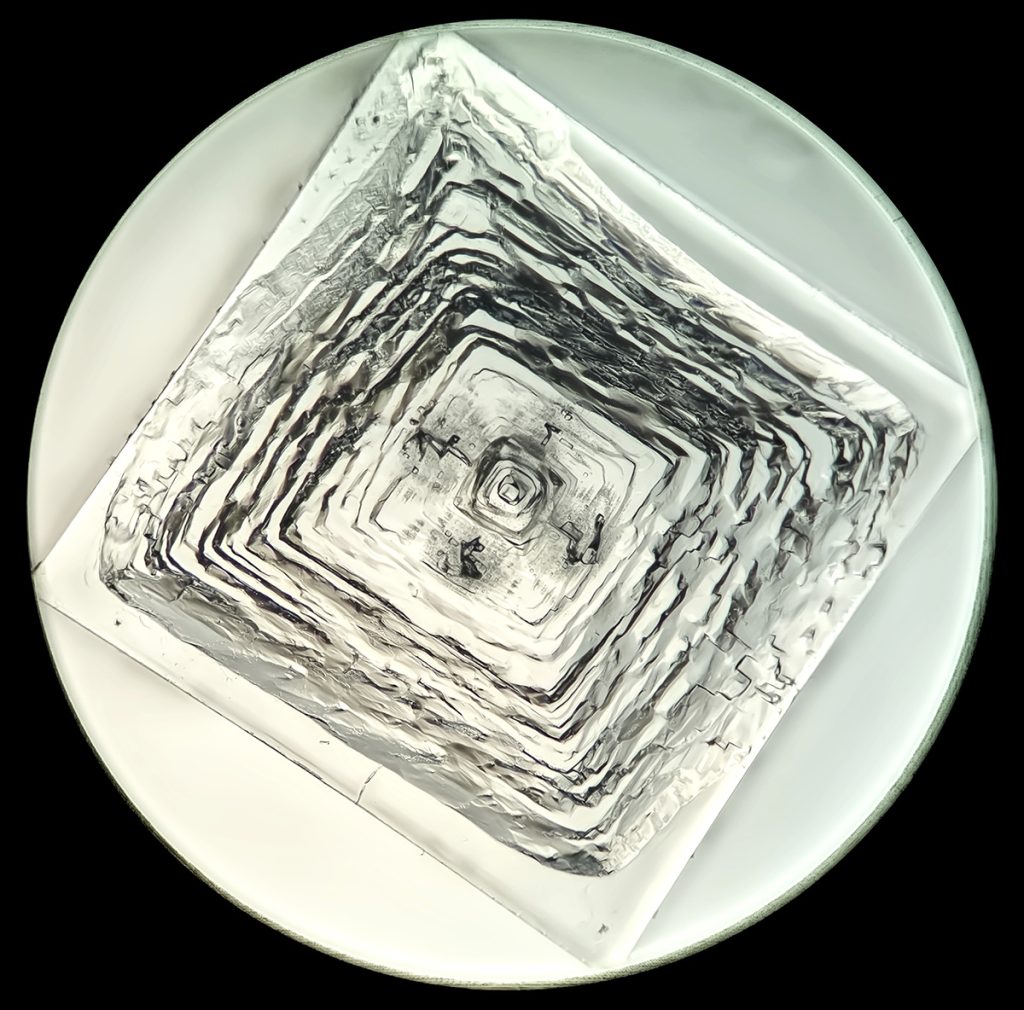
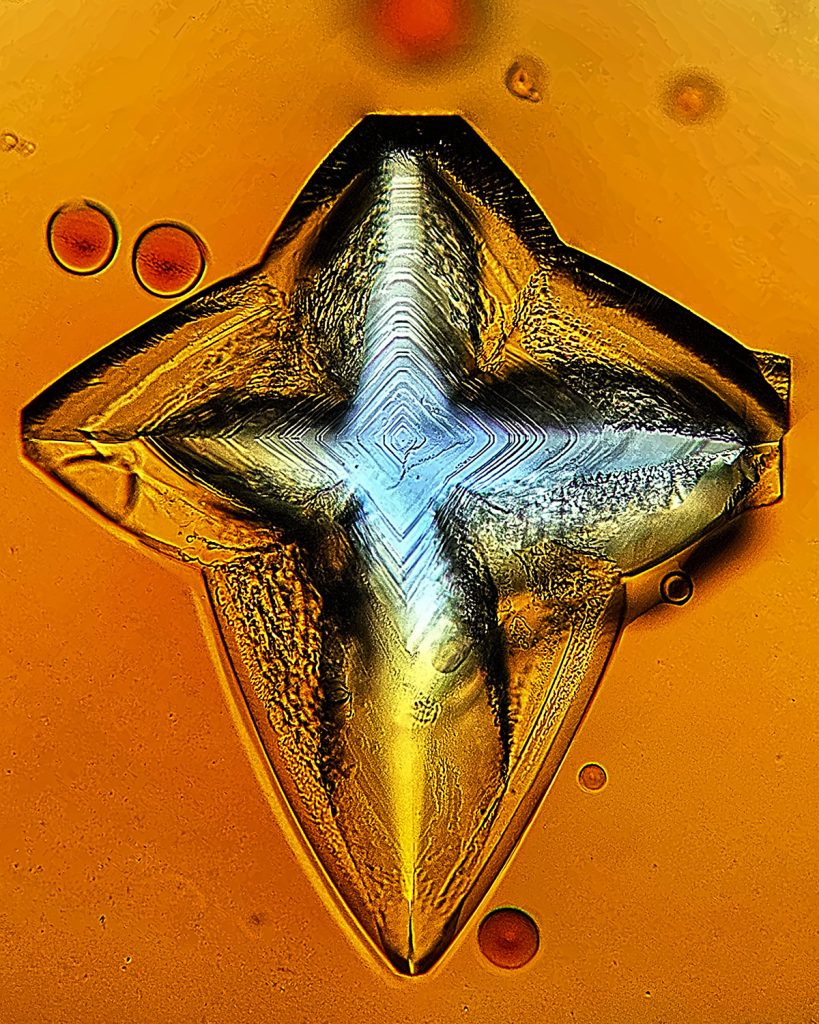
MAGNESIUM SULFATE: Magnesium sulfate (MgSO₄), better known as Epsom salt, is commonly used as bath salts. This salt is also derived from nature, where it is known as the minerals kieserite and epsomite. Its sources are mineral springs, mineral-rich caves, and seawater.
In its common form, magnesium sulfate is a white crystalline material. The crystals which form from dissolved magnesium sulfate are quite lovely. Magnesium sulfate is not only used in the manufacture of bath salts, but also in the production of medicines, preservatives, fireproof materials, tanning agents, and as a textile chemical agent.


SODIUM SULFATE: To the human eye, sodium sulfate (Na₂SO₄) salt crystals appear as a white crystalline solid; however, when examined in cross-polarized light, the same crystals display an amazing array of colors. The beautiful colors arise as a result of the interference of light waves passing through the crystal. Other similar, but different, optical physics occur within raindrops and ice crystals and are responsible for producing rainbows, halos, sun dogs, and other optical phenomena high in earth’s atmosphere.
Sodium sulfate is hygroscopic, meaning it loves to adsorb water. Sodium sulfate is therefore used as a drying agent in laboratories and in the manufacturing process of paper products and laundry detergents.
In its natural anhydrous (dry) form, sodium sulfate is called thenardite. On Mount Etna in Sicily, Italy, there are volcanic caves where thenardite stalactites and stalagmites grow naturally. Amazingly, when water seeps into these caves, the thenardite stalactites and stalagmites chemically bond with water and covert to the mineral mirabilite! Mirabilite is also known as Glauber’s salt or sodium sulfate decahydrate. This hydrated form is widely used as a fining agent in the glass industry to help remove air bubbles from molten glass.
Crystallization is a profoundly beautiful part of God’s creation. The crystallization process obeys His laws of physics and His rules of chemistry. The remarkable mathematical structures of crystal growth, based on complex molecular-level dimensions, exhibit a glimpse of the mighty and infinite understanding of Almighty God.