

With a high-powered telescope and a vivid imagination, the gas and dust cloud Messier 16 can almost look like an eagle with its wings spread in flight. For this reason, it was given the nickname “The Eagle Nebula.” Even though it lies about 6,500 light-years away, it can still be faintly seen with a simple pair of binoculars as a hazy patch of light. This is a testament to its incredible size, yet there are other nebulae that simply dwarf it. One example is the Carina Nebula; it stretches out over ten times the diameter of the Eagle Nebula.
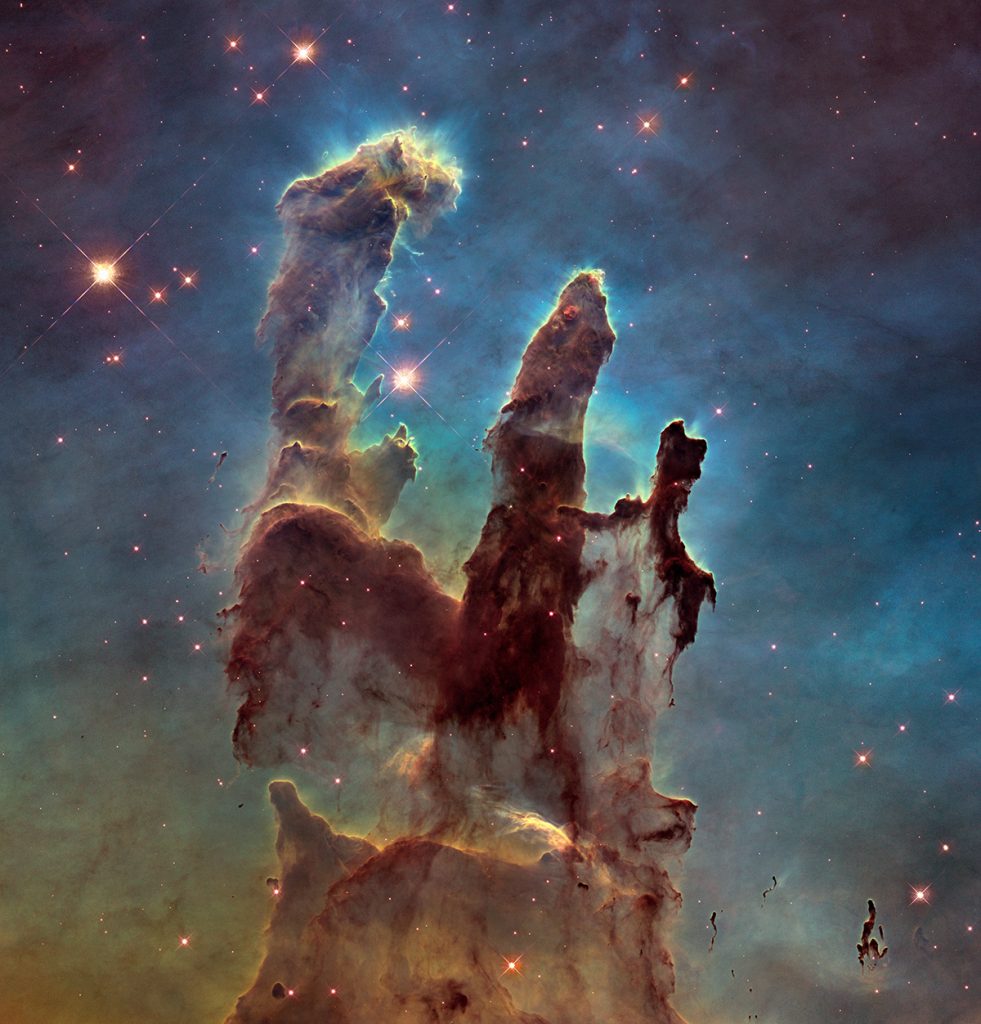
In the heart of the cavity of the Eagle Nebula are several columns of gas and dust that have been nicknamed the “Pillars of Creation.” They were made famous by an iconic photograph from the Hubble Space Telescope. That photo was a false color photo. I wanted to recreate the photo in the best way I could with my small equipment and color camera. The result was a glowing cloud in shades of red. Software was used to remove the stars from the picture to highlight the nebulosity.
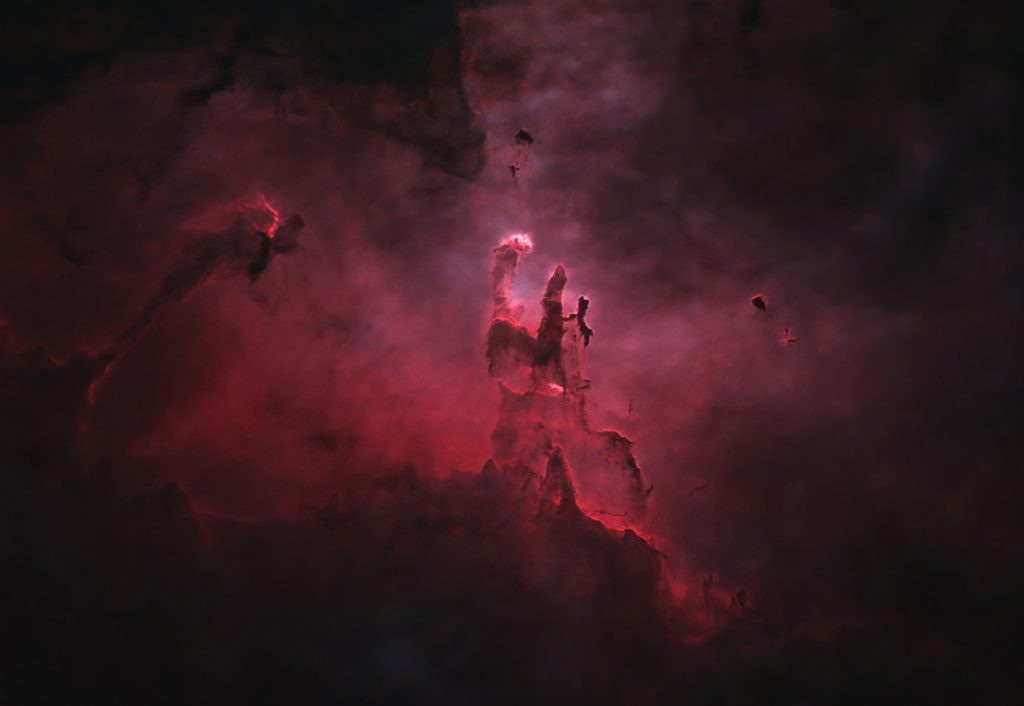
The pillars in the center of the picture are just a small part of the Eagle Nebula. In fact, the entire cloud stretches about seventeen times farther through space than the length of these pillars. This does not mean that they are small though. Even though the largest pillar only looks like a curling finger of dust, it is a gigantic four light-years long from the top to the bottom. It’s a distance so large that there’s no way to fully comprehend it; it stretches even the imagination to a breaking point.
It would be easier to grasp this distance if a familiar object were placed next to the pillars for a sense of scale, but it’s next to impossible to find a familiar object to compare with these pillars. If we would take the entire Earth and place it next to this pillar at the proper scale, it would be too small to see. Since the Earth isn’t adequate, we could try the Sun. The Sun is so large it could be filled with over one million Earths, but even if a circle the size of the Sun was placed on this picture, it could not be seen. In fact, it would take over twenty-seven million Suns stacked on top of each other to reach from the bottom of the pillar to the top.
Finally, since neither the Earth nor the Sun is adequate to compare with this colossal giant, we’ll compare it to the solar system. The part of the solar system where the planets orbit is over 5 billion miles from one end to the other and 6,000 times larger than the Sun’s diameter. Flying across that area at the speed of a jet, nearly 600 mph, would take about 20 lifetimes of flying day and night. However, a ring the size of our solar system next to the pillar would be smaller than 1/20 of a pixel on this picture. The resolution of this picture would not be good enough to show it!
If God’s simple dust is so utterly incomprehensible, how much more inconceivable is He? Nahum 1:3 paints an allegorical word picture of the greatness of God above the marvelous things of His creation where it says, “The clouds are the dust of his feet.”
Enjoy more articles and photography like this in Morris Yoder’s book The Celestial Message.
-
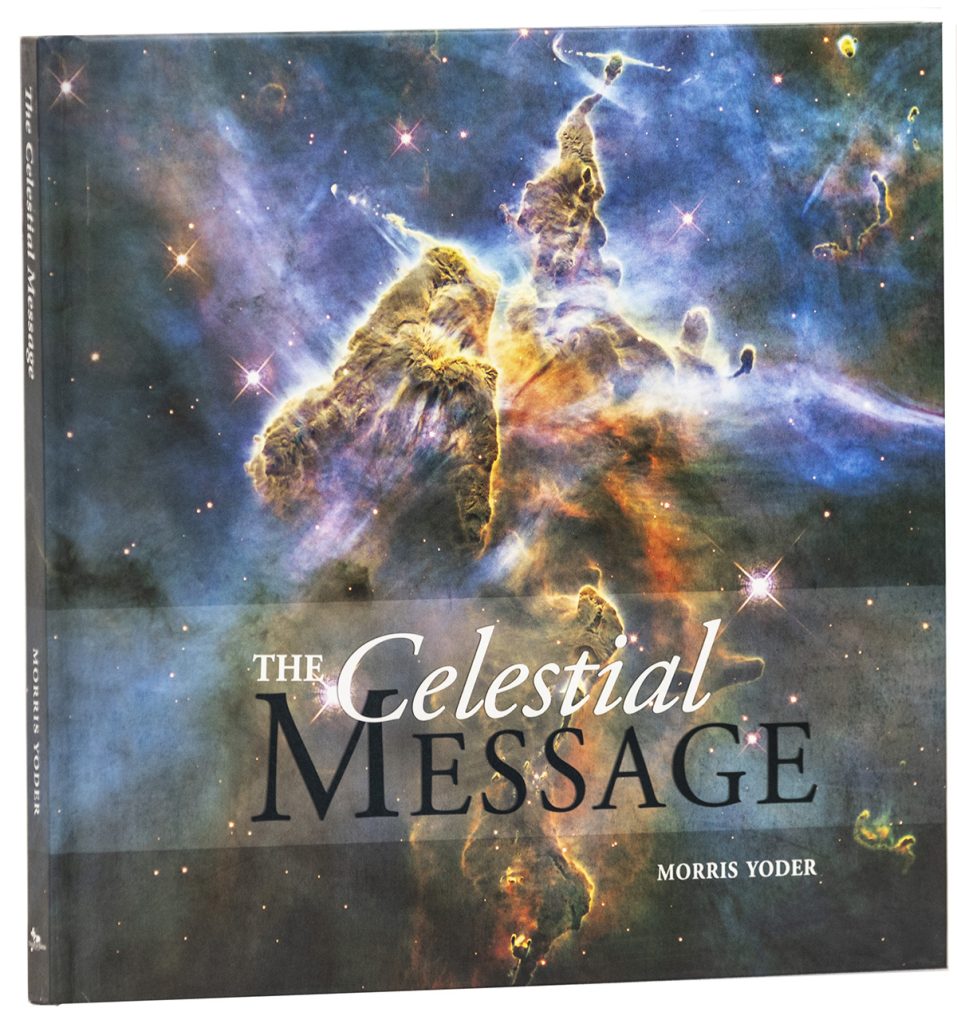
The Celestial Message
$29.99