

I like weeds—for good reason I think. It’s because I see so many incredibly interesting things when I’m among the weeds. But the problem is, I like the looks of weeded flower beds and garden. I also think mulched landscaping and a mowed yard look nice.
So imagine what it’s like when I’m pulling weeds. Let’s let those weeds grow because they do such-n-such with their seeds. Or, these weeds would be great to keep because such-n-such insects feed on them. Another thing I’ve often said is, “Goldenrod is a gold mine!”
So yes, there’s a patch of goldenrod at the edge of our backyard. Join me as I stop to enjoy this patch of gold nuggets.
Gold Nugget #1
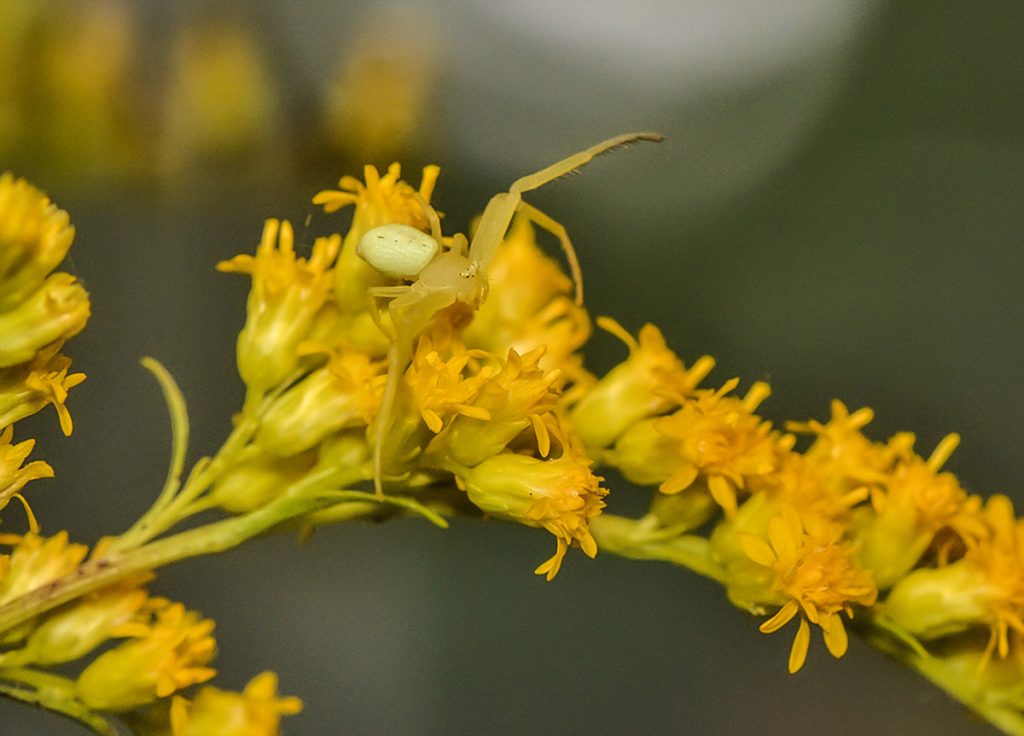
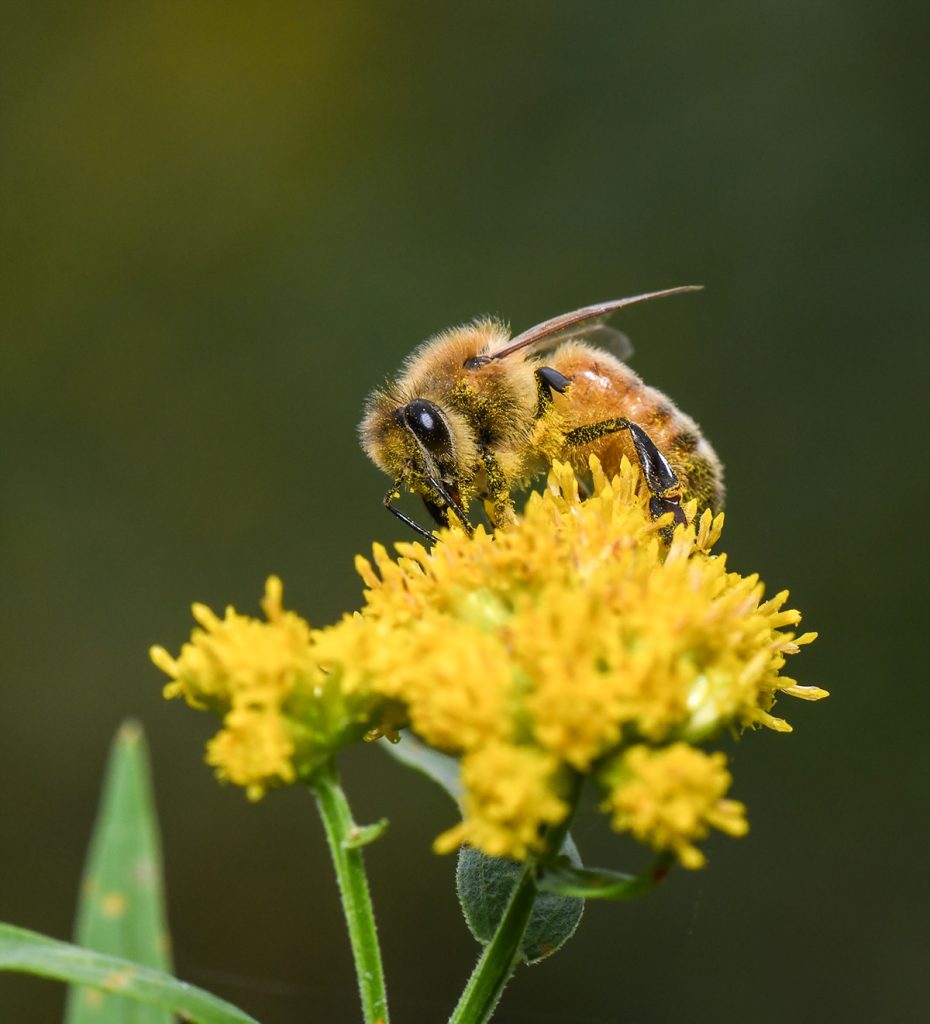
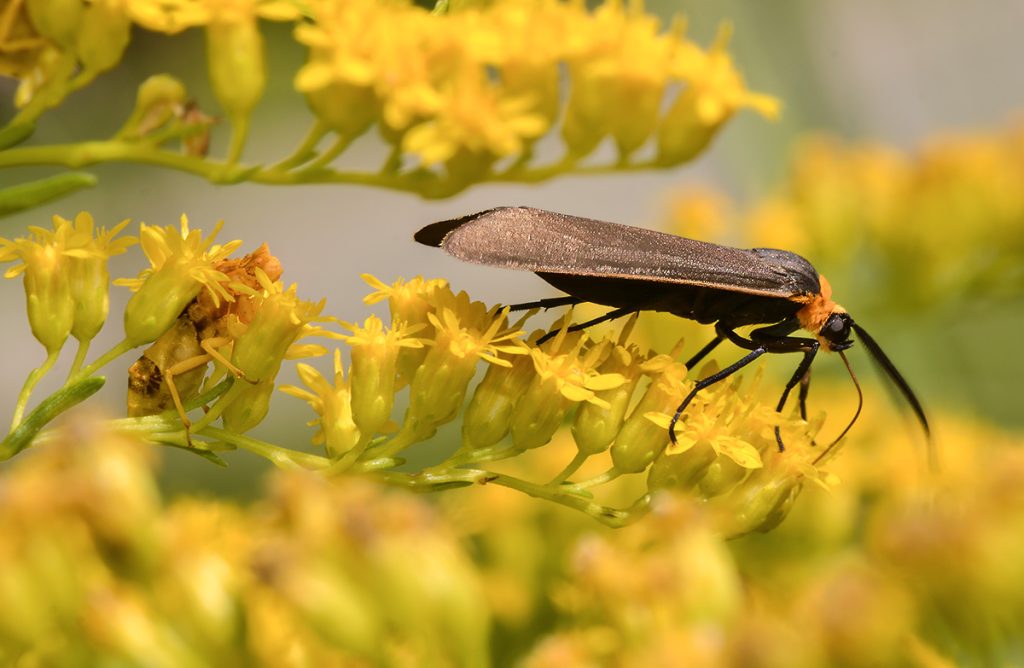
On the goldenrod’s flowers, various kinds of bees are madly scrambling around gathering nectar and pollen. Here and there, flies feed on pollen. An occasional butterfly visits. Over here a yellow-collared scape moth (Cisseps fulvicollis) is nectaring methodically along from the flower’s tip towards… Oh, no. Look! The moth is headed straight toward a very nicely camouflaged ambush bug that is lurking in ambush for a flower visitor.
The moth seems totally unaware of the danger. Will it decide to visit a different goldenrod and thus miss the ambush? Will it detect its hidden enemy and escape? Perhaps the ambush bug won’t even attack the moth because maybe the moth is chemically protected and the ambush bug has learned to avoid…BAMMM!!! The moth walked right into the ambush and that was that!
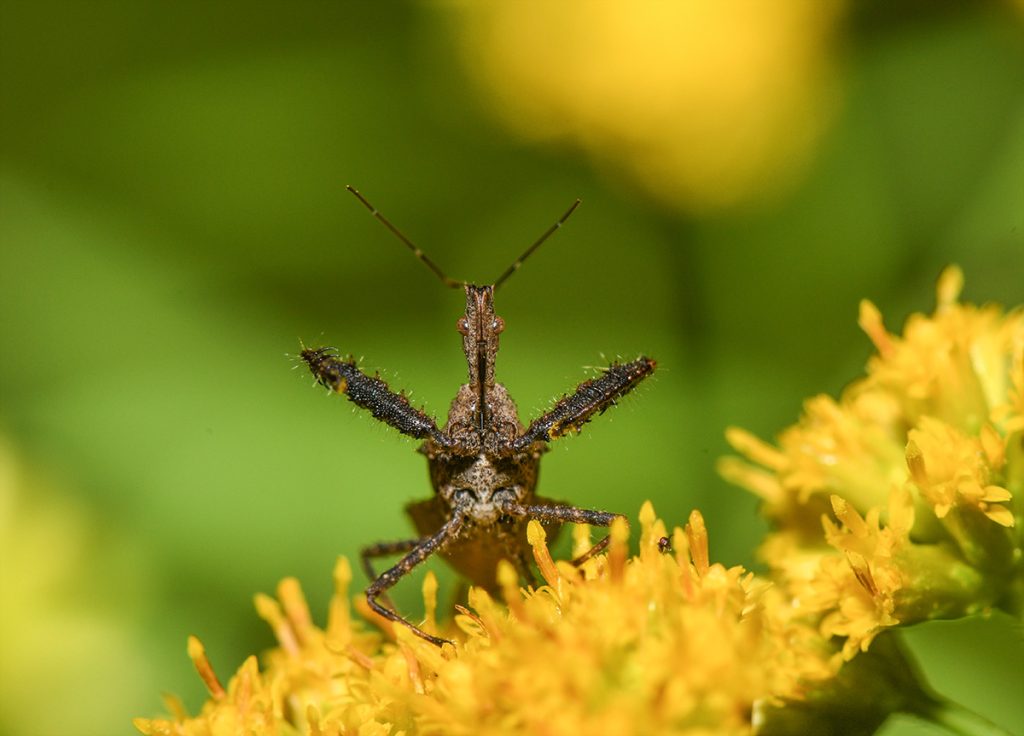
Because the goldenrod patch is a busy place and so many insects are attracted to goldenrod’s plentiful pollen and nectar, numerous insect predators also congregate on goldenrod flowers. These predators can often be spied waiting in ambush among the goldenrod’s florets. A close look can reveal assassin bugs, ambush bugs, or crab spiders. Now, for insects, any flower visit can turn into a death trap, but this seems especially so on goldenrod because of all those things lurking in ambush.
Gold Nugget #2
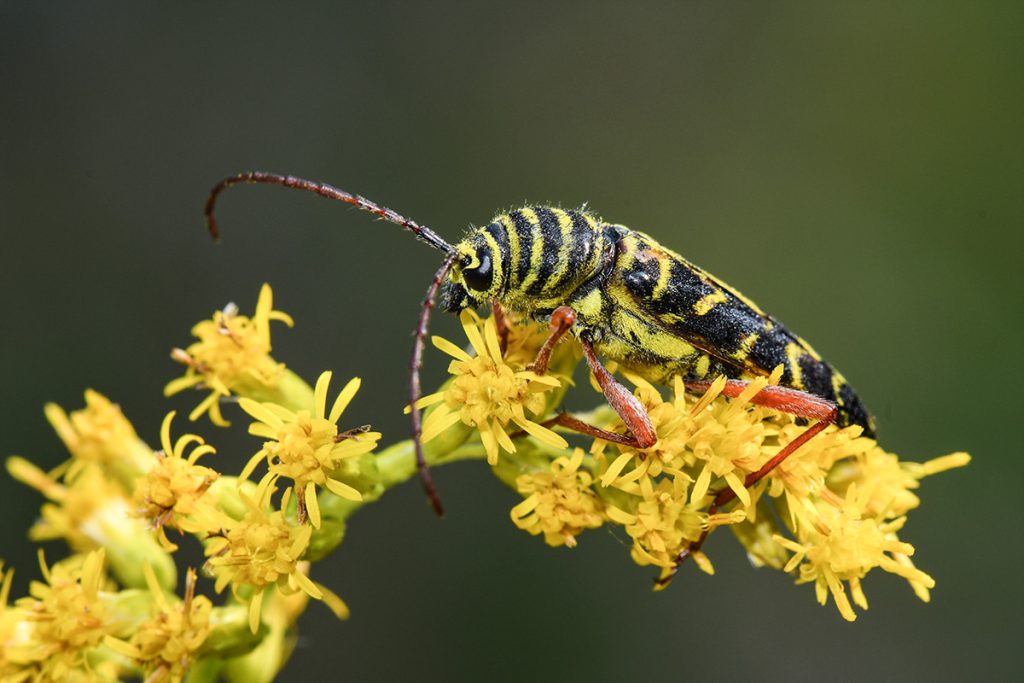
Now, over this way, on the goldenrod flowers is the not-so-boring locust borer. If you’ve ever seen one, you know the locust borer’s name didn’t come from its color scheme. Its bright yellow and black zig-zag zebra stripes aren’t boring. So how did the locust borer gets its name?
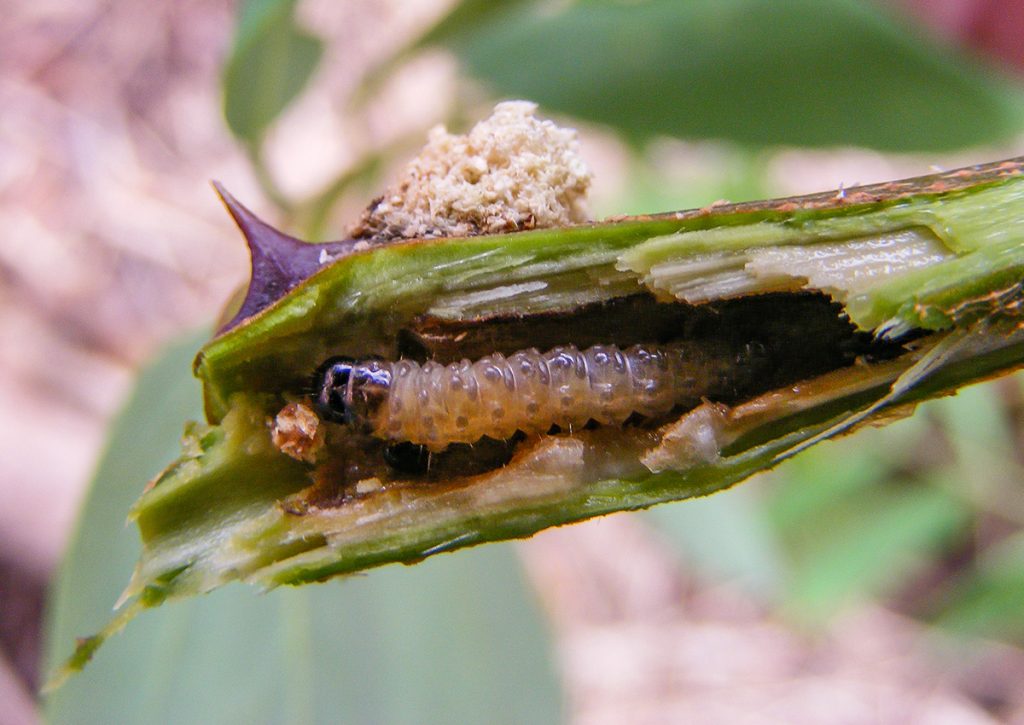
Well, on the other side of our little property, some young black locusts grow on the riverbank. Here locust borer larvae can be found boring in young black locust stems. When the borers are active in the stems, there is shredded wood/sawdust around the hole in the unsightly swellings they cause on the stems. So, the locust borer larvae can be found boring in the stems, and later the adults with their crazy zebra stripes can be found in the goldenrod gold mine. Surely the Creator enjoyed designing the locust borer’s exciting color scheme and its interesting life story.
Gold Nugget #3
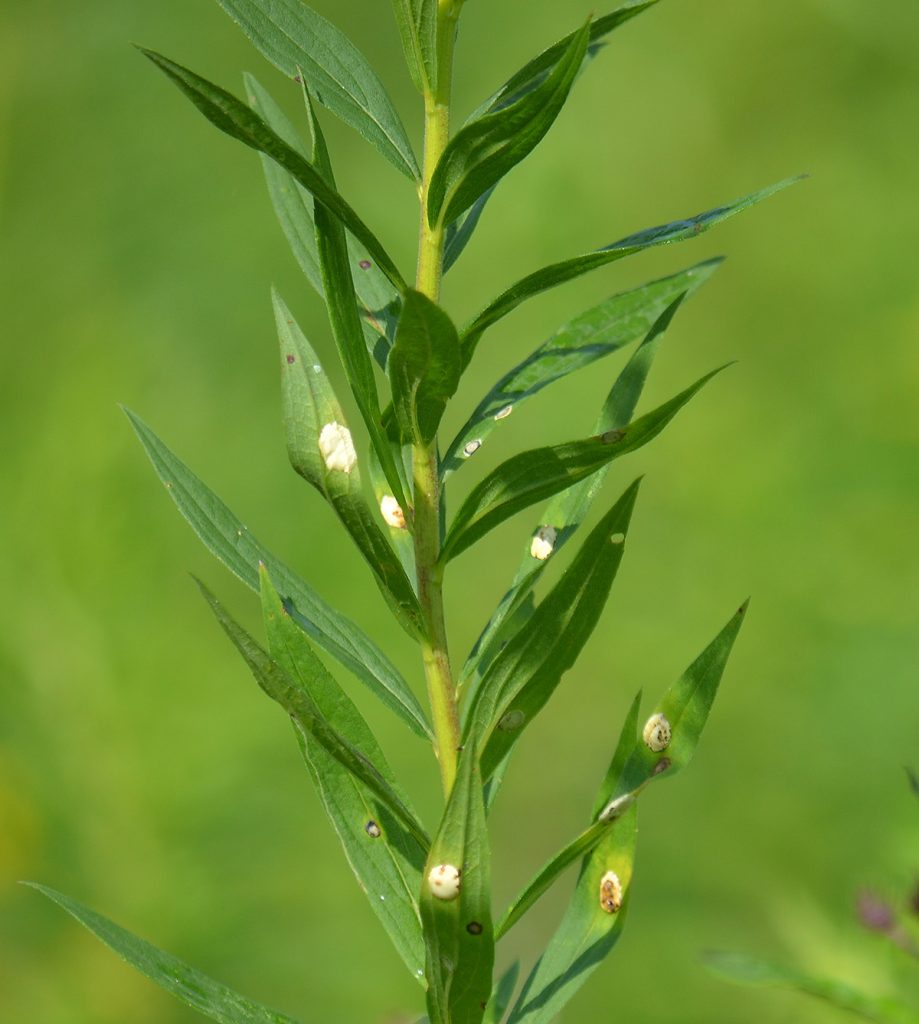
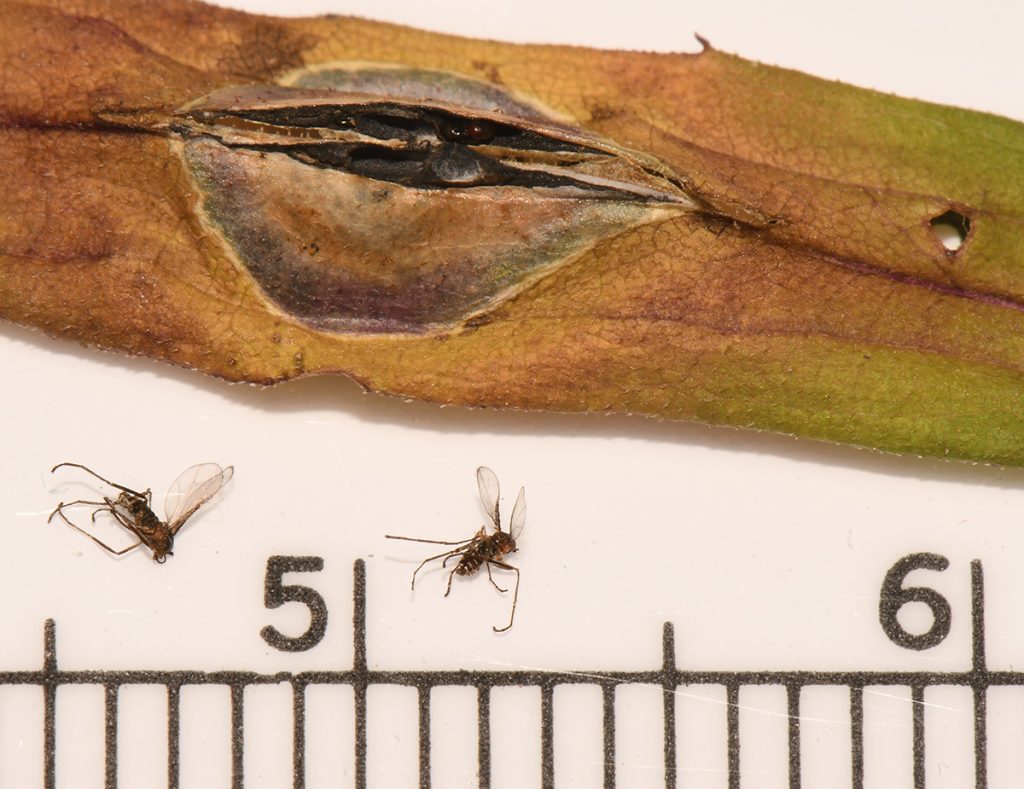
Maybe you saw those large white dots on the goldenrod leaves? These white spots are galls formed by the goldenrod ambrosia gall midge (Asteromyia carbonifera). Pick a leaf and crack open one of those galls. This time of year, it should have a bunch of tiny bright orange larvae inside a hard black envelope.
What an amazing story goes along with those galls. When Mother midge deposited her eggs on the goldenrod leaves, she had along with her, in special fungus-carrying structures, a symbiotic fungus that was introduced into the leaves. This fungus feeds on the leaves—in other words, the fungus is parasitic on the goldenrod. The midge larvae feed on the fungus and live somewhat protected from their enemies (such as parasitoid wasps) in the hard black envelope the fungus forms around the larvae. When the larvae develop into midges, the fungus gets transported to other leaves. Who could’ve thought that up besides a creative, all-knowing God?
We’ve focused on just three of the gold nuggets on our goldenrod, but since goldenrod is a gold mine, I am sure you can find more on weeds near you.
Oh, and are you thinking what I’m thinking? Is there a nice-looking way to grow weeds in the flower beds, like, maybe a couple of patches of goldenrod growing along the house? Imagine being able to sit at the dining room table and look right out the window and see a bunch of “gold nuggets.”