On late summer days when the sun shines down hot from a pale blue sky, I slip out the back door to the garden to see how things are drying up there. Flaming reds and yellows and pinks of summer mingle with the drab olives and browns of impending autumn, and spent flower heads rattle among their bug-bitten brothers swaying in the breeze. Late summer insects drone unseen. My hands automatically reach out and gently shred a brittle flower head, the seeds slipping into my cupped palm, tiny bits that contain the whole of a flower waiting for another season.
In early winter when the cold sinks down deep, brilliantly colored seed catalogs arrive in my mailbox. I turn the pages and study the flowers, the vegetables, the fruit, dreaming of armloads of flowers and buckets of veggies. Then I pick my favorites and place an order, the bill of which is always greater than I had expected. Gardening is supposed to save me money, I think as I hold these shiny packets of seeds in my hand, mentally calculating the cost of each individual seed. This yearly planting of a garden is not a cheap hobby, and each year the packets seem to cost just a little bit more.
Saving seeds from my favorite varieties has become an inexpensive way to get those armloads of flowers and buckets of veggies each summer without buying dozens of seed packets. I can freely harvest hundreds of seeds instead of purchasing a packet of fifty for $2.50 and often more.
Zinnias, cosmos, and sunflowers are the top three flowers that grace my gardens, adding their brilliant pops of color mixed in amongst the veggies or arranged in their own vibrant border row. Each of these flowers produces an abundance of seeds that can easily be gathered and saved for the next growing season.
Zinnia flowers die, their petals fading brown and crispy. When they are completely dry, I gently tug a pinch full of papery petals, and the seeds attached to the ends slide smoothly away from the flower head. I break off the petals, and there they are, flat brown seeds lying in my hand. Not all the seeds are viable, just the ones that are slightly thick and, when broken in half, reveal just a bit of white gummy food for the embryo hidden inside. Gently blowing across the seeds usually removes the chaff and nonviable seeds. Choosing flower heads from as many different colored zinnias as possible, I walk along the row, harvesting seeds until I have a large handful.
Cosmos seeds are even easier to harvest than zinnia seeds. Once the petals fade and dry and drop, the seed head opens and fans out the seeds in a spikey sphere. I simply pinch the seeds in my fingers, pull them off, and collect them in my hand, again choosing seeds from all the colors or varieties growing.
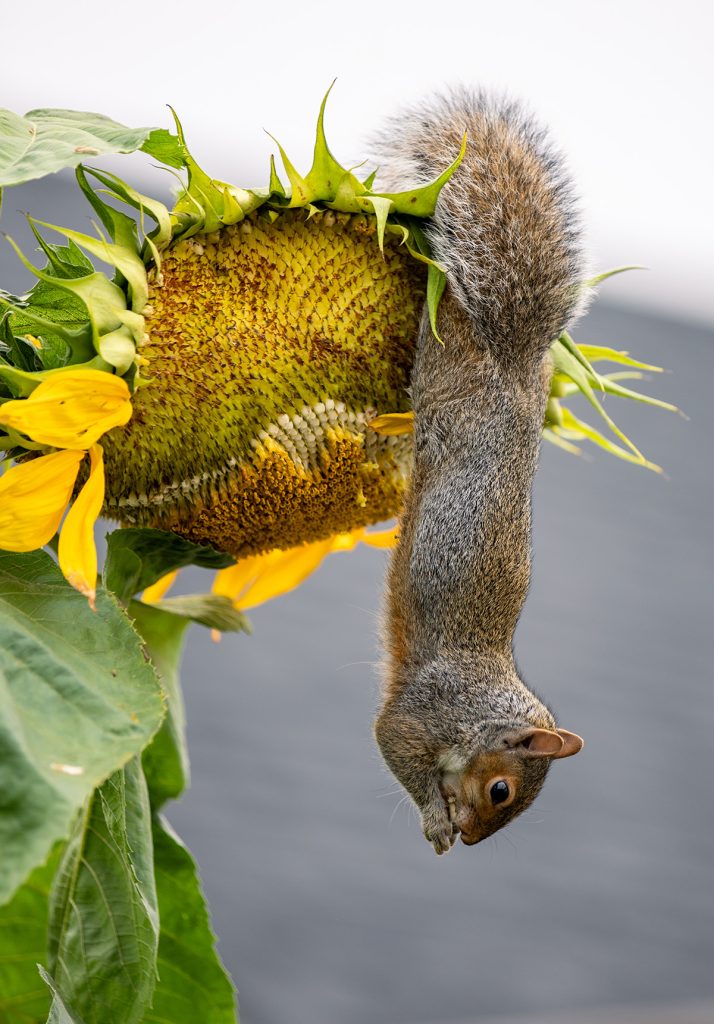
Sunflowers turn a greenish yellow and bow their heads toward the earth when their seeds are heavy and ripe. I rub their faces to loosen the large fat seeds, and pick them out of their little honeycomb-like holes until my hand is full. In my garden, sunflowers readily reseed, rendering seed saving unnecessary. However, for the sake of order, I like to save some seeds to plant strategically.
There are many, many other annual flowers that produce easily harvested seeds. When I initially purchase seeds, I watch for words like “heirloom” and “open-pollinated.” For open-pollinated seeds, pollination occurs naturally by insects or winds or rains, setting seed that generally produces a plant that resembles its parent. Heirloom seeds are open-pollinated seeds that have been passed down from generation to generation, also producing plants with similar characteristics to their parents. Other favorite garden flowers to save seed from include coxcombs, petunias, Amaranthus, bachelor’s buttons, and rudbeckias.
Saving vegetable seeds has been a little more intimidating to me, since we eventually eat parts of the plant, but I have successfully saved seeds from a favorite tomato variety as well as pole lima beans, both unnamed and possibly heirlooms. When initially buying vegetable seed or plants you hope to save seed from, once again look for “heirloom” or “open-pollinated” in the plant description.
Tutorials abound on saving tomato seeds, many of which include a fermentation process. I am a lazy gardener and skip that step. I harvest tomato seeds from my largest, most beautiful red ripe fruits, simply scooping out some seeds and spreading them out on a paper towel to dry thoroughly. Then I fold up the square of paper towel and store it away in an envelope until next spring.
Lima bean pods turn a light beige and crispy when they are ready to harvest. It is best to pick the pods before they split open and drop their seeds. I save seeds from the pods with the highest number of beans in hopes that I can help those genes stay strong, producing an even better heirloom for future generations.
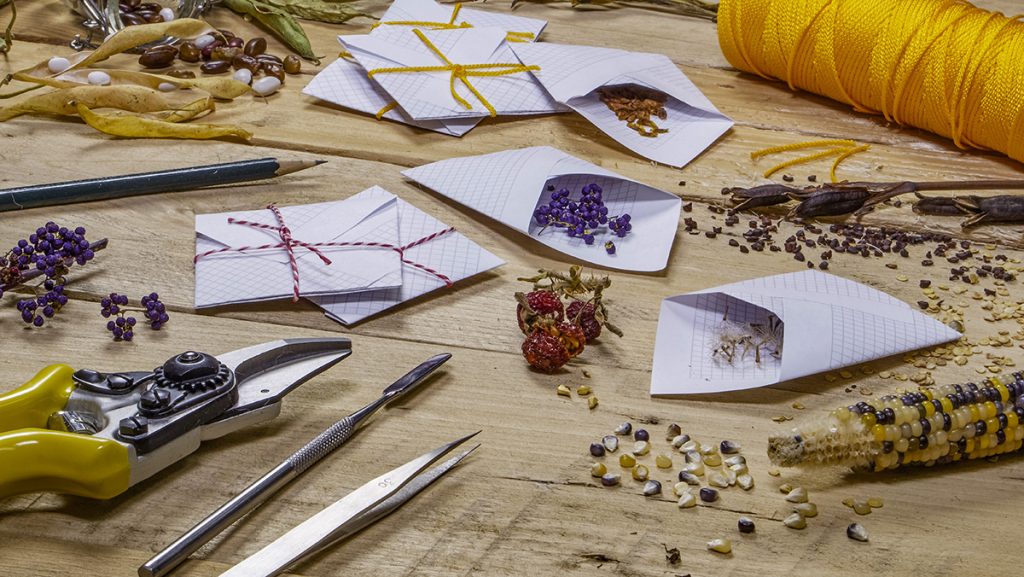
Once I have harvested flower and vegetable seeds, I spread them out on a table or counter in an airy place until each seed is completely dry. Then I package them up in plastic sandwich bags or little brown envelopes, label them with the proper name, and store them in the freezer until the sun shines clear and warm in the spring and the garden beckons once again.
Perhaps this fall as I wander amongst the spent flower heads, tidying up for the winter, I’ll stop by a flower I’ve never bothered saving seed from before. I’ll reach out and look for the seeds, shake them into my palm, blow the chaff away, and then store them away, safe until next spring.