Hawk Watching
Each year, birders gather at hawk watch sites across North America to watch—and count—the fall raptor migration. With hundreds or thousands of birds flying over every day, many at high altitudes, how does one quickly and accurately identify them?
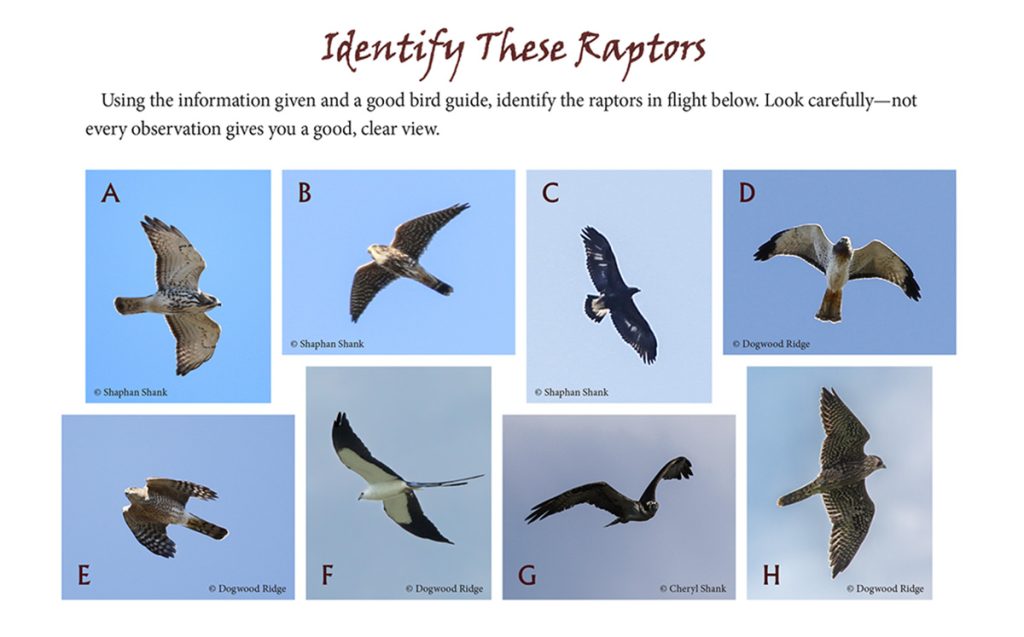
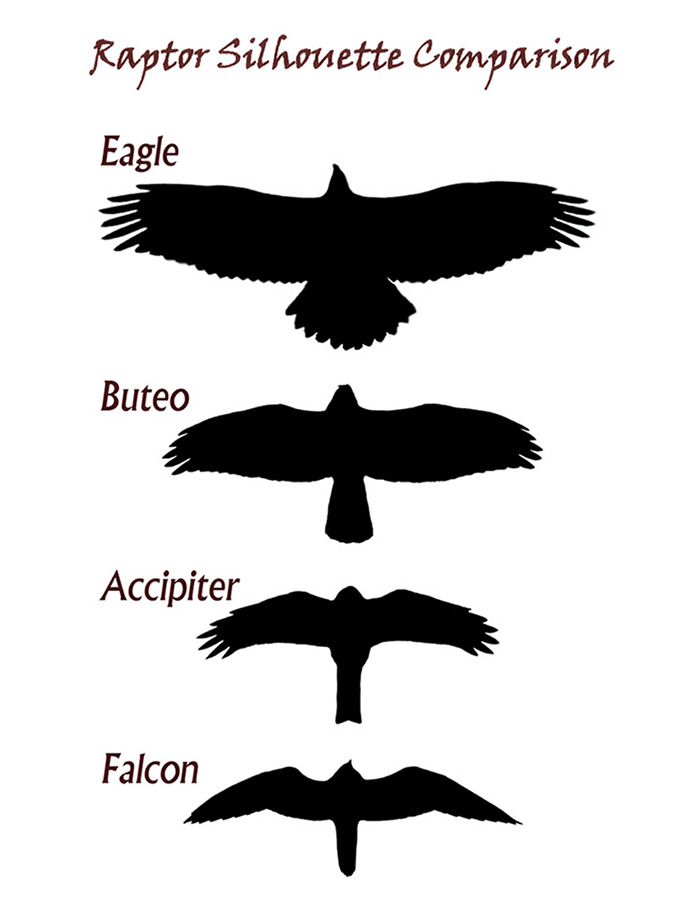
Size, shape, flight patterns, and color patterns can all narrow down an identification to the right group, and then to the right species. For raptors in flight, color patterns are often not readily visible. Learn to look first for the overall shape and size, as well as any distinguishing flight pattern.
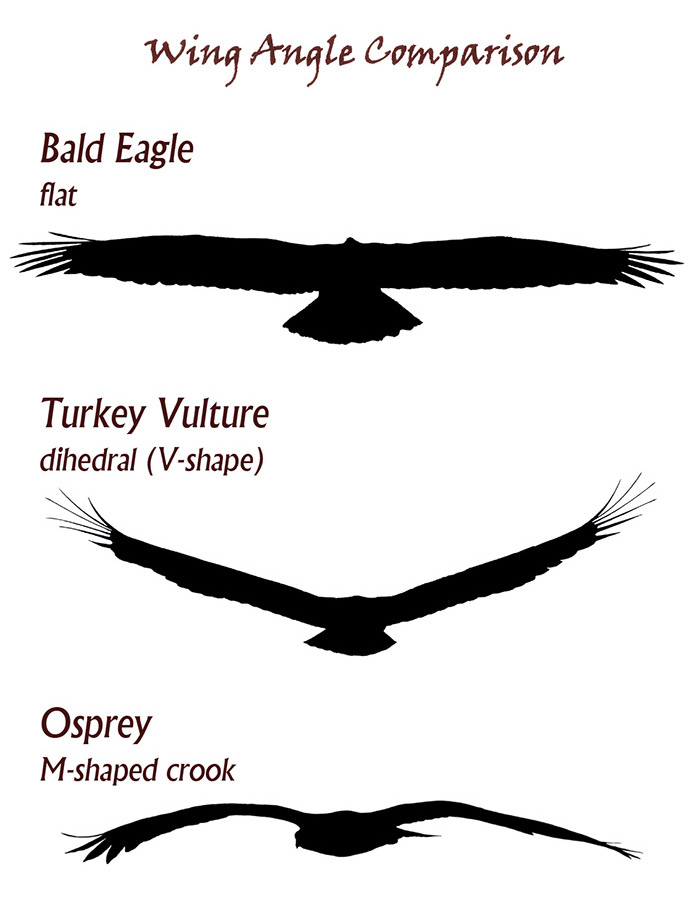
Eagles and vultures are the largest raptors, with huge broad wings. Vultures have featherless heads and appear black overall, except for lighter gray underwing areas. The shape of these areas is the best distinction between Black and Turkey Vultures. Turkey Vultures soar for minutes on end, holding their wings in a distinct V shape (dihedral). Black Vultures tend to hold their wings flatter and alternate gliding with flapping. Bald Eagles fly with flat wings, Golden Eagles with a slight dihedral. Except for adult Bald Eagles, most eagles appear mottled. Immature Bald Eagles have random mottling; Golden Eagles tend to have white in distinct patches.
Buteos (including similar hawks not in the Buteo genus) have wide wings and short wide tails. They also have a wide range of species options. Look for size; many buteos are large, but a few (such as Broad-winged and Red-shouldered Hawks) are smaller, the size of a crow. Color pattern can be important for distinguishing species, but remember that some species such as the Red-tailed Hawk can be highly variable.
Accipiters, in North America, often refers to the Sharp-shinned and Cooper’s Hawks. Recently, Cooper’s Hawks were reclassified as part of the similar Astur genus. Both hawks are long-tailed and relatively short- and round-winged. Their barred color patterns are nearly identical, but Cooper’s Hawks are usually larger. The head of a Cooper’s Hawk also extends farther past the front edge of its wings.
Falcons look similar to hawks but are not part of the same family. They range in size from the American Kestrel (Blue Jay size) to the arctic-dwelling Gyrfalcon (large Red-tailed Hawk size). Falcons have narrow, pointed wings and fairly long tails. Many falcons have fast, strong wingbeats; American Kestrels often hover when hunting.
Kites have long pointed wings like falcons and often have notched or forked tails. They are very graceful, agile flyers, sometimes engaging in spectacular acrobatics, sometimes in soaring.
A few raptors do not fit neatly into any of these groups. Ospreys are slightly smaller than eagles, with a distinctive white pattern below. They hover and plunge for fish, or soar with a distinctive M-shaped crook in their wings. American Goshawks somewhat resemble a grayer version of a Cooper’s Hawk with wider wings and tail. Northern Harriers have long wings and tails with a distinct white rump patch. Males are gray above and light below with darker wing tips and head; females are brown above and heavily streaked below.
As you become more familiar with individual raptor species, you will learn their unique characteristics, quirks, and behaviors. You will learn which species are most common, which ones tend to fly alone, and which can be found in groups (kettles) of dozens or hundreds of birds. And with time and effort, you will also learn the calls of raptors—one of the most reliable ways to identify a species quickly.