

Every year, scientists try to pin down the elusive concept of a species. They split this species and lump those, change scientific names, and often cover their tracks with a haze of evolutionary speculation. Birders think they know how many species they have seen, only to “lose” one species and “gain” two more from academic wranglings. Out of curiosity, a gardener researches the official name of the dandelions invading her space, only to learn that there are several nearly indistinguishable species, and the entire Taraxacum genus is a taxonomic nightmare.
What is a species, and why does taxonomy—our official way of classifying life—keep changing? Are there sound scientific reasons behind this system of classification, or is it all driven by an evolutionary viewpoint? Why should we even care?
You might not care. But some of us wonder why the Common and Hoary Redpolls were lumped into one species (Redpoll), add a lifer because a wren species was split, and note that we can no longer call both Cooper’s and Sharp-shinned Hawks accipiters. Before we address specific changes, let’s briefly look at species and taxonomy.
Genesis records that God created every plant, bird, and other animal after its kind. These kinds were not exactly the same as our species today; they were possibly equivalent to the family level in taxonomy. Each kind contained much more genetic information than species do now. After the Flood, as animal populations grew larger, they began dispersing throughout the world. Each population carried enough options in its genes to be able to change somewhat to best live in its new environment.
For example, there are dog genes for long and short hair. In cold areas, long-haired dogs will generally survive longer and have more puppies than short-haired dogs. With time, there may not be any short-haired dogs left—there will be no more genes for short hair to be passed along. In the tropics, however, the opposite will have happened. Scientists call this process natural selection. Natural selection is not evolution—it works within existing genetic material, rather than creating new genes from scratch.
Natural selection and various other factors eventually changed the original kinds that God created into many more types. At the most basic level, we use the term species. The process by which one species changes within its genetic information to become two species is called speciation. Speciation is simply God-given variation to life, and it is still continuing today.
In the 1700s, a creation scientist named Carolus Linnaeus developed a system of classifying living things. While he did not fully understand how speciation works, he did lay the foundation for modern taxonomy. Today, scientists often describe taxonomy as evolutionary relationships; however, creationists generally would not classify things much differently. Lower taxonomic levels, such as genus and species, are often, in fact, related due to speciation. Higher levels such as phylum and class are logical divisions as well, since they are generally based on shared characteristics that do not denote relation.
At the bottom of the Linnaean classification system is the species. Scientists use various factors to determine species divisions, such as whether different populations can interbreed. They also consider the genetic or DNA similarities between populations; however, genetics keep slowly shifting. How much variation should comprise a species is often where the water gets muddied. Sometimes, as in the case of the dandelions, there is little left but mud.
But I digress. Most of you, if you are wondering anything, probably want to know why bird books keep being revised, instead of where taxonomy originated. While changes such as splitting Accipiter into two genera (Astur and Accipiter) don’t affect us much, we do note “splits” and “lumps.”
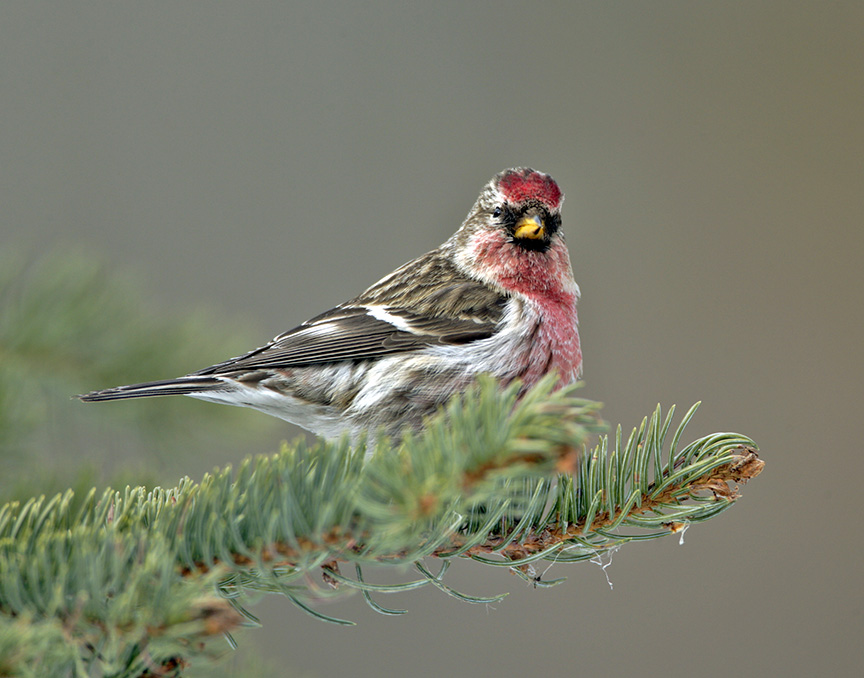
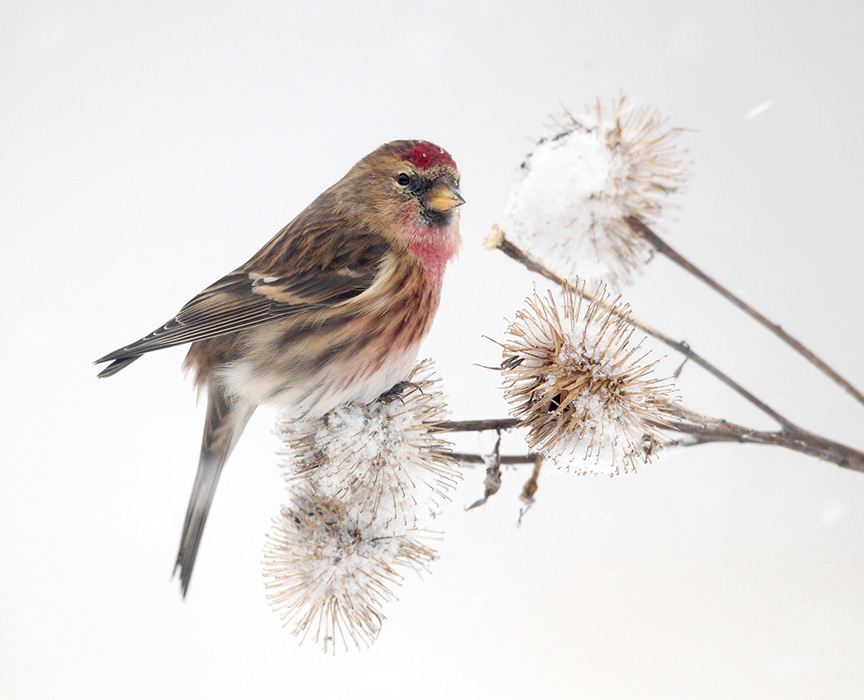
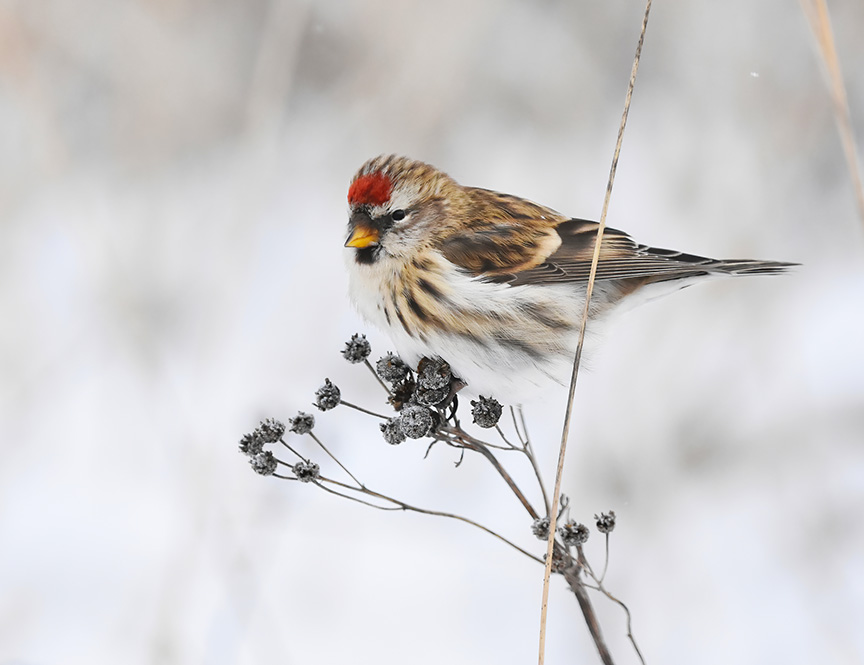
One notable lump from 2024 was that of the Common, Hoary, and Lesser Redpolls. As scientists studied redpolls’ genetic sequences, they found that there was little real difference; some redpolls simply expressed their genes differently. In addition, their populations overlapped and interbred commonly. The minor differences are now treated as subspecies of one species, the Redpoll.
In 2010, the Winter Wren was split into several species, including the Pacific Wren of western North America. In 2024, the House Wren was split, the largest two divisions being the Northern and Southern House Wrens. I particularly noticed this split, since I have seen House Wrens both at my Virginia home and in Guatemala. Various factors influenced these splits, including genetic differences, non-interbreeding populations, and differences in plumage and calls. Often, splits simply rename former subspecies as full species.
Despite its flaws, I still appreciate the Linnaean classification system. And despite the frustration of frequent changes, I’ll still anticipate new insights on the amazing variation God has built into each kind of creature!