

Barking exploded from the dense forest. Narrow trails snaked through the ferns, disappearing into dark woods, and I expected to see a hiker with a dog emerge from the towering pines.
Instead of a barking dog, I found a porcupine bristled in a nearby clearing, warning me to stay away. I quickly left the alarmed creature alone. But it wasn’t the first time I have been surprised by the sounds of woodland animals.
Many animals, including porcupines, produce a variety of noises when feeling threatened or simply communicating with each other. Their vocalizations can haunt or delight us, adding wonder to our outdoor excursions. These gifts of nature often arrive without warning, whether we are snowshoeing through a winter forest, paddling on a tree-shrouded river, or sleeping beneath a full moon.
Once while kayaking on a remote lake, I heard what I thought sounded like hissing nearby on the shore. Red and white pines guarded the lakeside, hiding the animal from sight. I rested my paddle on the kayak, allowing it to aimlessly float. Quiet filled the afternoon, and solitude surrounded me. The “hissing” repeated as my kayak bobbed closer to the shoreline.
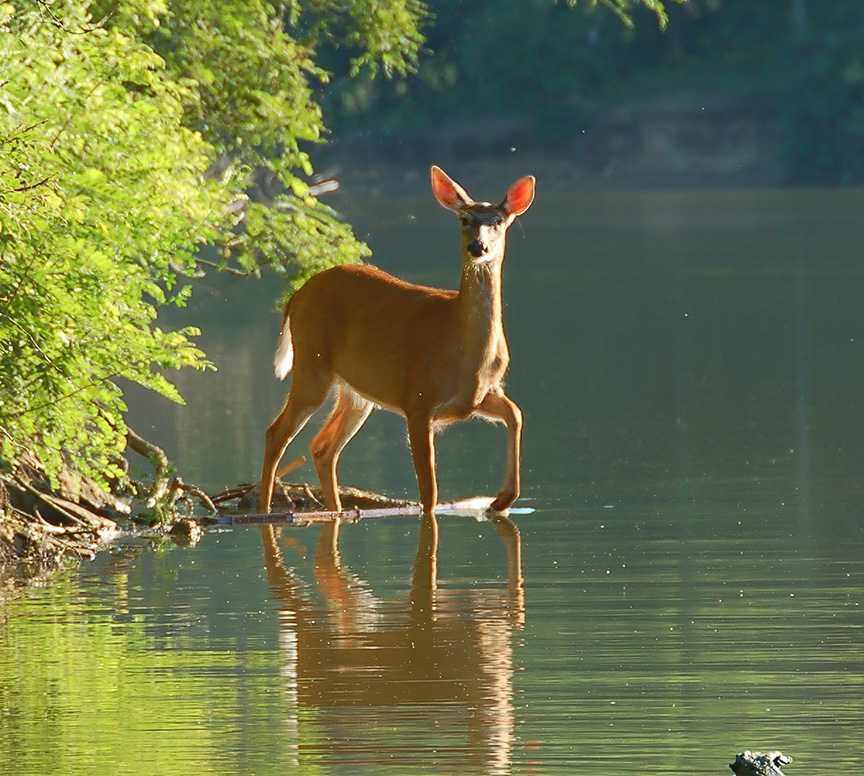
Soon a doe and two fawns stepped from the woods. The doe “hissed” again and stamped her foot. My kayak floated closer, and she bounded away, the fawns trailing behind her.
I learned later that deer do not hiss. Rather, deer snort to alert other deer of possible danger, and blowing air forcefully through their nose may well help them to better detect scents.
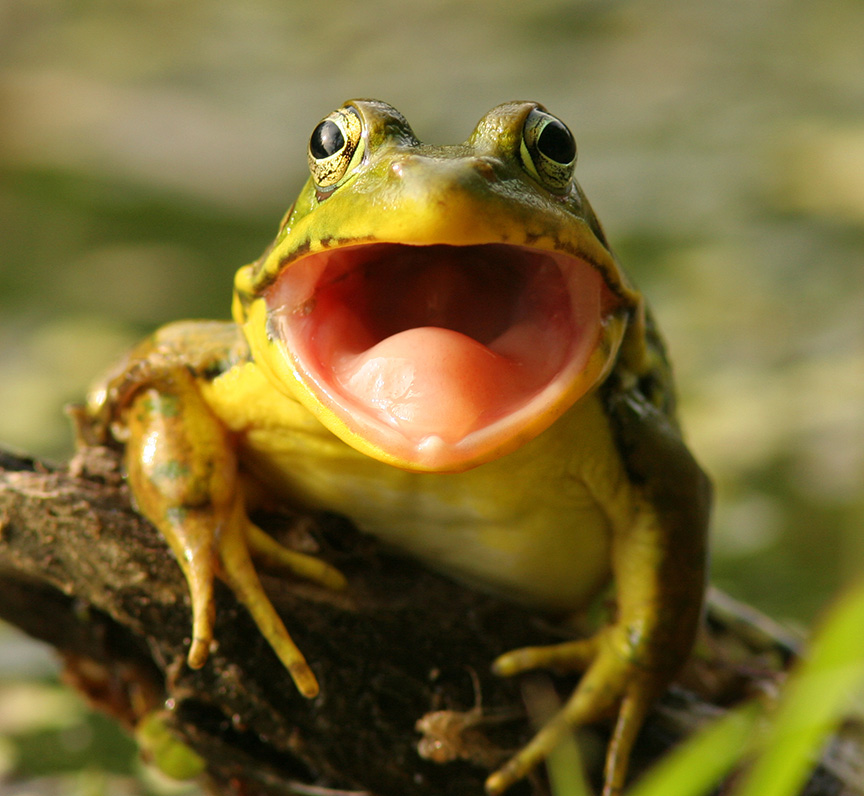
Woodsy lakes and streams also frequently host nightly symphonies of mysterious sounds. The plucking of a banjo string puzzled me for months while living on the shores of an isolated lake. A longtime resident finally revealed the source of the out-of-tune banjo players—green frogs. This nocturnal singer uses its unique, reverberating call to proclaim its territory and to call to a mate.
Another repetitious but more melodious call is the singing of the whip-poor-will. Its name was derived from its song. The astonishing aspect of this bird is how its tune sounds like spoken English, “Whip poor Will.”
Easily camouflaged, this brown bird may be difficult to see, but its lovely call rings out, routinely signaling the end of the day. A friend once told me that when he was young and spent his summers playing outside, his parents instructed him that it was time to come home when the whip-poor-will called.
Of all the nocturnal animal sounds, however, the Common Loon’s trills are, for me, the most thrilling. Their evening concerts first came to me one quiet night. Their foreign voices twirled through the air, finally bumping into my dreams until I awoke with a start.
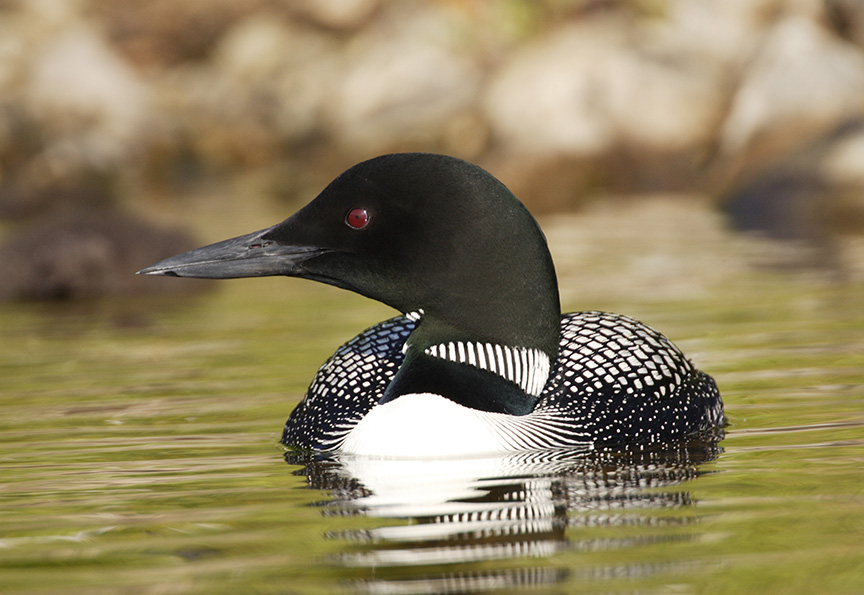
Back and forth the duet went. One voice would shoot up, vibrating against the cool spring night, and another would answer until a conclusion had been reached and their conversation ended. Whatever was singing had finished for the night. Everything was quiet outside, except for the groaning of the tall red pines in the wind.
The vocals echoed again the next morning, and I rushed outside, hurrying down to the lake, the source of the sounds. A loon swam nearby and yodeled to its partner before diving below the water surface. These birds became the highlight of my summer, always amazing me with the depth of their vocalizations, from wailing to hooting to laughing.
I continue to welcome these discoveries, happy to find myself still naïve to the range of animal talents, learning something new about wildlife with each revelation. As the book of Job tells us, all of God’s creatures have lessons to offer. “But ask now the beasts, and they shall teach thee; and the fowls of the air, and they shall tell thee…”
A few years ago, midway through my hike, a noise broke through the silence of the forest. It sounded like the cry of a hawk mixed with the cawing of a crow. I hesitated and scanned the trees, expecting to see a bird warning me away from its nest.
After a few minutes of searching, I finally spotted two porcupines climbing a pine. They scrunched together, again imitating birds. I smiled and quickly left, not wanting to alarm the creatures. Yet I tucked the scene away in my mind to be replayed later, along with dozens of others, a ceaseless loop celebrating the wonders of nature.