

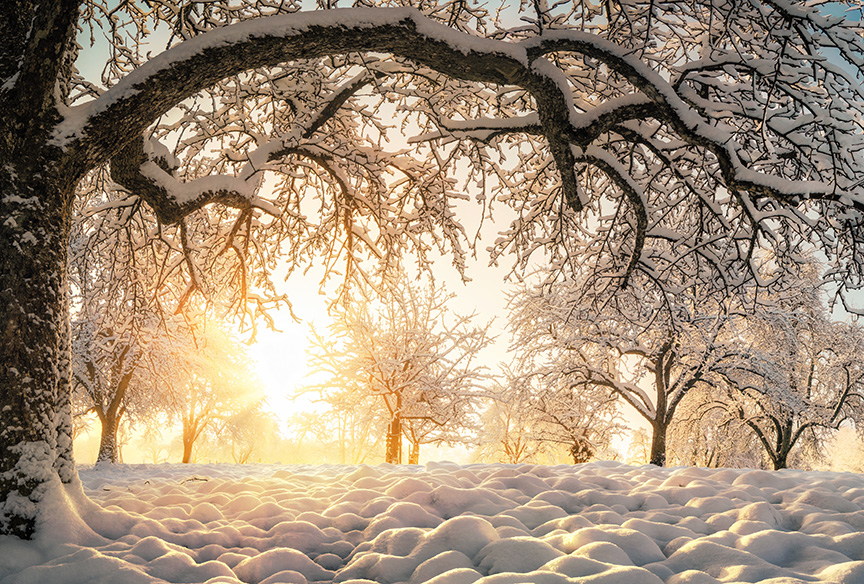
It is midwinter, and I stand at my kitchen windows, staring out at crows perched in the ancient pear tree, their feathery coats glistening black in pale sunshine. My flower garden lies below them, its empty expanse of fallow ground a canvas for the paint of imagination. I watch the crows as they lift their wings and flutter down to the corner of the hayfield where we dump our kitchen waste. They scrap over tender morsels and peck at broken eggshells. I idly wonder if they are here all year, or if this is their winter haunt. I have not paid enough attention.
Snow has fallen liberally, and my garden walks have been quick, leaving boot prints marring the perfect surface of the slowly melting snow. The gardens all lie rather desolate this time of year. Flat crusts of decaying mulch cover the orchard floor, last year’s perennials returning their browning leaves to the soil from whence they sprang.
Young fruit trees hang out sturdy limbs in stark relief against the pale blue of a winter sky. I eye them thoughtfully, deciding where the perfect pruning cuts should be made. There is no need to rush for loppers this early in winter, so I return to my warm house where there is hot coffee and plenty of books.
A delightful stack of seed and nursery catalogs arrives in the mail in early winter. As I sip my coffee and dreamily page, memories of the bitter failures, work, and disappointments of last summer’s garden are burned in the fire of rekindled passion, delight, and hope. Winter is nearly the only time I can have a perfect garden, for I have yet to do anything to mess it up.
I have been keeping a garden journal of sorts, and I get this out and read through last year’s notes. I think about what I want from my garden, what I wish it would look like, and what vegetables we enjoy the most. I jot down my goals: neat garden edges, succession plantings of our favorite vegetables, a deer-proofed and thoroughly mulched main-crop garden, neat flower beds, and a great big strawberry patch well-guarded from deer. When the ground lies barren mid-winter, anything is attainable. I flip my notebook shut and stare dreamily out at the crows some more.
Before I begin making a list of new seeds to order for the next season, I round up all the seeds I have, digging them out from the bottom of the freezer where I usually keep them, and collecting any others around that haven’t made it into the seed bucket. Grabbing my garden notebook, I jot down lists of the vegetable, flower, and herb varieties I have in storage. Then I organize the seeds into the categories where they belong: seeds to winter sow, seeds to start indoors, vegetables to direct sow in the cool season, vegetables to direct sow in the warm season, herbs, and flowers. I nestle seed packets into quart-size freezer bags, label the bags accordingly, and pack them into an empty ice cream bucket. This makes finding the seeds I want much easier.
While the land outside is stark and bare, colorless, I pull deep red berries out of the freezer and whip up our family’s favorite dessert, red raspberry delight. The fresh flavor and beauty of the thickened berries cheers a winter evening. I have often become trapped by the idea that all the wonderful foods in the pantry and freezer harvested from the summer garden must be hoarded and carefully saved for some special time. This sometimes results in frosted, freezer-burned berries and boxes of peaches from 2018 lounging in a corner of the deep freeze waiting on a “special time.” The winter months are the time to liberally eat those delicious fruits and vegetables preserved in the summer, because there certainly is not anything fresh in the garden. Seasonal eating is a beautiful thing, but winter is the time to highlight all those boxes of frozen fruits and vegetables and precious jars of home-canned produce, gifts from last year’s garden.
One of the best things about the winter months is the subtle change of daylight length. Slowly, slowly, daylight increases, though along with that comes the harshest cold of winter. I begin to watch for those little signs of spring that suddenly shock us with their sheer defiance of winter. I smile gleefully when I note one lone forsythia blossom blooming determinedly amongst a cascade of brown stems along a southern wall as I drive my daughter to her kindergarten classes one January day. When I wander through the orchard, the tiny yellow-green spears of daffodil leaves suddenly glimmer out from the mulch. I stop and look at them, surprised every year at their determined growth in the misery of late winter and early spring.
Life is happening there deep underground, and soon those spring-time signs will appear everywhere. The snow will melt, the sun’s rays will become warm again, and daffodils and forsythias will bloom. Until then, it’s time to dream, to enjoy last summer’s preserved harvests, to plan that perfect garden, and to stand at the kitchen windows and admire the winter beauty of shiny black crows flapping over a snow-flattened flower garden.