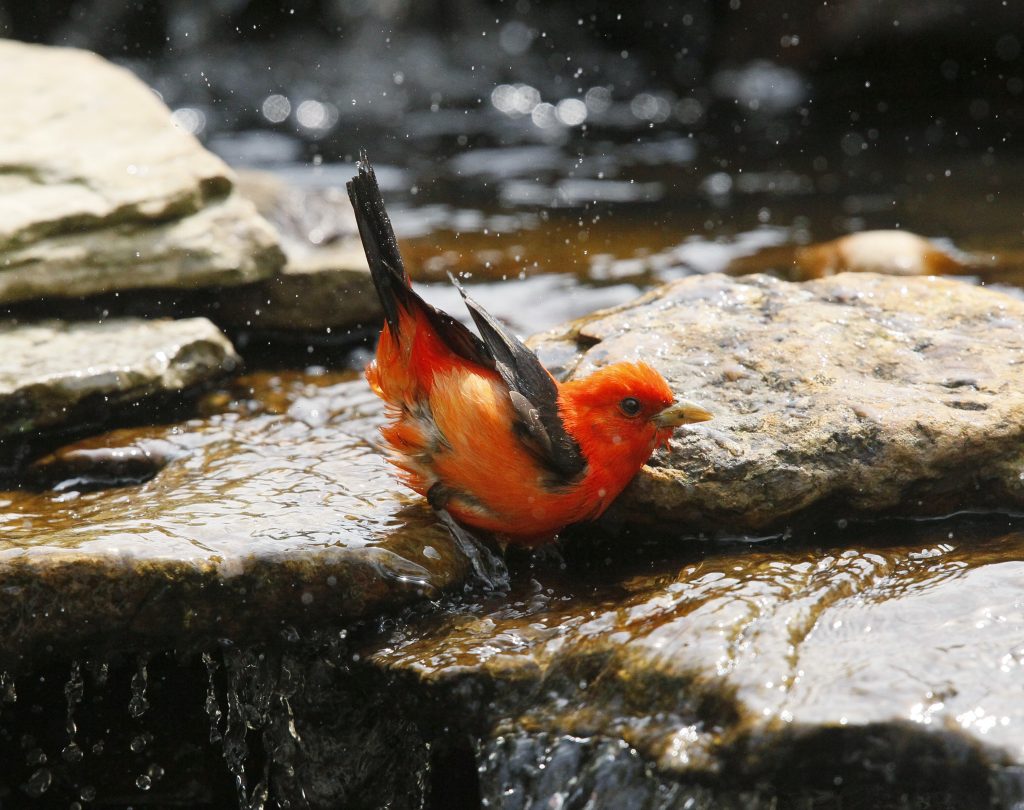
Scarlet Tanager. Photo © Dogwood Ridge.
Are you among the many who enjoy the spring bird migration? Are you watching the warblers on their northern trek?
I remember seeing pictures of warblers and being totally clueless that I could be looking up and enjoy many of these same birds. I never saw them, and it was easy to write them off as something that can be seen somewhere, but nowhere near me.
Well, thankfully, that was many years ago. I’ve since learned that these birds are, indeed, nearby. With a little effort, they can oftentimes be found. Some days there are fall-outs, as birders call them, and dozens of warblers flit around snatching food in the treetops.
These birds follow the insect hatch, and the insect hatch follows the opening of leaves. So, expect to see these birds when you begin to see leaves open.
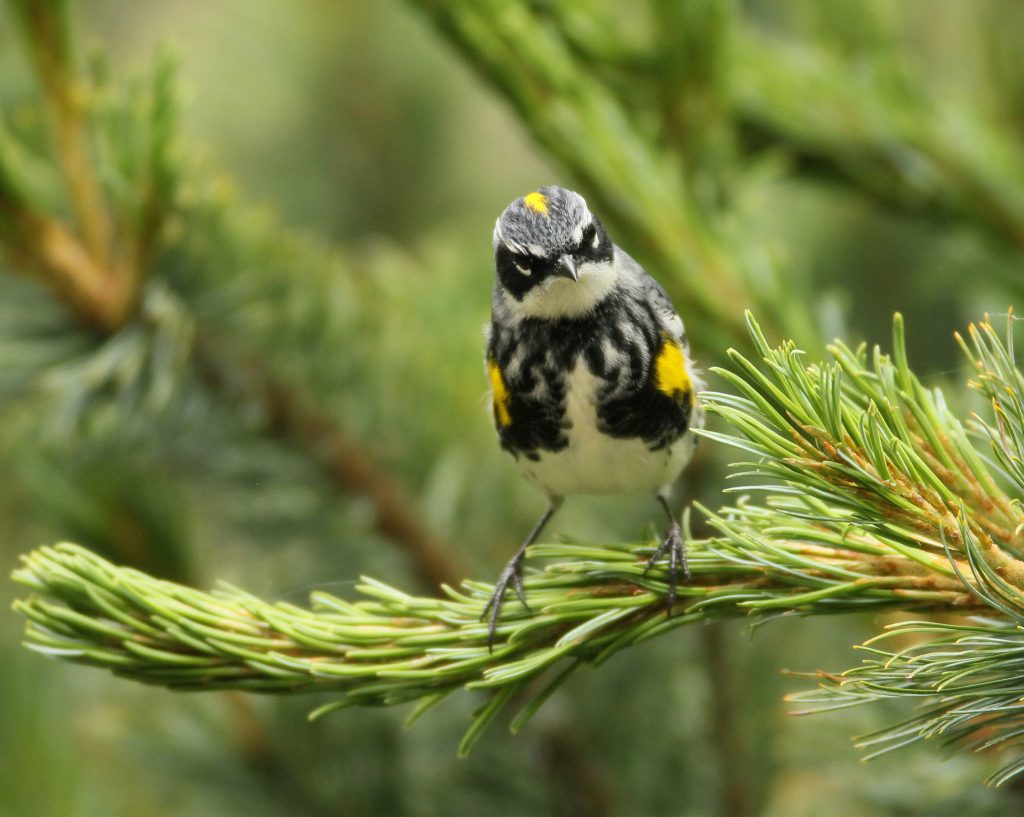
But how do you coax these beautiful birds out of the treetops for a better view? In my case, how can I pull them down for better quality photographs?
You can check your local store, but the last time I looked, they were not selling insect feeders. And the seed feeders—well—they won’t draw down very many warblers. I have seen Pine Warblers occasionally visit a feeder, but that is it.
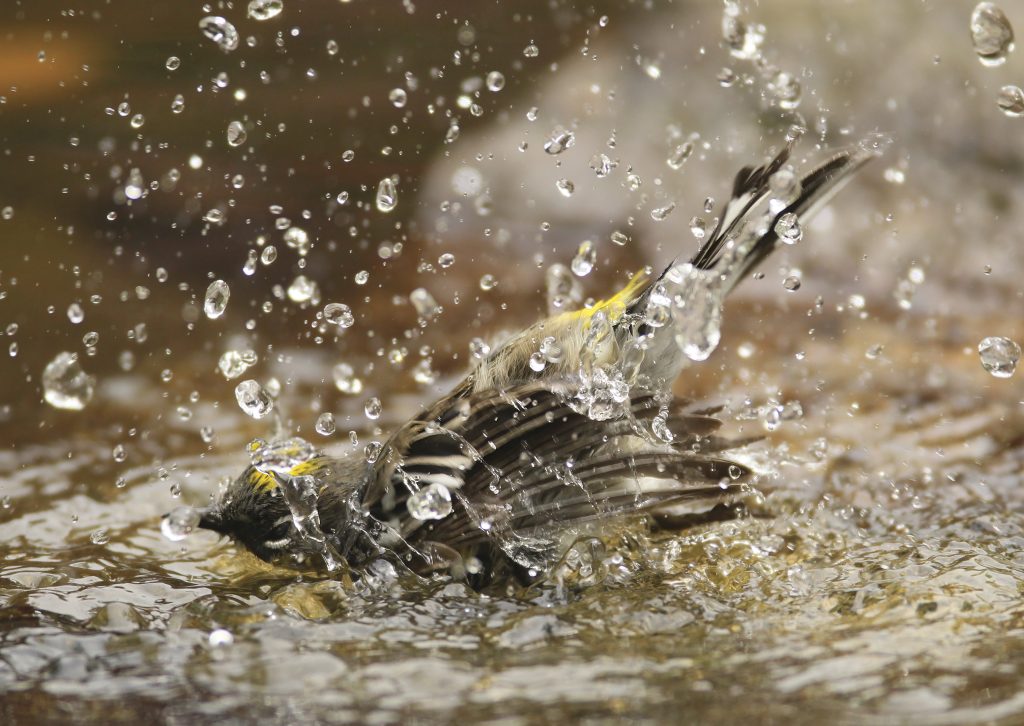
But there is something that will work for a whole lot of species—water. Birds need water. They drink it and they bathe in it. I’ve seen little hummers and large hawks, plus about everything in between, stop for a bath sooner or later.
My favorite is probably the Scarlet Tanager. They are shy, and they live high in trees. But thanks to water, sometimes they drop in for a splash. And when they do, I, for one, hope a camera is in my doorway blind, because I’ll be wishing for photos.
When I was a boy, we had a plastic bird bath on a pedestal. My recollection of it would be if a bird visited, it would be an occasional robin splashing, or a flock of starlings making a mess. Never do I recall seeing “fun” birds.
As I grew older and developed an interest in nature photography, a friend told me that dripping water will attract many more birds than will still water.
Ground-level water that ripples is best. The rippling can be a gentle stream from a recirculating pump, or you can hang a dripper above a bird bath. A dripper can be as simple as a jug of water with a small nail hole in the bottom. The cost is minimal, and children can have fun making and maintaining the water supply.
The water should be near cover. Birds are vulnerable to predators when they bathe, and having cover close by gives them a measure of safety.
If a water garden is going to be your bird bath, make sure the edges have flat rocks or pebbles an inch, more or less, below the water surface. Birds don’t want to go into deep water. Hawks and owls might be an exception to this, but don’t expect to see them. If they show up, that is a bonus.
My daughter-in-law has made a concrete birdbath using a large elephant ear plant leaf as the “stamped-in” pattern. I really like how it turned out for her. We chatted a bit today, and I’m hoping that in some future issue, she can teach us how she made it.
If you have or make a water feature for birds and get photos of the birds, I’d enjoy seeing your results.