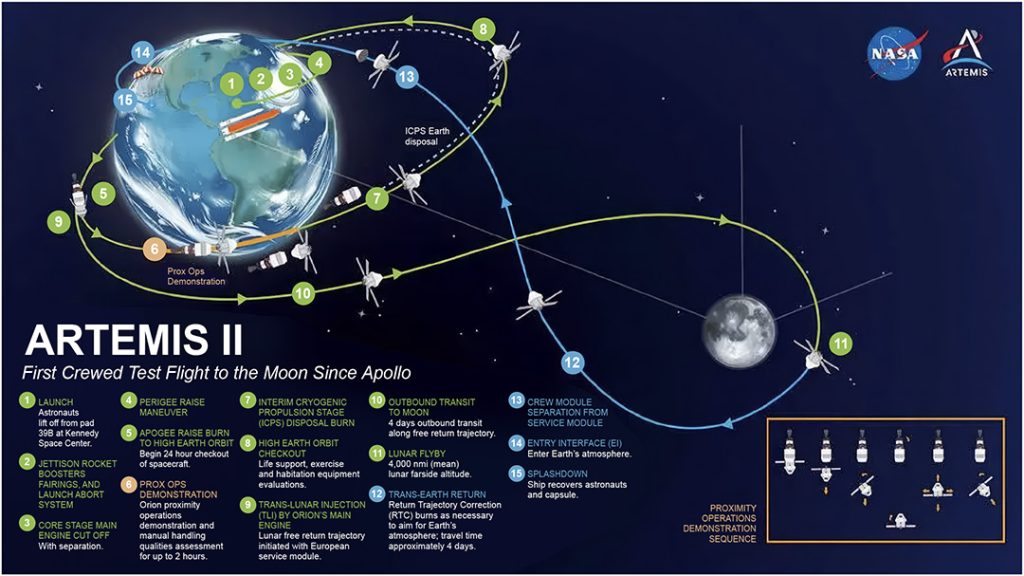
As I write this, the Artemis II crew is on their way back to Earth from having orbited the Moon. This mission has the attention of astronomers around the world. NASA recently released a number of photographs. Without further ado, buckle your seat belts—launch! —Kevin Shank
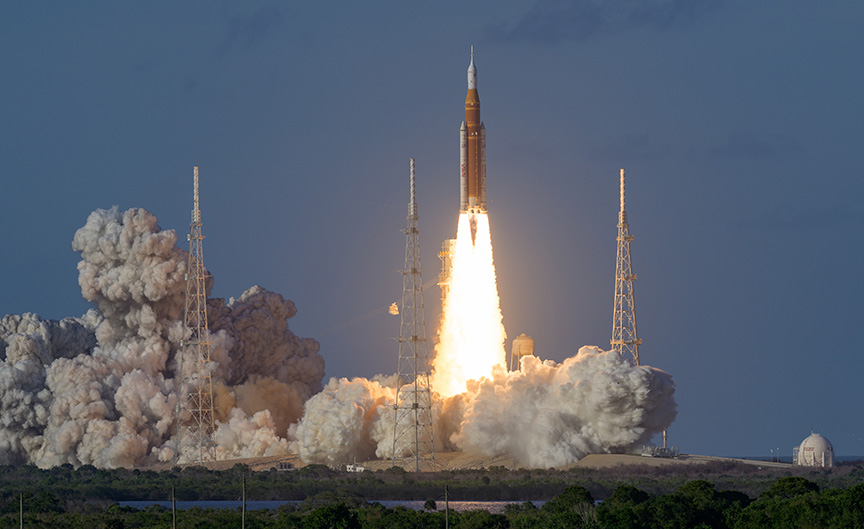
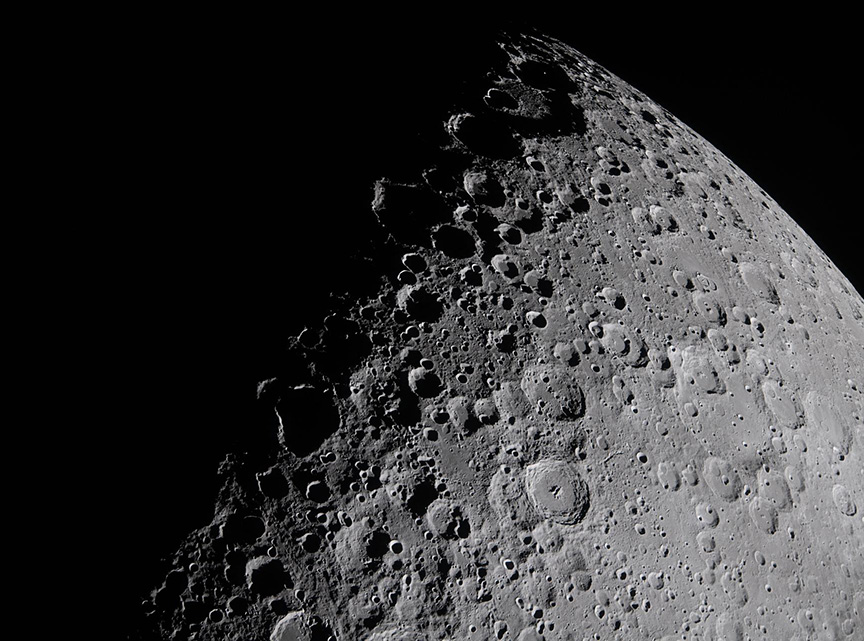
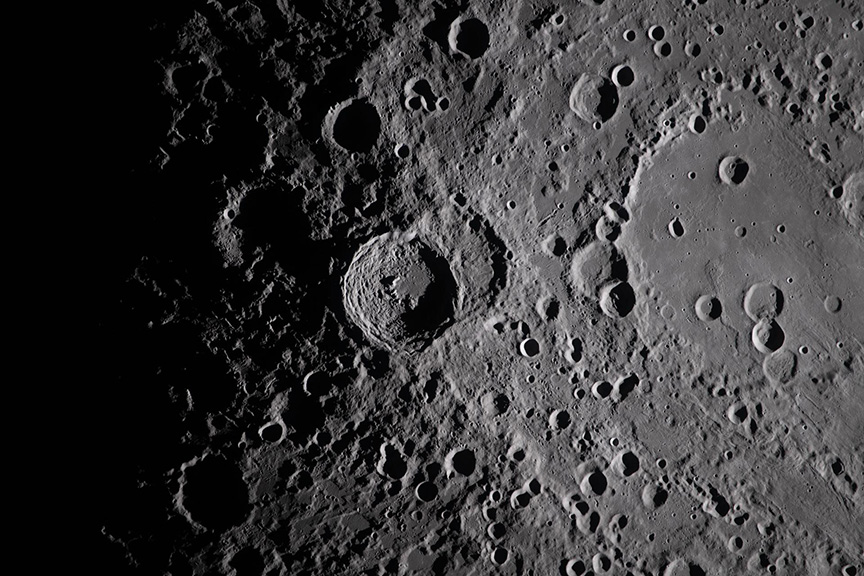
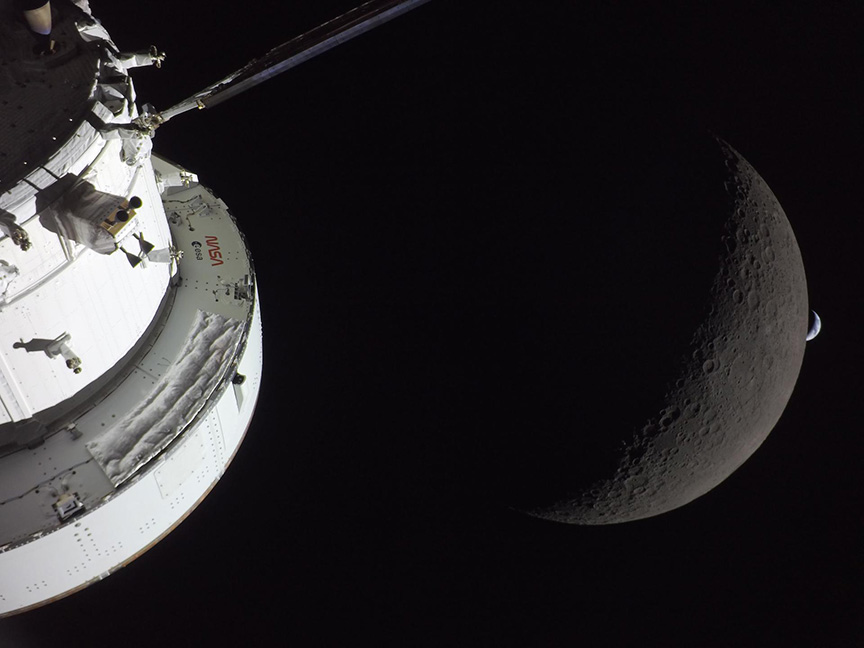
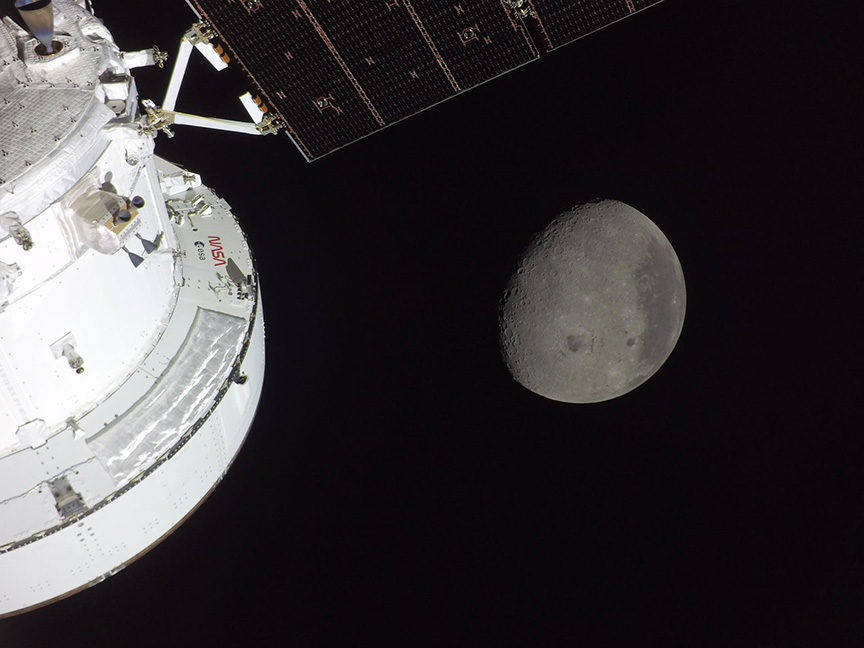
Artemis II launches. Photo from NASA.The Moon coming into view along the terminator – the boundary between lunar day and night – where low-angle sunlight casts long, dramatic shadows across the surface. This grazing light accentuates the Moon’s rugged topography. Photo from NASA.Photo from NASA.The right side of NASA’s Orion spacecraft is seen lit up by the Sun. A waxing crescent Moon is visible behind it. And then, a crescent Earth, tiny compared to the Moon, is about to set below the Moon’s horizon on the right. Photo from NASA.Photo from NASA.
Historical background: On December 24, 1968, the Apollo 8 crew read Genesis 1:1-10 as they orbited the Moon. This was on a live television broadcast. Astronaut Bill Anders read verses 1-4, astronaut Jim Lovell read verses 5-8, and Astronaut Frank Borman read verses 9 and 10.
April 4, 2026: “Apollo 8 had a memorable Christmas Eve [December 24, 1968] reading from Genesis. Do you have a message you’d like to share from space about Easter Sunday?” —A CBS News reporter
“You know, I don’t have anything prepared. I’m glad you brought that up, though. I think these observances are important. And as we are so far from Earth and looking back at, you know, the beauty of creation, I think, for me, one of the really important personal perspectives that I have up here is I can really see Earth as one thing. And, you know, when I read the Bible and I look at all of the amazing things that were done for us who were created, it’s, yeah, you have this amazing place, this spaceship. You guys are talking to us because we’re in a spaceship really far from Earth. But you’re on a spaceship called Earth that was created to give us a place to live in the universe, in the cosmos. Maybe the distance we are from you makes you think what we are doing is special, but we’re the same distance from you. And I’m trying to tell you, just trust me, you are special. In all of this emptiness, this is a whole bunch of nothing, this thing we call the universe, you have this oasis, this beautiful place that we get to exist together. I think as we go into Easter Sunday, thinking about all the cultures all around the world, whether you celebrate it or not, whether you believe in God or not, this is an opportunity for us to remember where we are, who we are, and that we are the same thing, and that we got to get through this together.” —Victor Glover, Pilot, Artemis II
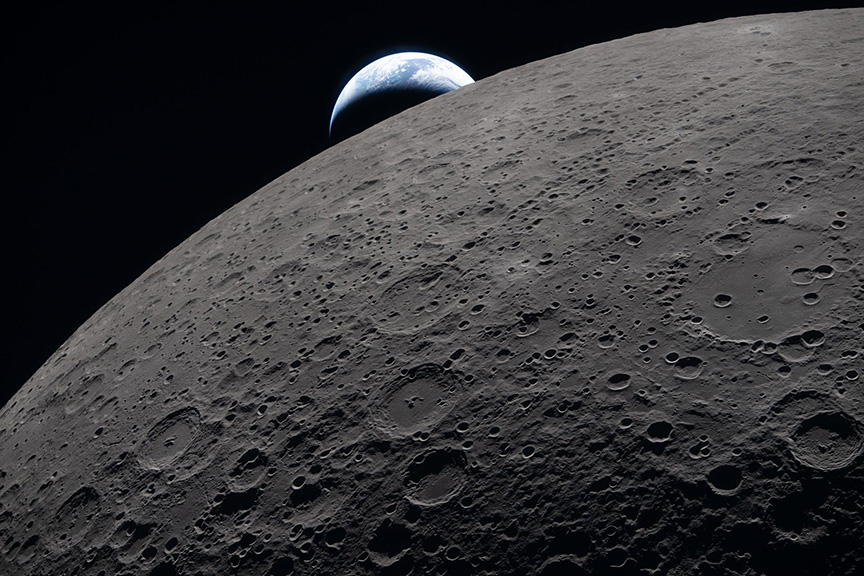
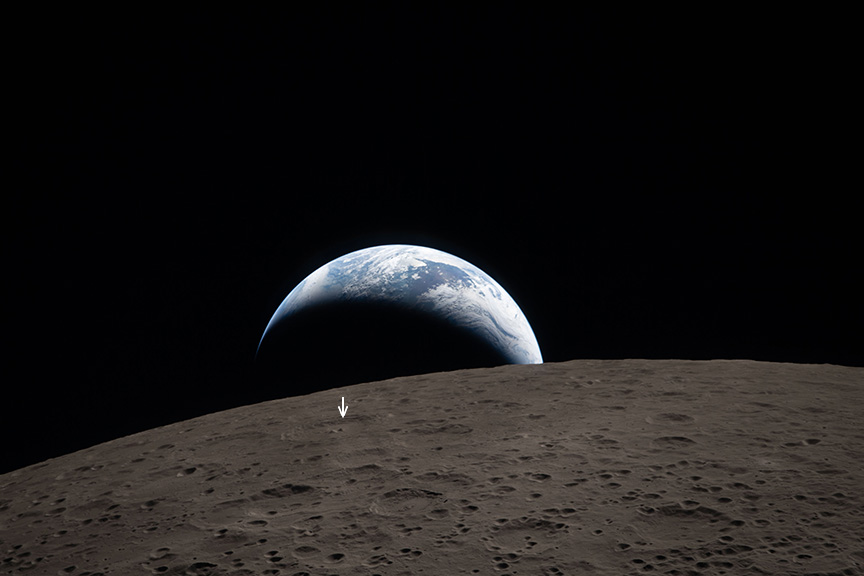
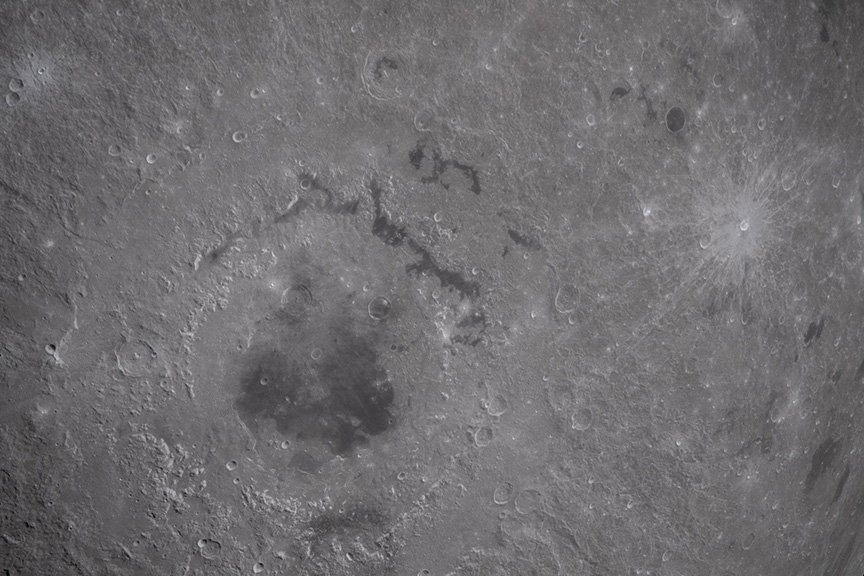
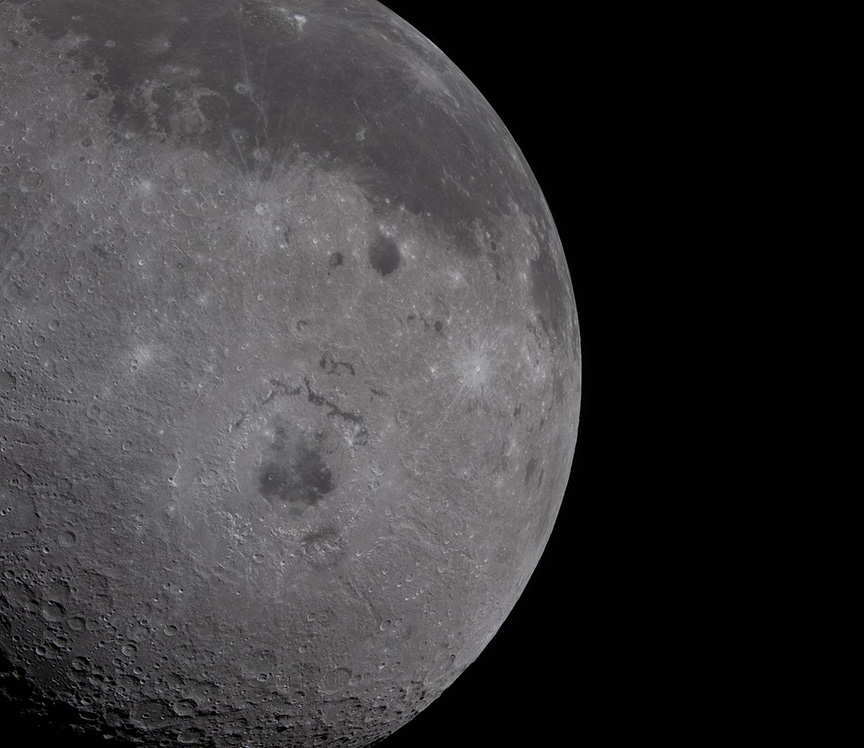
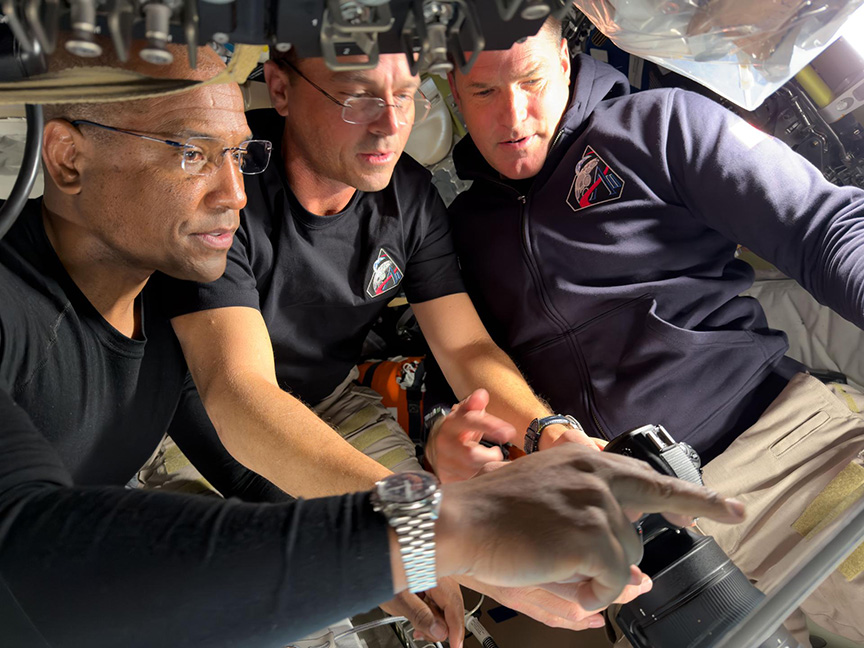
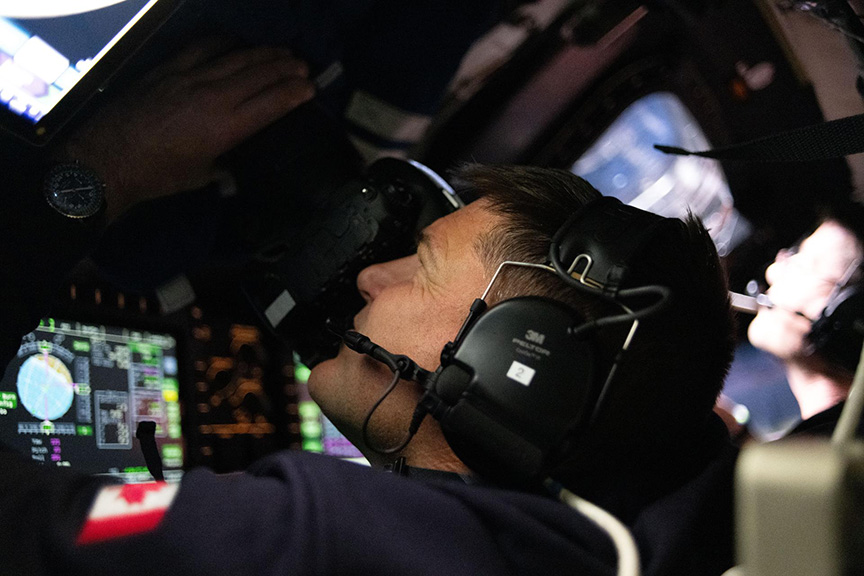
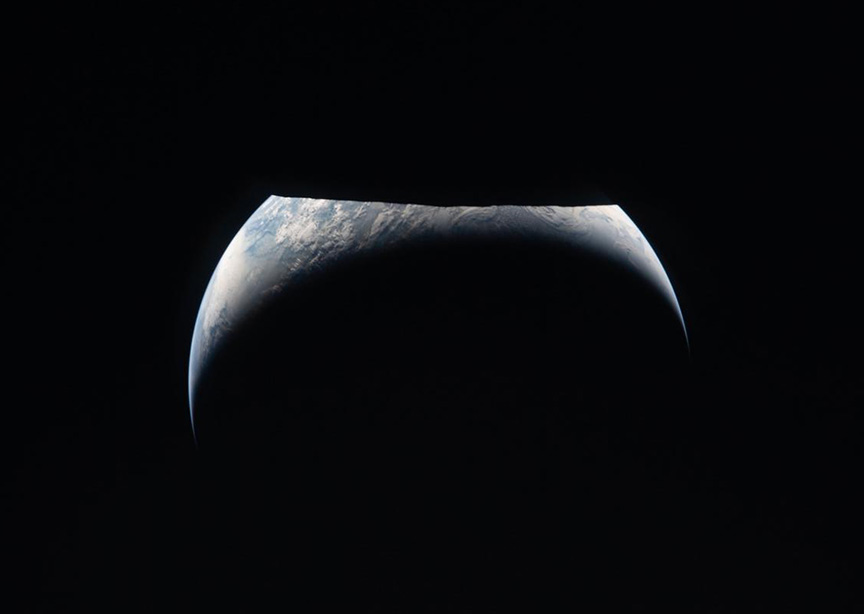
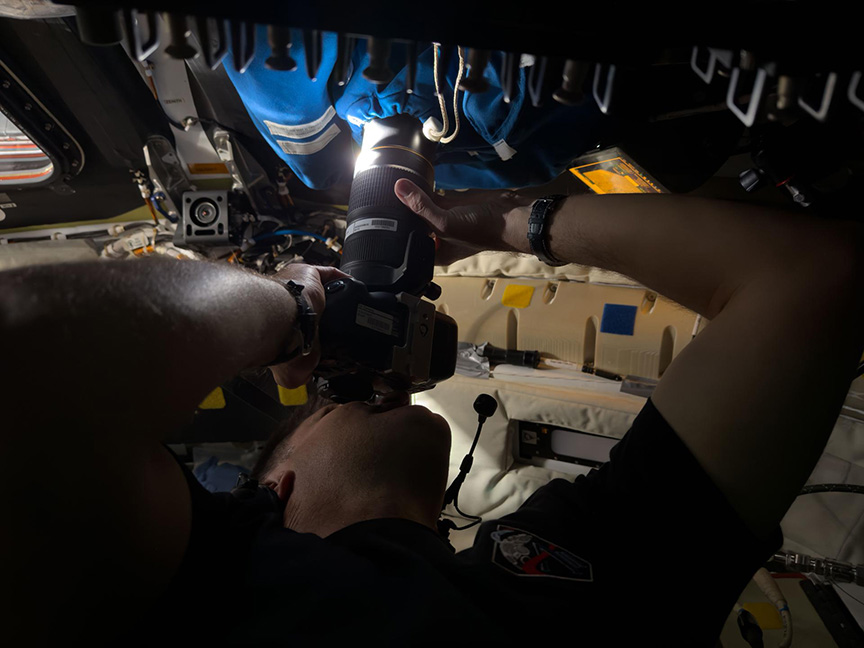
Photo from NASA.Earthset captured through the Orion spacecraft window at 6:41 p.m. EDT, April 6, 2026, during the Artemis II crew’s flyby of the Moon. A muted blue Earth with bright white clouds sets behind the cratered lunar surface. The dark portion of Earth is experiencing nighttime. On Earth’s day side, swirling clouds are visible over the Australia and Oceania region. In the foreground, Ohm crater (arrow) has terraced edges and a flat floor interrupted by central peaks. Central peaks form in complex craters when the lunar surface, liquefied on impact, splashes upwards during the crater’s formation. Photo from NASA.Orientale Basin. Photos from NASA.Artemis II Pilot Victor Glover, Commander Reid Wiseman, and Mission Specialist Jeremy Hansen prepare for their journey around the far side of the Moon by configuring their camera equipment shortly before beginning their lunar flyby observations. Photo from NASA.April 6, 2026 – CSA (Canadian Space Agency) astronaut and Artemis II Mission Specialist Jeremy Hansen is seen taking images through the Orion spacecraft window early in the Artemis II lunar flyby. Hansen and his fellow crewmates spent approximately seven hours taking turns at the Orion windows capturing science data to share with their team back on Earth. Photo from NASA.April 6, 2026 – Earthrise captured through the Orion spacecraft window at 7:22 p.m. ET during the Artemis II crew’s flyby of the Moon’s far side. Earth appears as a delicate crescent, with only its upper edge illuminated. The planet’s soft blue hue and scattered white cloud systems stand out against the blackness of space, while the lower portion fades into night. Taken with a 400mm lens, the image, Earthrise, reveals a striking alignment of Earth and Moon, with the Moon in the top foreground and the Earth below. Along the lunar horizon, rugged terrain is silhouetted against the bright crescent Earth. Both bodies are oriented with their north poles to the left and south poles to the right, offering a unique perspective of our home planet from deep space. Photo from NASA.Astronaut Jeremy Hansen captures an image through the camera shroud covering window 2 of the Orion spacecraft. The camera shroud, essentially a curtain with a hole for the lens to pass through, is used to prevent light from the cabin from reflecting on the windowpanes. Photo from NASA.
April 6, 2026: “As we get close to the nearest point to the Moon and farthest point from Earth, as we continue to unlock the mysteries of the cosmos, I would like to remind you of one of the most important mysteries there on Earth, and that’s love, Christ said, in response to what was the greatest command, that it was to love God with all that you are. And He also, being a great teacher, said the second is equal to it, and that is to love your neighbor as yourself. And so, as we prepare to go out of radio communication we’re still to feel your love from Earth, and to all of you down there down on Earth, and around Earth, we love you from the Moon.” —Victor Glover, Pilot, Artemis II
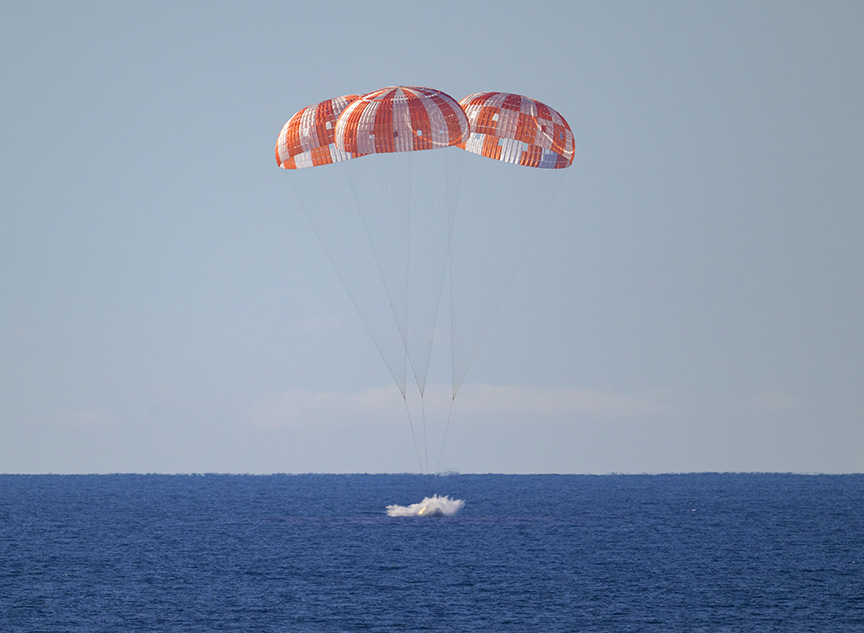
At 8:07 EDT on April 10, 2026, Integrity, the capsule carrying the Artemis II Mission, splashed down successfully in the Pacific Ocean. Photo from NASA.