

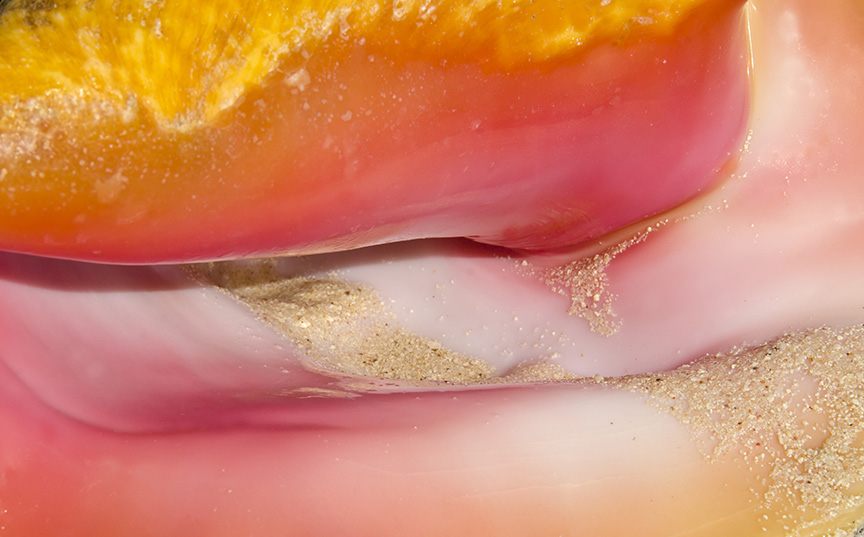
Did you know that the beautiful shell you found on the beach last summer used to be a home? That’s right! Many ocean animals live inside shells, and most of them belong to a group called mollusks. Mollusks make up the largest marine animal group; around 23% of all known ocean species belong to this phylum.
Mollusks are known for:
- A muscular foot they use for moving, burrowing, or attaching to surfaces.
- A visceral mass, where all their major organs are found.
From colorful sea slugs to massive clams, mollusks are some of the most fascinating creatures in the ocean. Let’s meet a few of them!
Blue Dragon Nudibranch: Small but Fierce
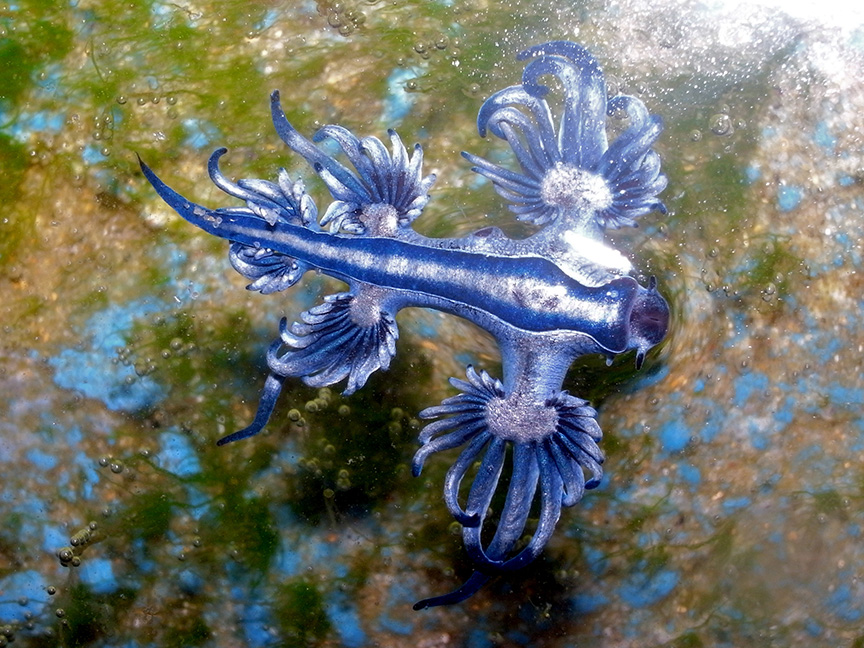
Hi there! I’m a blue dragon nudibranch, a tiny sea slug that’s only 3 centimeters long. I don’t have a shell like many of my mollusk relatives, but I’ve got some amazing features.
I float upside down on the surface of the ocean. Why? It’s part of my camouflage. My blue belly faces up, blending in with the water, and my silver-gray back faces down, matching the sunlight from above.
My favorite food is Portuguese man o’ war, a poisonous, jelly-like creature. I eat their tentacles and store their venom in my own body, making my sting even more powerful than theirs.
Scientists are fascinated by how I safely consume toxic prey. By studying my venom storage and defense strategies, researchers are learning more about how toxins work in nature.
Cone Snail: Beautiful but Deadly
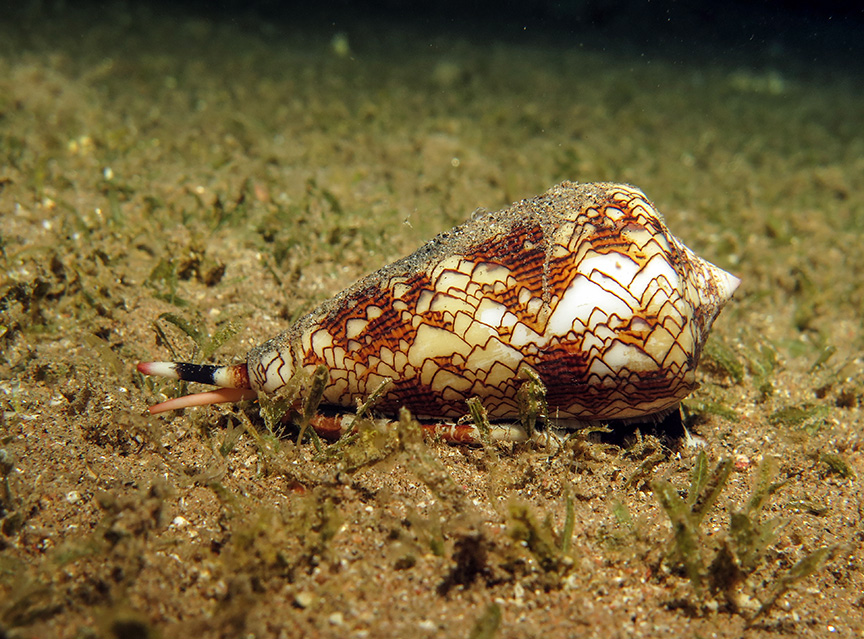
Hi! I’m a cone snail. People often notice me because of my pretty shell, but don’t be fooled! I may look harmless, but I have a secret weapon. I hunt with a small harpoon-like tooth that can inject venom into my prey. It’s fast, powerful, and can even be dangerous to people.
I live in warm, shallow waters of the Pacific and Indian Oceans, where I’m happiest.
Scientists are using my venom to help make new medicines that treat chronic pain. The venom blocks nerve signals in a way that’s very precise. Amazingly, even though I’m deadly, I’m also helping people.
Giant Clam: The Ocean’s Gentle Giant
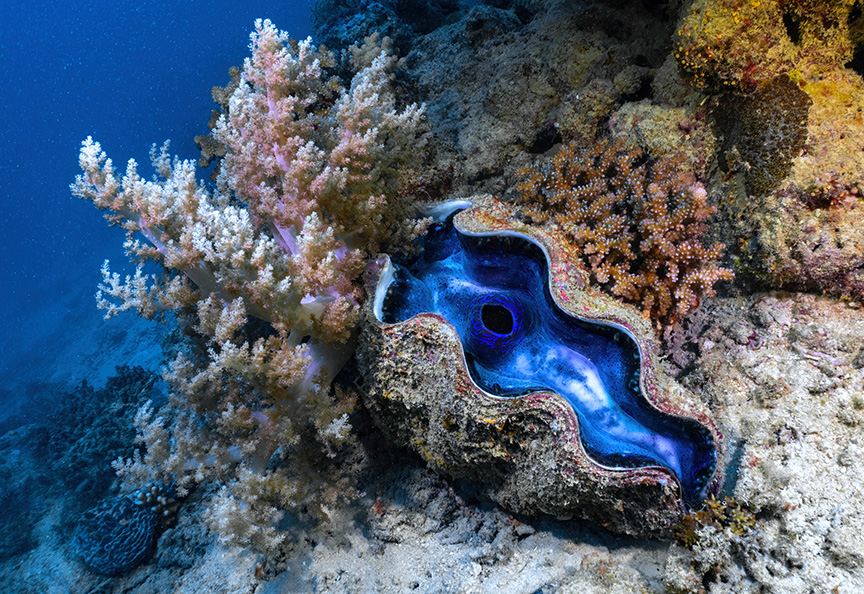
Hello! I’m a giant clam, and yes, I am giant! Some of us can grow over 4 feet (1.2 m) wide and weigh more than 700 pounds (300 kg). I’ve lived in the same spot in the Indo-Pacific Ocean for nearly 100 years. That’s right. I don’t move around like most other animals.
Even though I don’t have eyes, I can still “see” using photoreceptors that help me sense light. This helps me know when food is nearby.
I have a special relationship with algae living in my tissues. The algae performs photosynthesis, giving me energy, while I provide them shelter.