

The pea crop was bountiful. Buckets filled as we picked by the handful. But what was this crawling up my arm? A little green aphid dodged hairs as he sought higher ground.
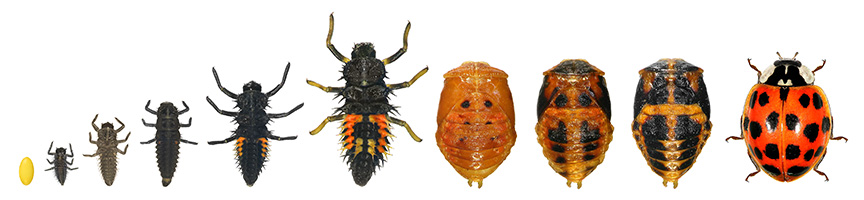
The next picking of peas revealed even more aphids. The warmer it is, the faster they multiply. But we also found little red and black “alligators” scurrying around. They were ladybug larvae. Just take a minute to watch one meet an aphid, and you will see why ladybugs are considered a farmer’s friend.
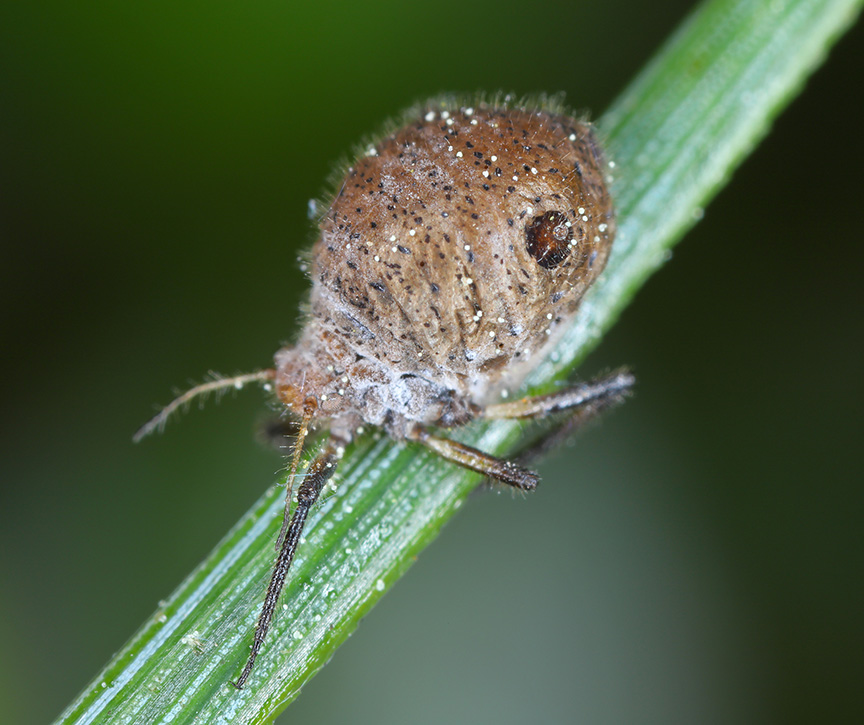
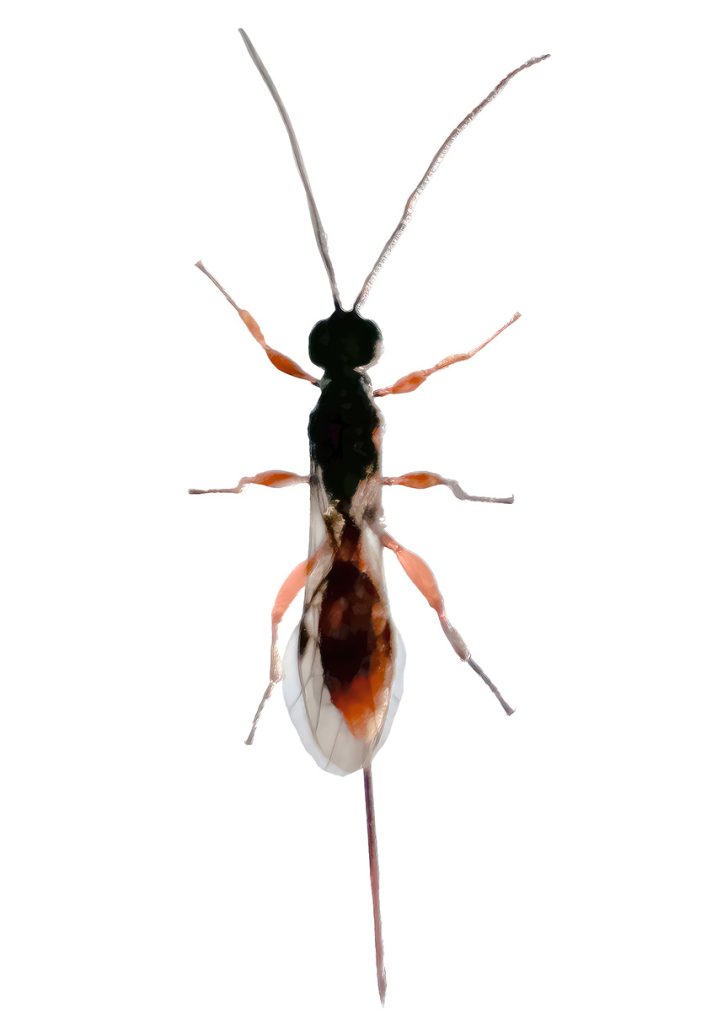
Next I spied a shiny brownish aphid, quite dead-looking with a bloated abdomen. That aphid is now a mummy, having been attacked by a tiny wasp called Aphidius. The wasp laid an egg in the aphid. Once you notice a small round hole in the mummified aphid, its wasp has hatched and flown in search of more aphids into which she can deposit her eggs.
Now we had picked the last peas and were taking out the stakes and strings. Ladybugs scurried everywhere. I hoped they would patrol the rest of the garden for aphids.
As I pulled another stake, something caught my eye. On the stakes were wrinkly-looking ladybug larvae, no longer scurrying about. Here I saw an empty one, and—Oh, look! There is a freshly hatched ladybug. Pale, soft-looking, and without spots, it is a ladybug, nonetheless.
Potato beetles were the next pests we met. The big hard-shelled ones got smashed, or dropped into a jar of liquid. But the garden was neglected for a week, and suddenly there were fat red soft-bodied potato beetles by the hundreds.
Daily my straw broom and I traveled through the potato rows. Swish…swish. If I wait till the warmest part of the day to knock off those clumsy red bugs, most of them perish before they find a potato stem to climb onto again.
A different bug caught my eye, a pale green native stink bug, a smaller cousin of the brown marmorated ones from China that sit outside my door on sunny fall days, hoping to slip inside and hibernate behind my curtains.
I watched as the stink bug moved closer to the unsuspecting potato beetle. Punch! His pointy mouthpart penetrated the soft bug’s body. Slurp!…only a deflated red skin remained.
He’s definitely on my side—I carefully bypassed the stink bug with my broom.
A big black and yellow garden spider had stretched his web between two tomato stakes and now waited patiently for lunch to arrive.
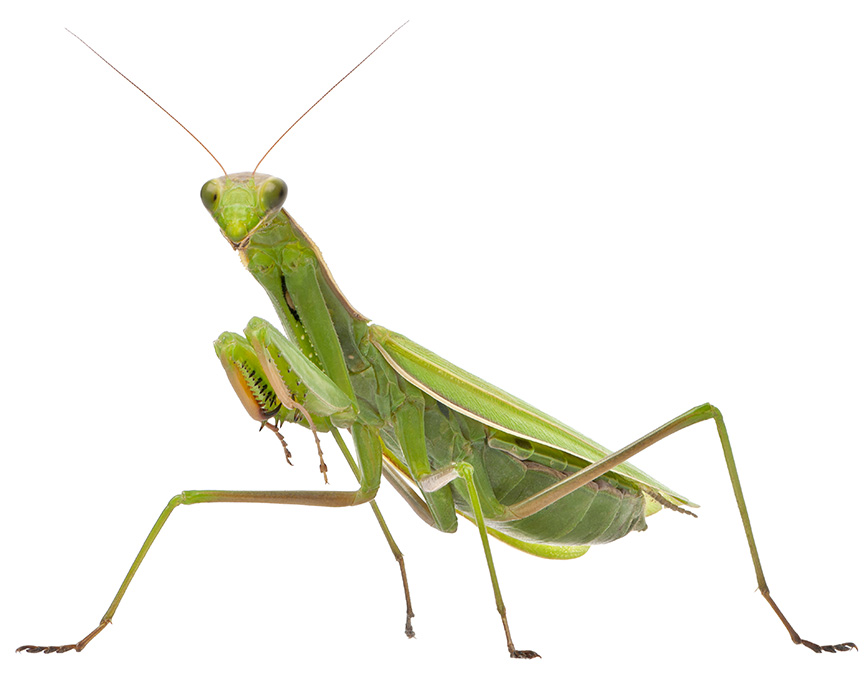
In the tea bed, a praying mantis sat motionless till some hapless insect came too close. On a sunflower, I noticed several wheel bugs prowling about.
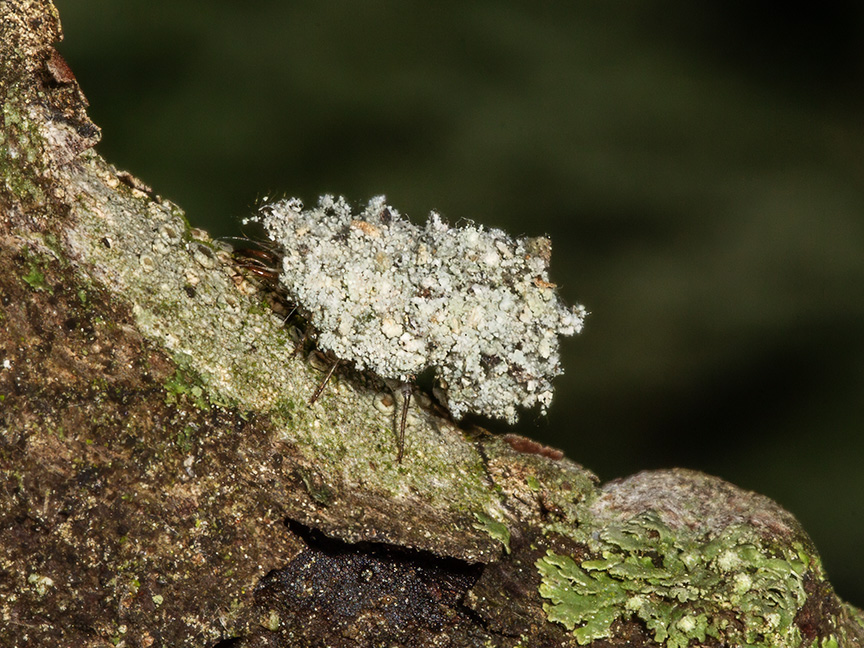
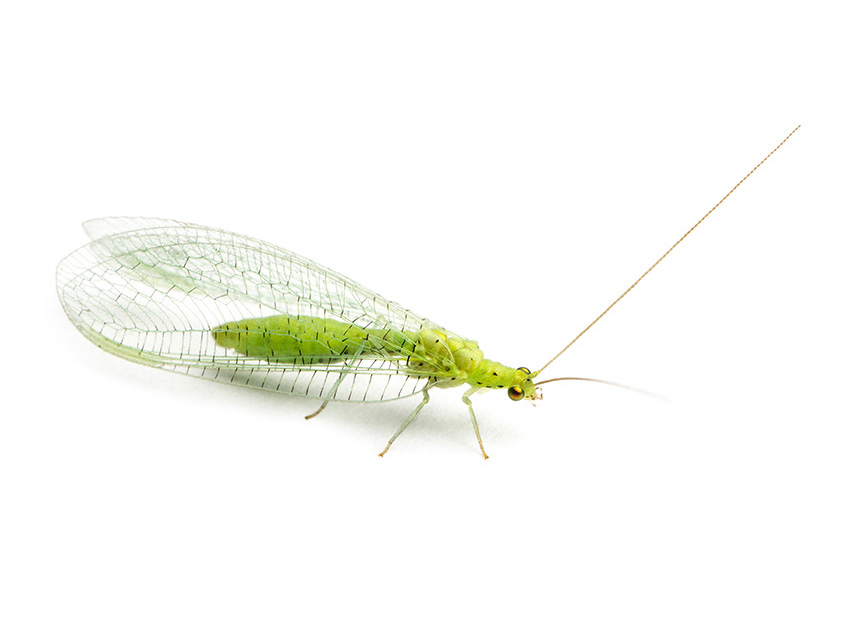
Last of all, a dainty pale green lacewing alighted on my hand. Fascinating as the fairy-like fly is, its eggs are even more so. On an asparagus stem, or a nice ripe tomato, you may find half a dozen tiny green eggs held aloft on slender, flexible stems. Even their larvae are unique. They camouflage themselves with lichens, dirt, and even aphid skins.
So many helpful little creatures live in my garden.