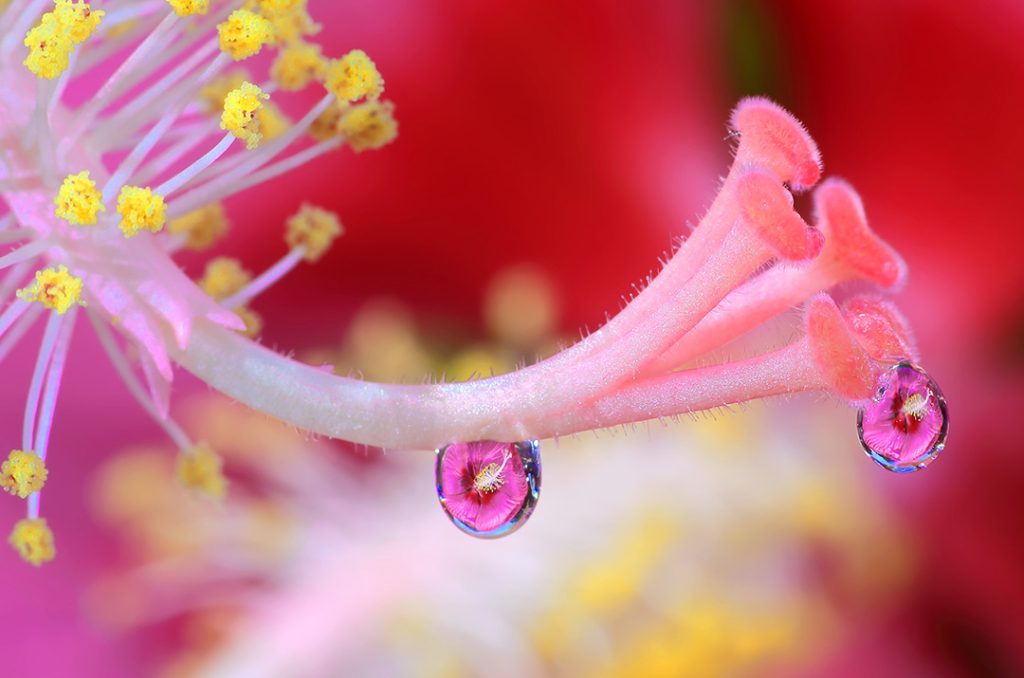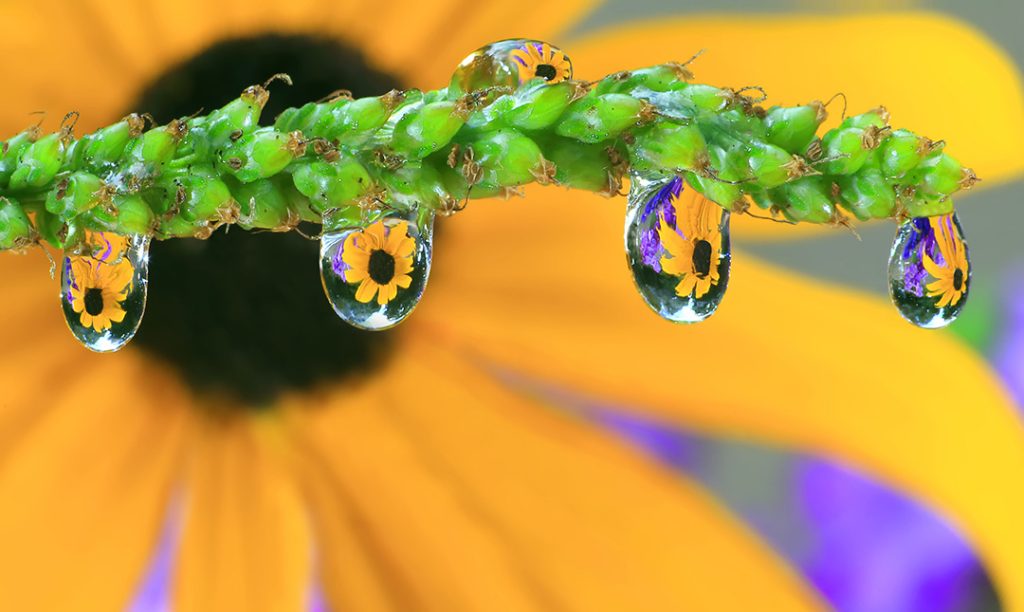
Looking out my window this morning, I observed water drops falling from my greenhouse roof. As I walked under a tree checking fence to see why there was a sheep in my yard, a gentle breeze shook some water droplets onto my head.
You may already know that water is made up of two different elements, hydrogen and oxygen. The ratio of hydrogen to oxygen is 2:1. In other words, two hydrogen atoms attracted to one oxygen atom make a molecule of water. Have you ever asked your mother for a glass of H2O?
In the April experiment, we observed the capillarity of water traveling up a napkin. Cohesion and adhesion are two more characteristics of water we want to explore today.
What makes water molecules clump together forming droplets? Water molecules are attracted to each other due to hydrogen bonding. Water is slightly polar, and hydrogen from one molecule wants to keep bonding with oxygen in another molecule. So they keep clinging together making water drops. Cohesion is the attraction of the same kind of molecules to each other.
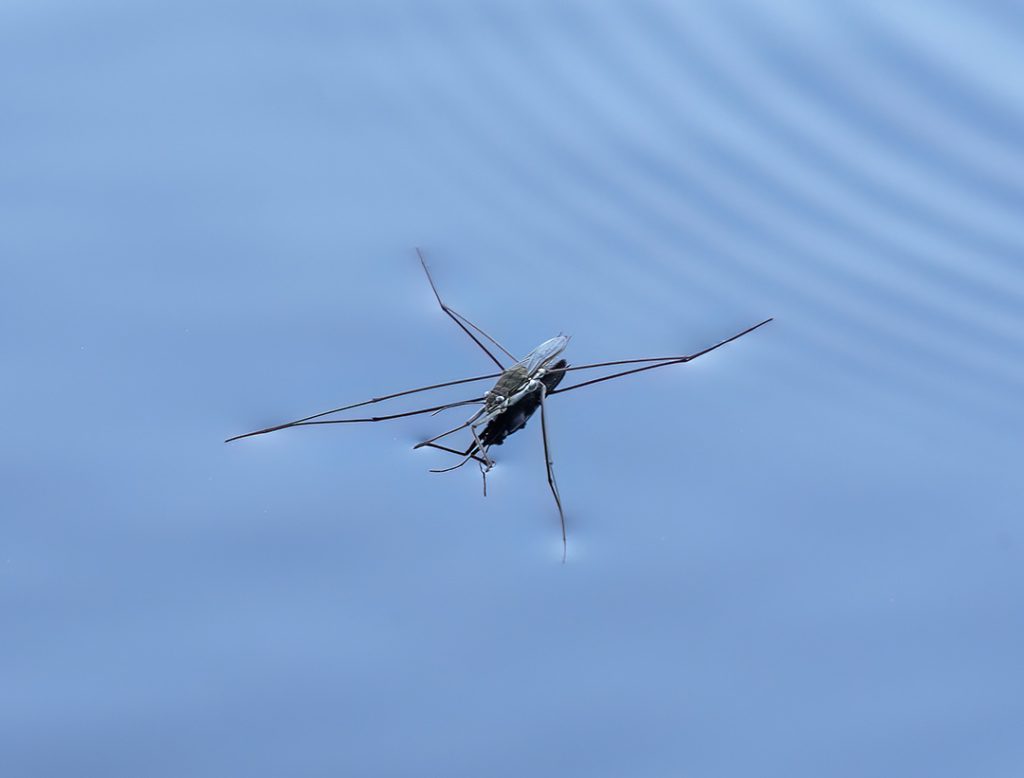
Cohesion creates surface tension on ponds, rivers, lakes, and even single droplets of water. Have you noticed water striders taking advantage of hydrogen bonding on the surface of water? With their long legs covered with water-resistant hairs, they are able to skitter across the water.
Adhesion is when different kinds of molecules are attracted to each other, such as water drops holding onto a leaf until a breeze comes along, or when water drops cling to my greenhouse roof for a bit before falling to the ground.
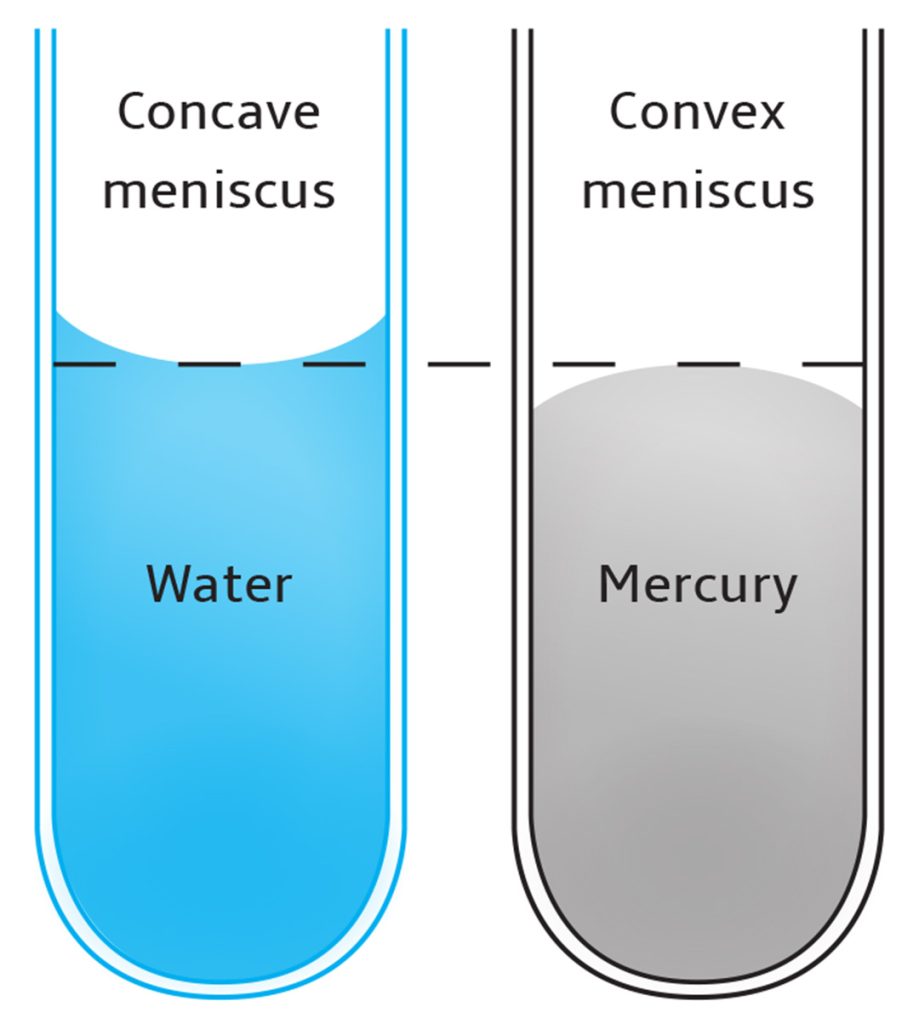
You may have observed that it’s a little hard to read a rain gauge. That’s because the water on the sides of the gauge likes to keep clinging to the glass, due to adhesion. The water in the middle dips down a bit. This concave curve is called a concave meniscus. Check that out for yourself the next time it rains.
Let’s experiment using a penny, some water in a cup, a dropper, a paper clip, and tweezers.
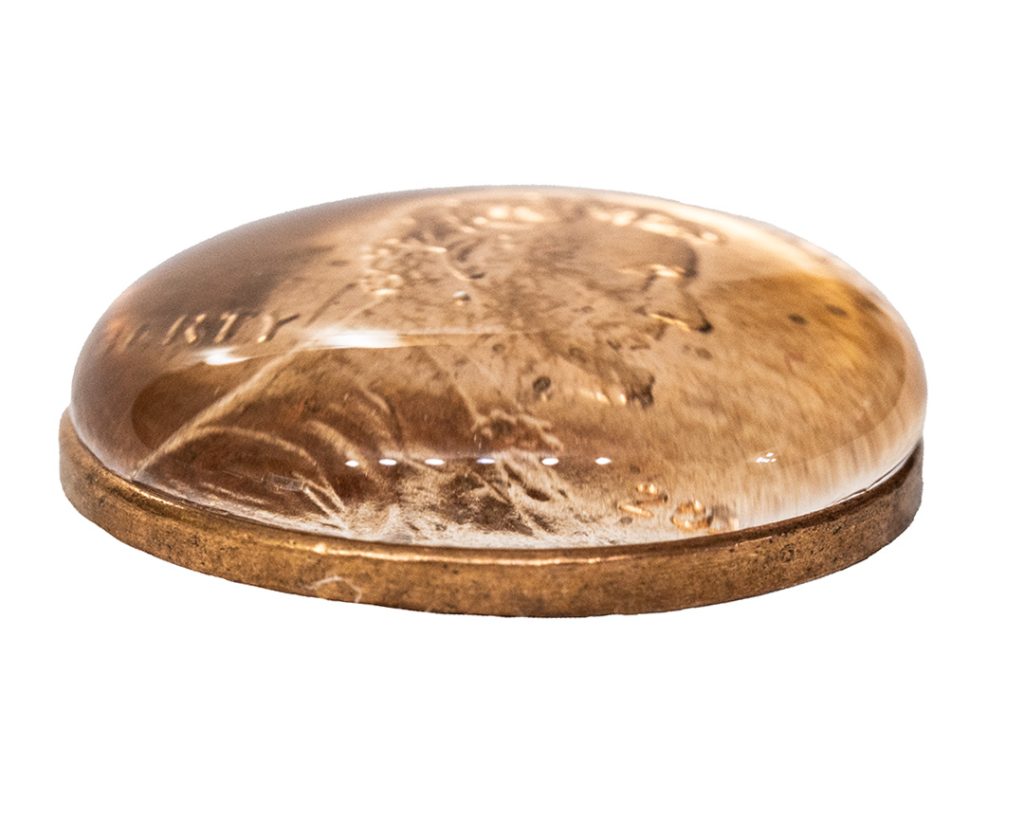
Place the penny on your kitchen table. Fill the dropper with water and start dropping water onto the penny. Do it slowly enough that you can count how many drops it takes before the water slides off the penny. You might want to try this a few times. Can you get twenty-five drops on it?
Water drops clumping together on the penny illustrates both cohesion and adhesion. Cohesion held the drops together while adhesion held them onto the penny.
Try dropping alcohol onto the penny. Can you still count twenty-five drops?
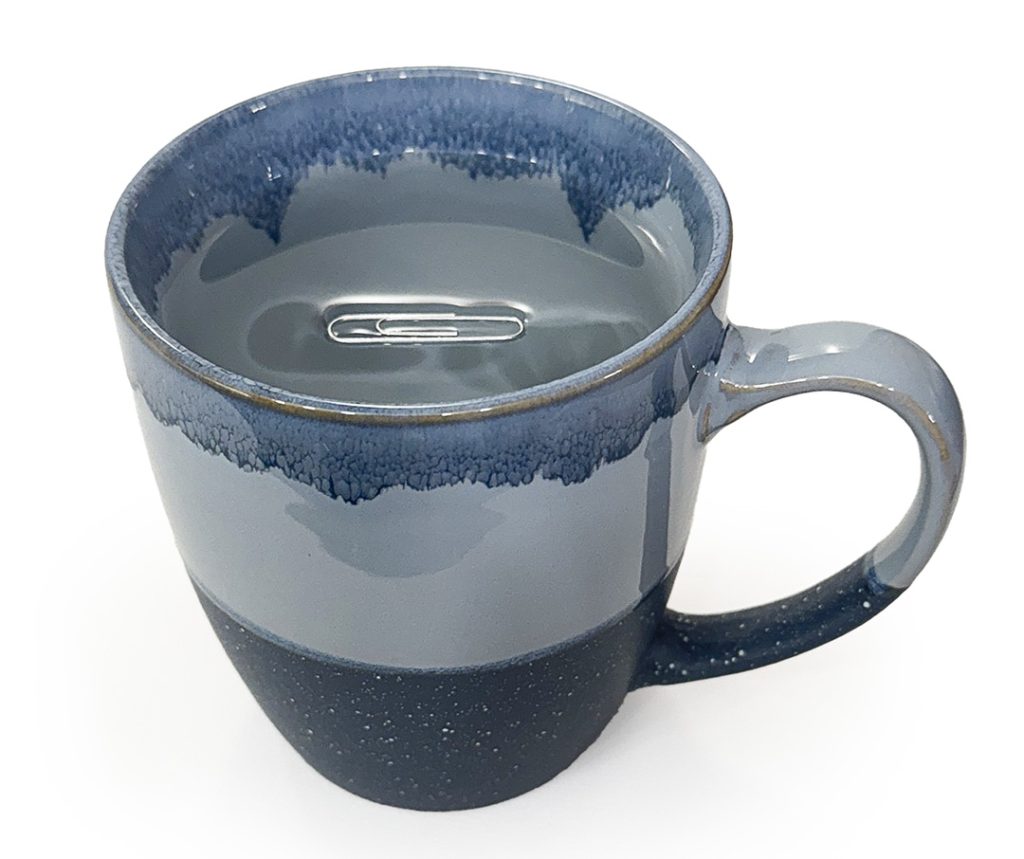
Now, using the tweezers, carefully place a paper clip onto the water in your glass and watch it float due to water’s surface tension.
Next, drip one drop of liquid soap into the water. What happened? Why?
The paper clip sank because the soap acts as a surfactant, breaking the cohesion of the molecules that cause surface tension on the water. It did this by soap molecules wedging between the water molecules. No longer could the water support the weight.
I’m really glad God made water droplets to form clouds and fall as raindrops when they get too heavy to stay in the cloud. I don’t think I could handle being out in the rain if it fell from the sky like a waterfall.