What is it that makes a well-executed fall photo so impactful? In this article, I would like to explore the anatomy of fall photos and discover what makes them tick.
Fall is very special to me, because it was a fall photo that launched my photography career. I remember that blue-sky October day as though it were yesterday. For a couple of years, I had messed around with my wife’s point-and-shoot camera, photographing butterflies and fish on various outdoor adventures. Then one autumn afternoon, as I walked up my driveway, I noticed an eye-popping red maple, backlit by the afternoon sun. I returned to the house, grabbed Uldene’s little camera, and held it against the large tree trunk, capturing a shot looking straight up the tree into the fiery canopy. I was so taken with the results that I decided to send it to Birds and Blooms.
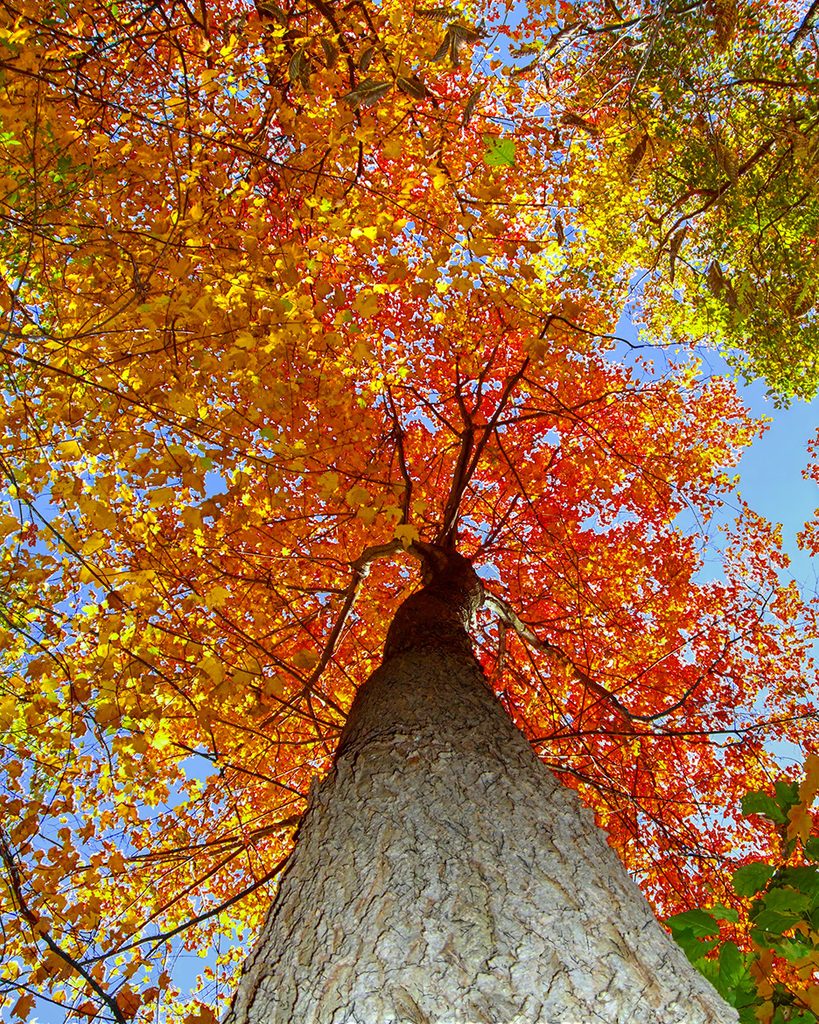
At that time, I didn’t realize that pictures from point-and-shoot cameras rarely got published due to lack of resolution and color fringing (which are both apparent in my picture, if you inspect it magnified). But, against the odds, they published it on the back cover of their November edition. Why?
First, I believe they chose it because of the beautiful complementary colors—orange and blue.
Secondly, it has a striking stained-glass effect. As a matter of fact, they even titled it “Colored leaves are the stained-glass windows in the cathedral of the world.” You see, leaves are semitransparent, and when sunlight shines through them, each colorful leaf is transformed into a glowing lantern.
Thirdly, the picture exhibits a classic example of a leading line, as the tree trunk acts as a wide road leading the eyes through the frame and into the glorious canopy above. When I snapped the picture, I knew nothing of color theory or leading lines, but I believe the Lord gave me the wherewithal to capture it because He knew that something amazing would come from it—a life filled with photo adventures which would teach me so much about the Creator.
There is also another great lesson in this photo—that mood, composition, and lighting are more important than, and can overpower lack of, sharpness and other technical shortcomings.
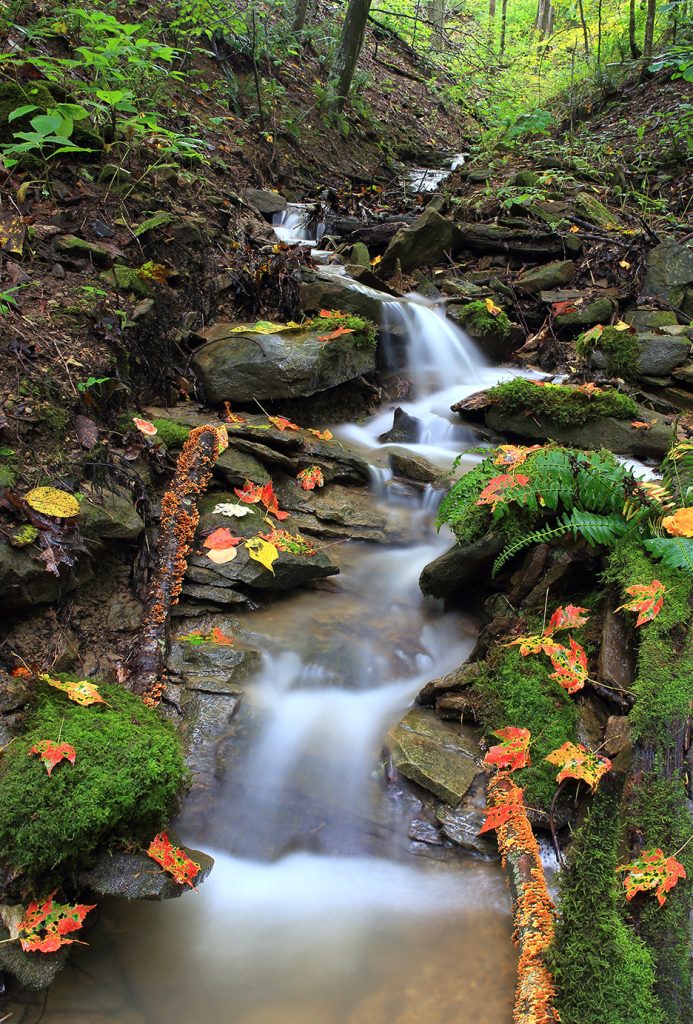
Now let’s study the fall stream photo. This is another previously published picture and one which I chose for a large print in my living room. What is it that makes an autumn stream so striking and satisfying?
The exciting mix and flow of color theory, texture contrast, and photographic technique make this photo. The warm orange-red leaves and cool green moss make the leaves really pop. And orange-red is the split complementary of blue-green. (If you want to learn more about color harmonies, a color wheel can be useful.)
There is also a wonderful textural element to the stream photo. The silky-smooth water was achieved by using a slow shutter speed. The moss looks soft and dense, and the leaves on top of it are crisp, geometric, and randomly scattered, breaking up the uniformity of the moss.
The stream itself acts as a leading line, as well as the lichen-covered branches. And I’ll let you in on a little secret. I put together most of the elements of this stream shot. The brook is on my property, and I brought in colorful leaves from another area and placed them selectively along the stream. I also placed the lichen branches and most of the moss.
Also, a circular polarizer filter will remove glare from your stream and waterfall shots. The CPL also produces incredibly deep, rich saturation of colors.
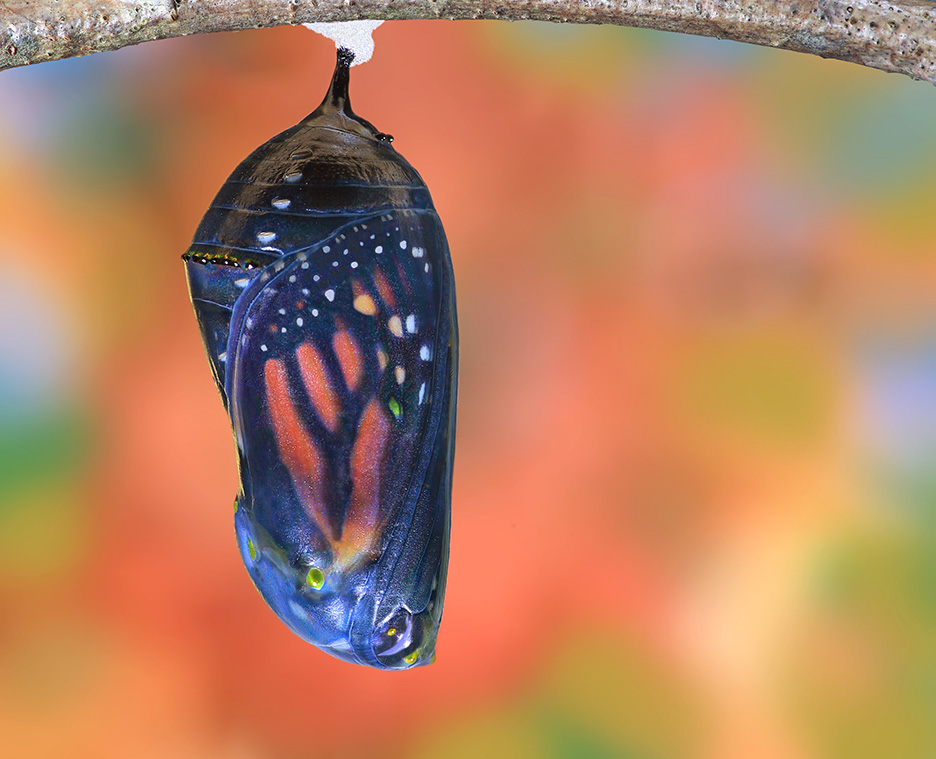
Lastly, fall color can look fantastic as blurred-out warmth in our photo backgrounds. See how wonderful the autumn warmth looks against the monarch chrysalis? And again, the splashes of blue and green in the composition complement the orange, making the photo exciting.
Bonus Practice
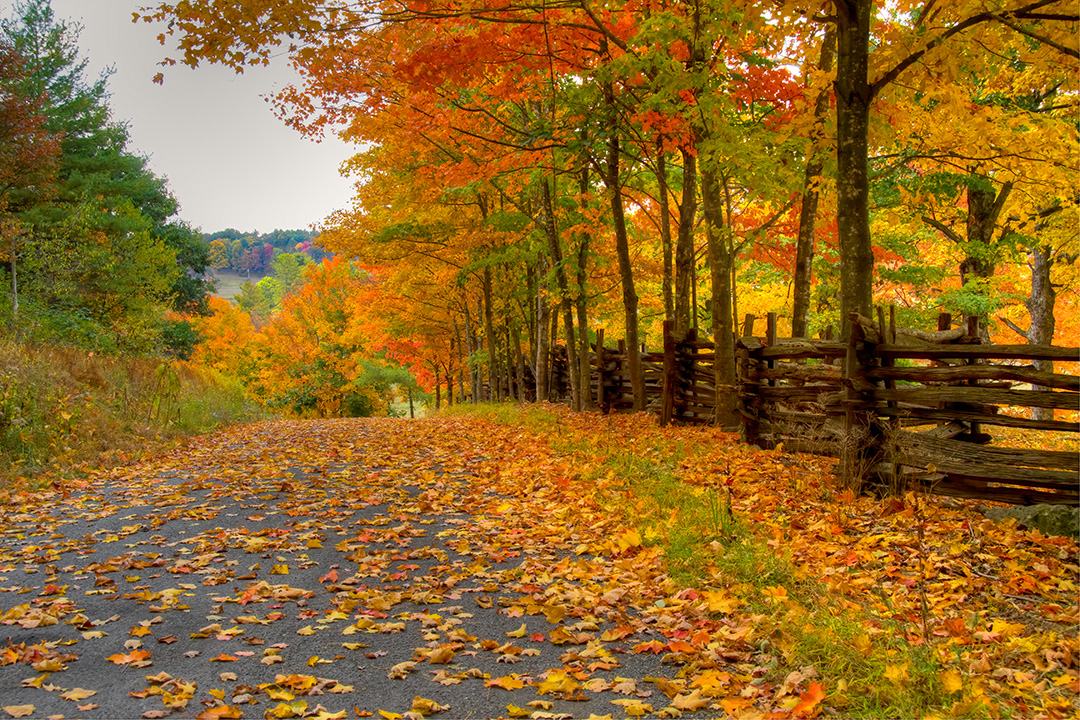
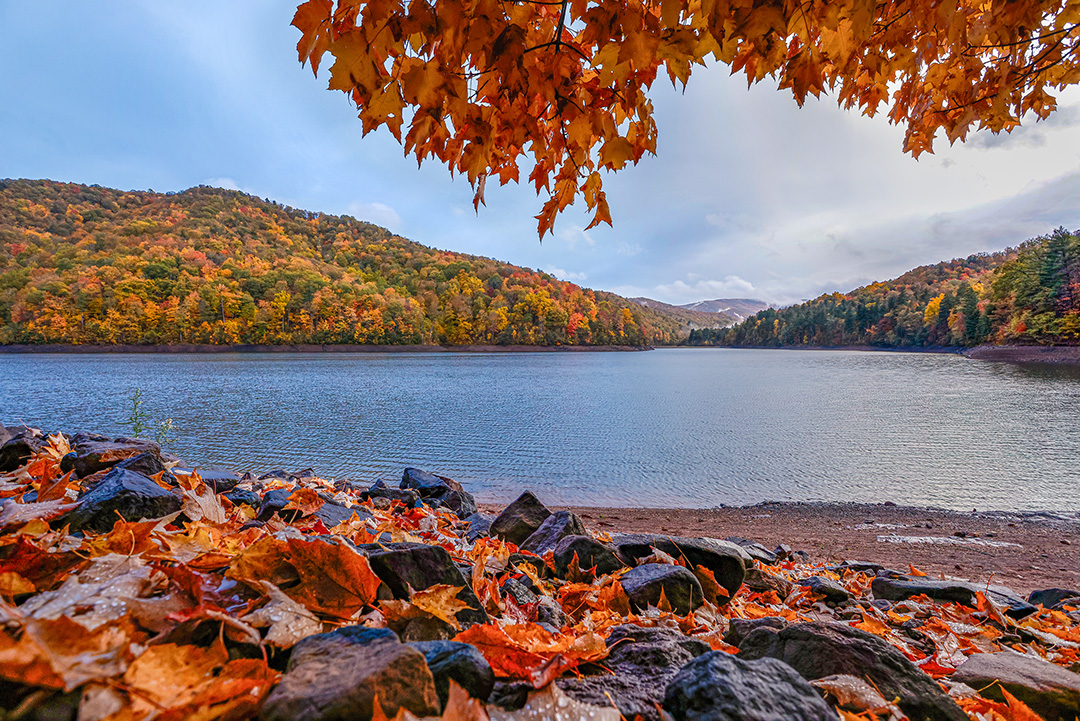
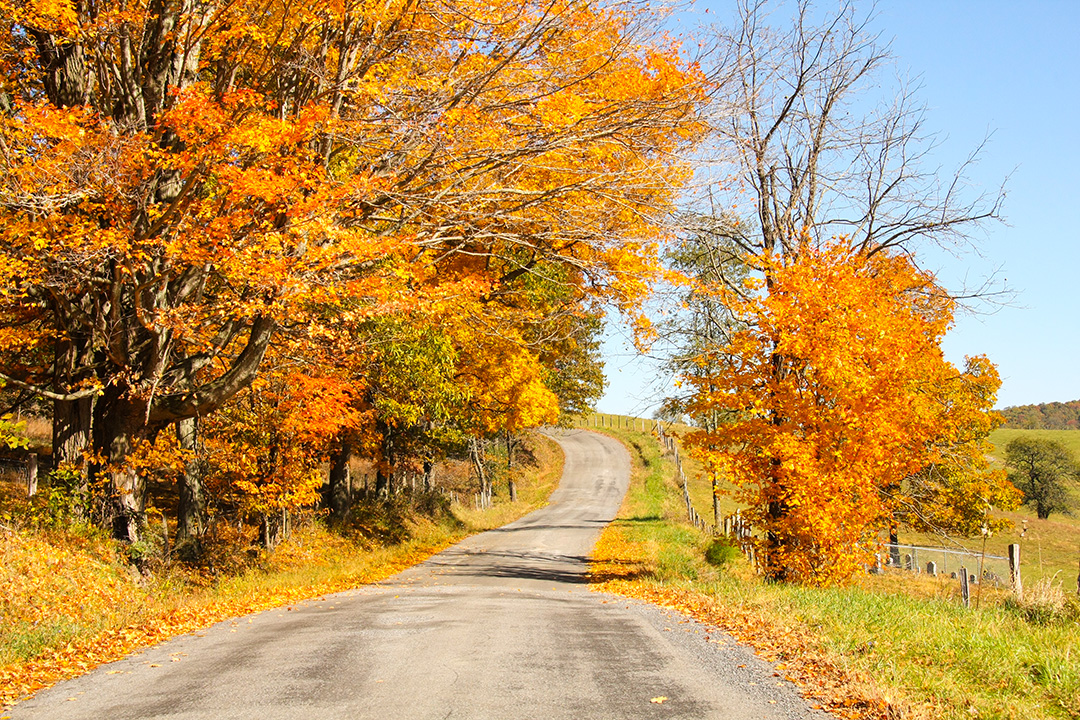
Examine these photos. What techniques do they use?