

Birding With Friends First Place Winner
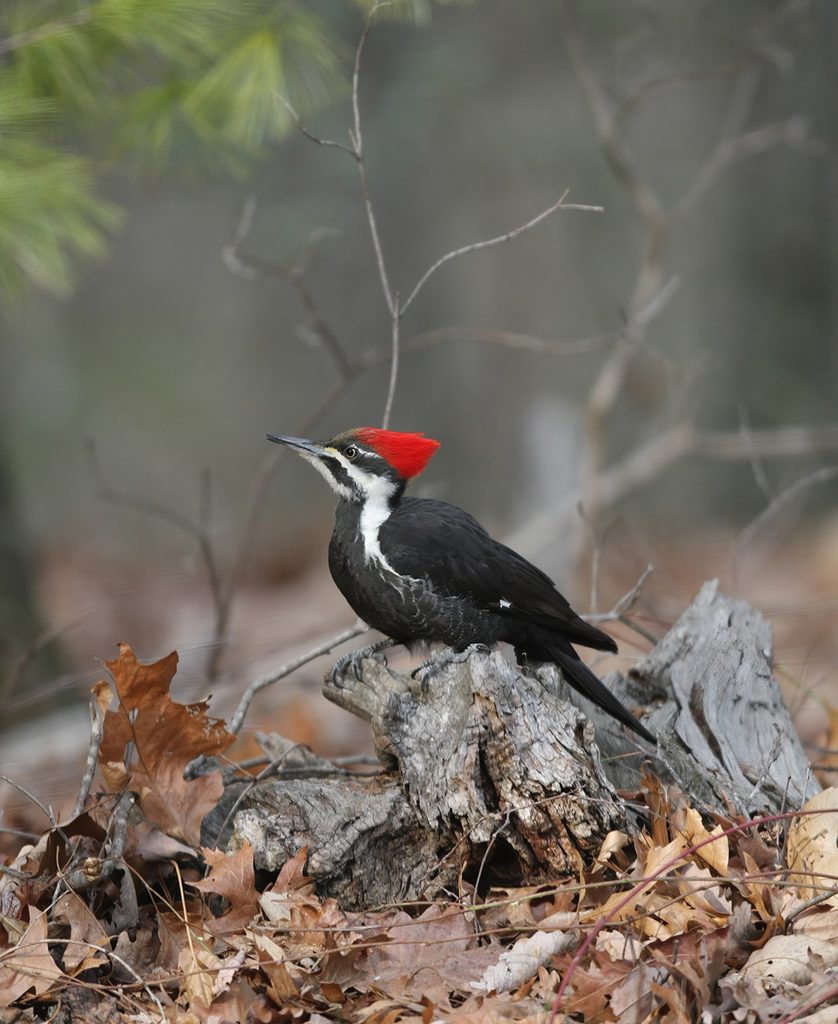
I woke up after dawn on Saturday morning, June 20, the day my brother and I had decided to see how many bird species we could see or hear. As I got up and heard the birds singing, I decided the edge of the 200-foot circle would be our upstairs bedroom window. Since we live on the edge of a small valley, I knew we could probably see some birds down there.
I sat down at my desk and started writing as fast as I could hear them, starting with American Robin, Carolina Wren, House Wren, and all the other common yard and feeder birds. Since we have woods right next to the house, I was soon able to get American Redstart and Acadian Flycatcher, among others. I glanced out the window just in time to see the first and only Common Grackle for the day.
I stepped out onto the porch on the other side of the house and figured out where the other boundary was going to be. I saw a Tree Swallow perched on the lines by the road, and heard Dickcissels and Eastern Meadowlarks start their chorus. Then I heard a—was that a Yellow-breasted Chat? It sang only several notes, so I wasn’t sure what it was, though it sounded almost like a chat. I put it on my list with a question mark. Hopefully I could get it confirmed later. I turned around just in time to see a Great Blue Heron flapping slowly over the trees in the distance. Great! I thought. We probably won’t see that one again. Sure enough, we didn’t.
After breakfast I was working at my desk when my brother came in and asked me if I had seen the Red-tailed Hawk being chased by Blue Jays. I hadn’t, and he was outside the circle when he saw them, so it didn’t count. I went over to the window and looked in that direction and saw the red-tail, now being chased by blackbirds.
I realized I hadn’t seen cowbirds or starlings yet, so I looked down at the cows in the pasture and found both those bird species in short order. I also saw goldfinches flying to a thistle patch.
Afterward, while working close to the woods, I finally heard what I was listening for, Red-eyed Vireo and Yellow-throated Vireo. Then I also heard several notes of what I decided was a Scarlet Tanager’s song.
We had exactly fifty species at lunchtime, but I knew it would get much harder to find many more.
After lunch, I took a walk through the woods, trying to see if some of the nesters were in their usual spots. As soon as I walked into our small patch of woods, a Brown Thrasher flew, right where I knew they were. But they didn’t often fly out of the woods, which it would have to do to be seen from our house, about 100 yards/meters away.
As I walked over to the south woods, a Great Crested Flycatcher flew out onto a fence post. I looked toward the house and pointed at the bird, hoping my brother was watching me with binoculars from the upstairs window.
Then I went over to the tree stand where we had seen a Blue-gray Gnatcatcher pair building a nest. Sure enough, I heard them. But it would be next to impossible to see, much less hear them from the house, about 550 yards/meters away.
I walked along the pasture edge, hoping to find a Blue Grosbeak. Not finding it, I turned into the north woods, which comes up to the house. Almost as soon as I entered the woods, I saw a Red-bellied Woodpecker. Just like that, it flew about 100 feet (30 m) across a clearing, which was visible from the house. I raced down the hill and scrambled up the other side till I got to the yard at the edge of the circle, just seconds before it flew back across the clearing.
My brother had been out too and had seen and heard a Lark Sparrow at the other end of the property. What? A Lark Sparrow? That was a very good bird, and, at this time of year, it was certainly nesting. We had seen several this spring, but had not seen them since. There are very few known places where they nest in Indiana, so that made it even better. We discussed the possibility of hearing it sing at night, since they do that sometimes. We soon dismissed that thought because of the distance and the woods between that part of the property and the house.
That evening I was keeping my eyes open while working, when I saw a bird flying away and being attacked by blackbirds. Was that the American Crow we were missing? I saw enough to be fairly positive that it was.
Later, sitting on the gate beside the barn with one of my brothers, watching the sunset and listening for birds, we heard Blue Jays. Good! Now we could put them on our list after all. Just before climbing into bed, I stuck my head out the window for a while, listening to the Barred and Eastern Screech-Owls’ nightly serenade.
At midnight, my alarm went off, so I woke up and went downstairs. Once on the porch, I heard a bird that sounded off in the distance a bit. I stood there listening, trying to decide what it was. It almost sounded like a Grasshopper Sparrow, but it had more notes at the beginning and didn’t have that trill at the end. It sounded more like a Dickcissel, but different and not as harsh. I had a good idea what it was, but I wanted to make sure. So I pulled on my boots and we set out, the dog and I.
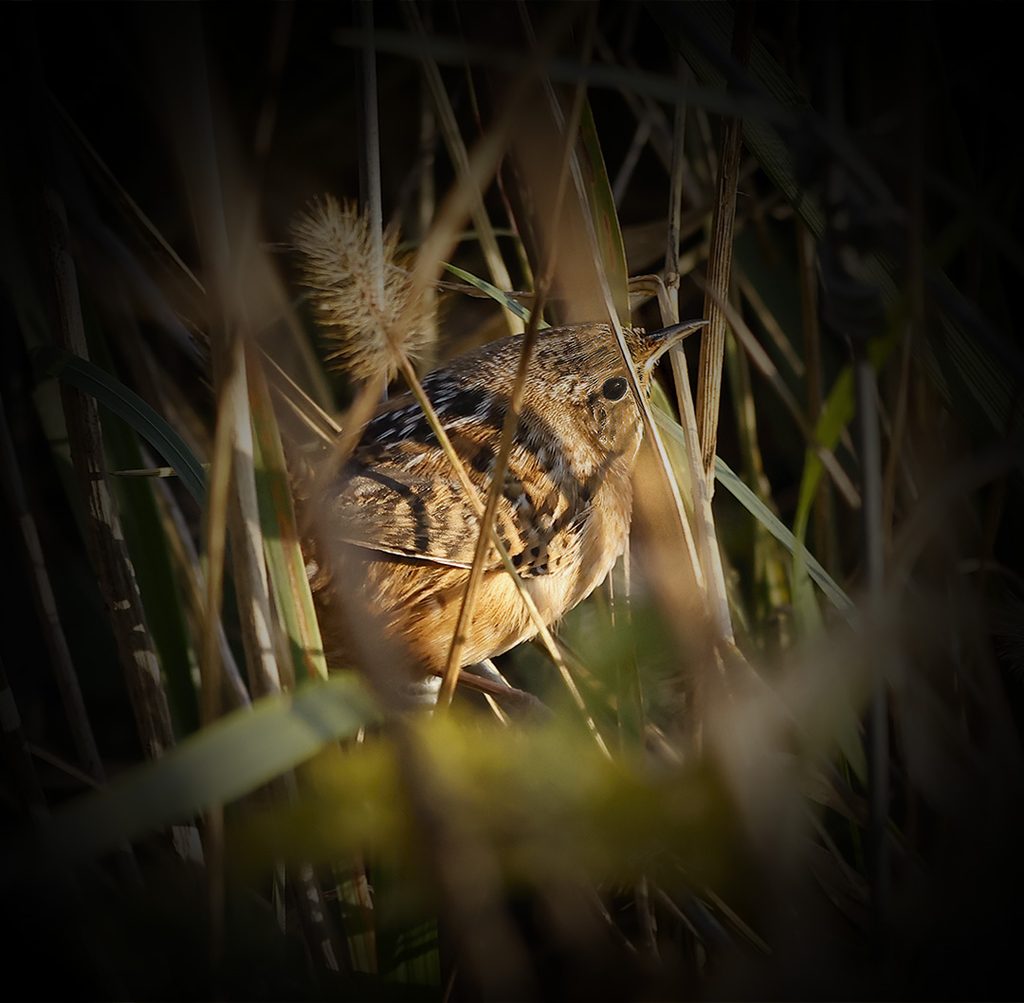
Across the pasture, over the fence at the road, I could still hear it singing farther ahead. So off through the wheat field we went another 80-100 feet (25-30 m) till we got to a waterway with a tiny stream running through it. We got fairly close before it flew and landed again. It was a Sedge Wren, just what I’d thought, another bird we hadn’t known was around!
I wanted to see how close I could get, having done that once before with Henslow’s and Grasshopper Sparrows at Kankakee Sands. So I started moving closer, shining my headlight directly at it. I got almost within a foot of it before I stopped, wanting to watch it sing. Soon it did.
I soon went to my room, thinking it was well worth half an hour of lost sleep. I listened at the window for a while and finally heard a chat far off, so I went back to bed.
The next morning, I woke up early, determined to get several more species before the time was up. I spent some time outside, trying to see or hear anything new. Then something flew into our oat field. After studying a bit, I concluded it was indeed a young male Blue Grosbeak!
While harnessing up the horses to go to church, I finally heard what I was listening for. A Great Crested Flycatcher. It called only once, but that was enough.
After breakfast, I went out to see if the Brown Thrasher could be coaxed out to the edge of the woods, so my brother could see it from the house. No such luck, so I headed for the house, as it was almost time to go to church. I was almost to the house when a sparrow flew up over the treetops, displaying white tail corners. That could be nothing but a Lark Sparrow! I raced in and looked at the clock. It was almost exactly twenty-four hours from when I had seen the Great Blue Heron. (I had seen all the birds gotten before that, again.)
Thus we ended our twenty-four hours with fifty-nine species. We had gotten all the known nesters but two, on the entire seventy-eight-acre property. Not bad at all, especially for this time of year.
Participants
Ivan, Jonathan, and Elmer Riehl
Bird List
- American Robin
- Carolina Wren
- House Wren
- American Redstart
- Common Yellowthroat
- Song Sparrow
- Dickcissel
- Rose-breasted Grosbeak
- Red-headed Woodpecker
- Purple Martin
- House Finch
- Acadian Flycatcher
- Carolina Chickadee
- Downy Woodpecker
- Warbling Vireo
- Northern Cardinal
- Eastern Bluebird
- Black Vulture
- Sedge Wren
- House Sparrow
- Barn Swallow
- Eastern Phoebe
- Chipping Sparrow
- Ruby-throated Hummingbird
- Field Sparrow
- Tree Swallow
- Red-winged Blackbird
- Eastern Meadowlark
- Rock Pigeon
- Yellow-breasted Chat
- Orchard Oriole
- Baltimore Oriole
- Great Blue Heron
- Indigo Bunting
- Turkey Vulture
- Mourning Dove
- Blue Grosbeak
- Lark Sparrow
- Wood Thrush
- Blue Jay
- Red-tailed Hawk
- European Starling
- Brown-headed Cowbird
- Great Crested Flycatcher
- American Goldfinch
- Common Grackle
- White-breasted Nuthatch
- Gray Catbird
- Tufted Titmouse
- Killdeer
- Yellow-throated Vireo
- Red-eyed Vireo
- Scarlet Tanager
- Pileated Woodpecker
- Eastern Wood-Pewee
- Eastern Kingbird
- American Crow
- Barred Owl
- Eastern Screech-Owl