
The eastern part of Hydra doesn’t hold quite as many outstanding deep-sky targets as the western half of the constellation, but there are several objects here that are worth taking the time to find…
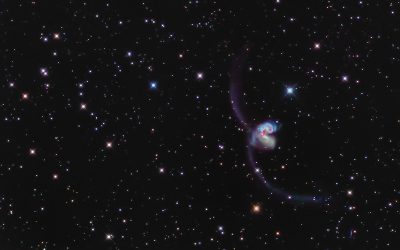

The eastern part of Hydra doesn’t hold quite as many outstanding deep-sky targets as the western half of the constellation, but there are several objects here that are worth taking the time to find…

Hydra holds a diverse array of telescopic targets. The constellation contains several beautiful double stars, as well as a fairly bright planetary nebula, a globular star cluster, a bright open star cluster, and a fine barred spiral galaxy…

View the full issue in the Magazine Archive By the time March comes around in the Northern Hemisphere, Leo is high in the east and Arcturus is rising around dark—both sure signs that spring is...

View the full issue in the Magazine Archive Lepus and Columba are a pair of small constellations that lie straight south of Orion. Lepus lies immediately south of Orion, and Columba lies south of...

View the full issue in the Magazine Archive Eridanus, the River, is a large constellation that begins just west of Orion’s brightest star, Rigel. From Rigel, it stretches about 60° southwest before...

View the full issue in the Magazine Archive Cassiopeia lies high in the northern sky in December. Like Cepheus, our target constellation last month, Cassiopeia is a circumpolar constellation. It...

View the full issue in the Magazine Archive Cepheus, the King, sits high in the northern sky between Polaris and the W-shaped constellation Cassiopeia. It lies near enough to Polaris that it is...

View the full issue in the Magazine Archive The Moon can be both a bane and a blessing to the amateur astronomer. Moonlight renders faint deep sky objects invisible, and it washes out even the...

View the full issue in the Magazine Archive The Summer Triangle, a large triangle of bright stars (Deneb, Vega, and Altair), lies straight overhead on September evenings in the United States....

View the full issue in the Magazine Archive Sagittarius, the Archer, lies straight above the southern horizon on August evenings at mid-northern latitudes. The band of the Milky Way runs through the...

View the full issue in the Magazine Archive Virgo is a sprawling constellation that lies high in the southern sky during late spring. This constellation is easy to find thanks to the presence of its...
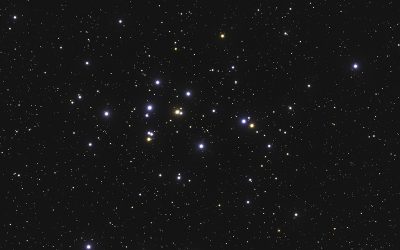
View the full issue in the Magazine Archive Cancer, the Crab, is a mid-sized constellation that lies just east of Gemini and just west of Leo. Cancer is made up solely of dim stars, and its shape is...

View the full issue in the Magazine Archive M35 and NGC 2158. Photo © Scott Rosen. Gemini, the twins, lies northeast of Orion along the band of the Milky Way. The most obvious part of Gemini is the...

View the full issue in the Magazine Archive Horsehead Nebula. Photo © Kevin & Adrian Shank. Orion, the Hunter, is one of the most well-known constellations in the night sky. Most of its...

View the full issue in the Magazine Archive Double Cluster, NGC 869 & NGC 884. Photo © Boris Stromar|Dreamstime.com. To the ancient Greeks, the stars of Perseus represented a hero. To me, this...