

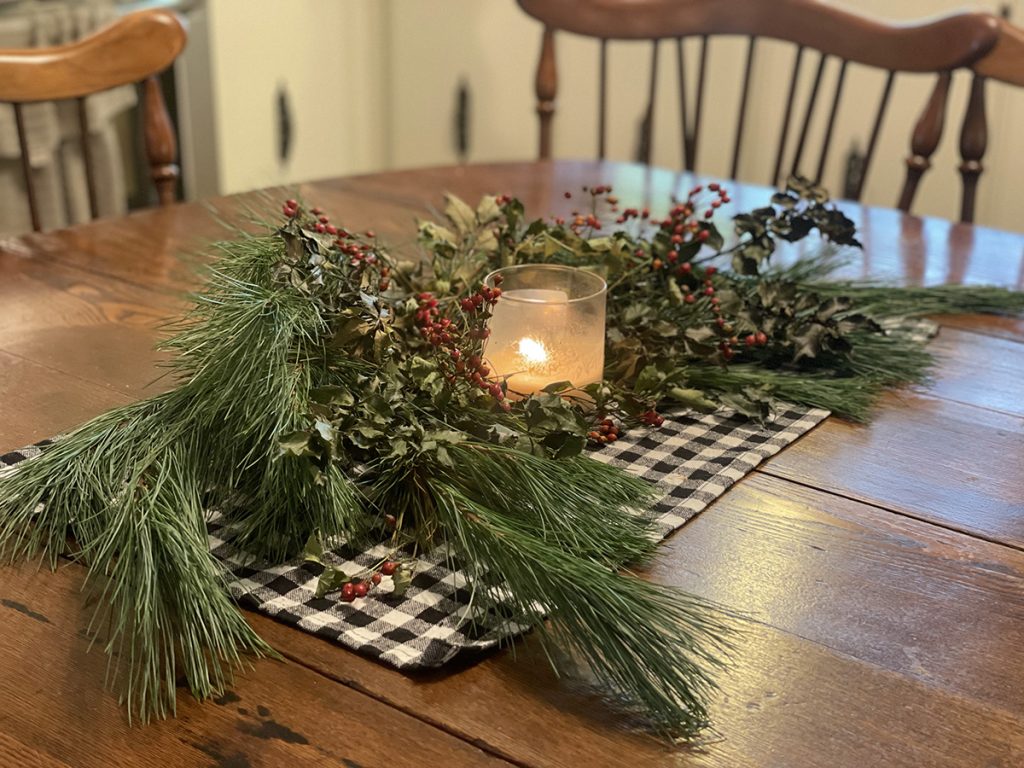
Grandma got more than she bargained for when she brought in some greenery for Christmas. You might get some surprises too if you have any natural greenery in the house this winter—you know, those garlands or centerpieces made of pine boughs, holly, rosehips, etc. Grandma had added rosehips for spots of cheery red in her greenery.
The rosehips were innocent enough and pretty, but did they give her a surprise! Later that winter she was heard to exclaim, “Sis eppis levich en mi shunk!” (translation: There’s something alive in my cupboard!)
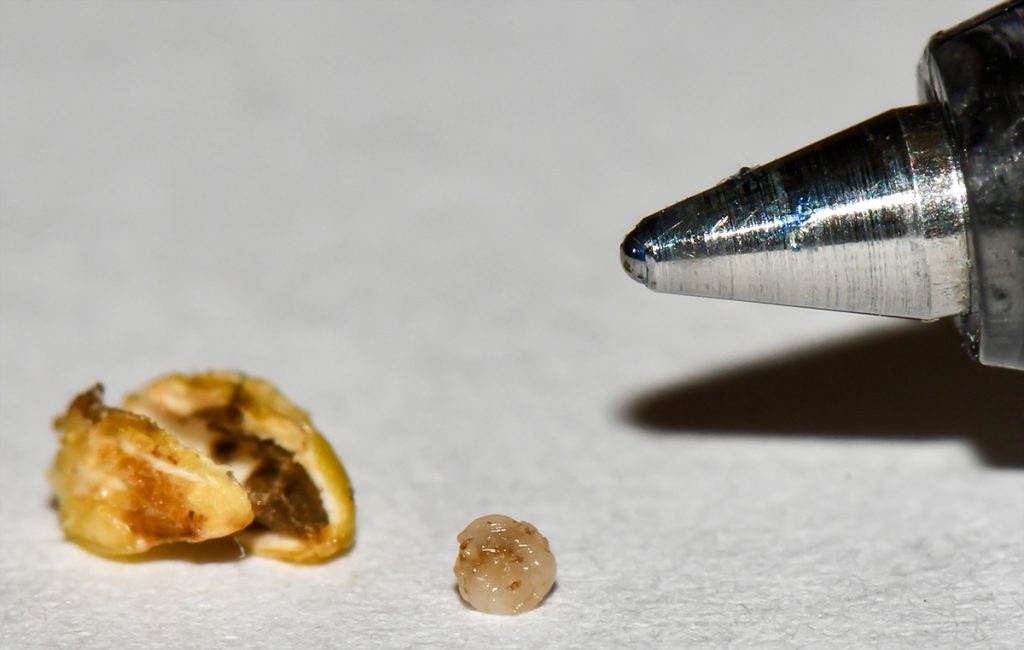
The “living things” that hatched out of Grandma’s rosehips were cute tiny yellow wasps with long tails and big red eyes. These rose-seed-infesting wasps are called rose seed chalcids (Megastigmus). In the photo of rosehips, there is a cross-sectioned rosehip that shows a rose seed with a hole from a seed-feeding wasp larva. I cut open that seed to show the minute wasp larva beside a pen tip. This is an October photo, so if you start opening decorative rosehips to see the larvae in late winter, they will likely be larger.
Are you getting the same idea I am? I think I’m going to keep some rosehips in rearing containers and see if I am fortunate enough to rear rose seed chalcids. That way I can take good photos of them, since I didn’t get a chance with Grandma’s surprises. Maybe you’ll beat me to it.
The thought that you might have some rosehips along with other natural greenery in your house reminds me of a decorative centerpiece I saw at a family gathering last Christmas season. Yes, it was made of white pine branches and holly sprigs with rosehips to add some bright spots of red. It also was like a little zoo.
On a white pine needle, I saw a very tiny white ribbed cocoon of one of the ribbed cocoon-maker moths of the genus Bucculatrix. And no, I did not write the 8’s on that cocoon. Apparently the caterpillar can spin those 8’s into its cocoon. I and some other folks have been trying to figure out how that happens. Not much is known about this genus of moths, and they can only be identified to species level by DNA or dissection.
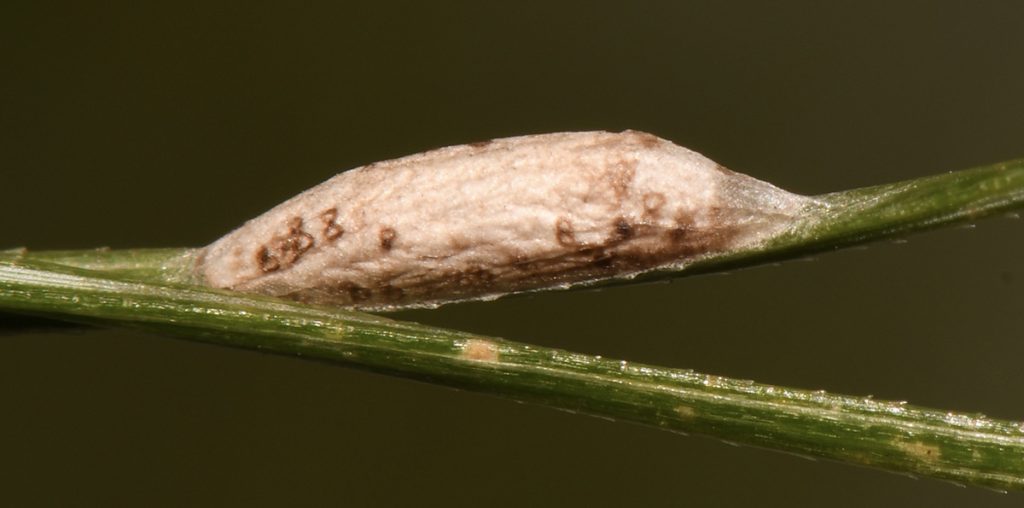
Anyway, I surmise these ribbed cocoon moth caterpillars likely feed on oak or birch leaves. When the caterpillars are ready to pupate, they do a “walk-around” and seem to prefer white pine needles as a place to pupate. At least that’s where I can reliably find them. I find both the regular white cocoons and the ones with the 8’s on eye-level white pine needles, but maybe I’d find them down in the brush and weeds if I’d crawl around on the forest floor.
If you have some white pine boughs in your house right now, perhaps later on this winter (or early spring) it could be like Christmas all over again for you if a Bucculatrix moth emerges from its cocoon and you get to watch it emerge. See the photo of a freshly emerged moth holding its wings up in that very unnatural way to dry them.
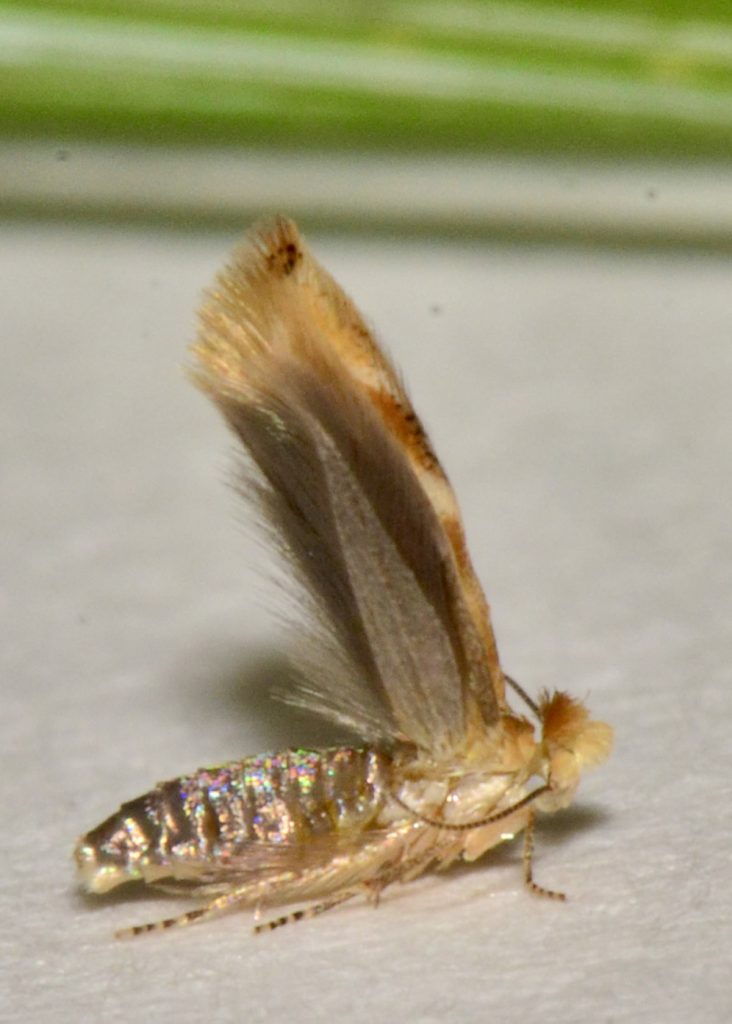
See all those iridescent flashes of color on the moth’s abdomen? That is structural color! The microstructure of the moth’s scales refract light waves and split them into the rainbow colors of the various wavelengths of light, similar to how soap bubbles do. Yup, I want to rear some more ribbed cocoon moths so I can look at those iridescent scales in a microscope. Maybe you’ll beat me to it.
Also on the white pine needles in that centerpiece last year were some needles that formed a tube. This was the leaf-shelter of a pine tube moth caterpillar. The pine tube moth caterpillar sews pine needles into a tube retreat. It hides in its silk-lined tube of needles and stretches out of this leaf-shelter when it feeds on the surrounding pine needles. In the photo, you can see the feeding sign on nearby pine needles.
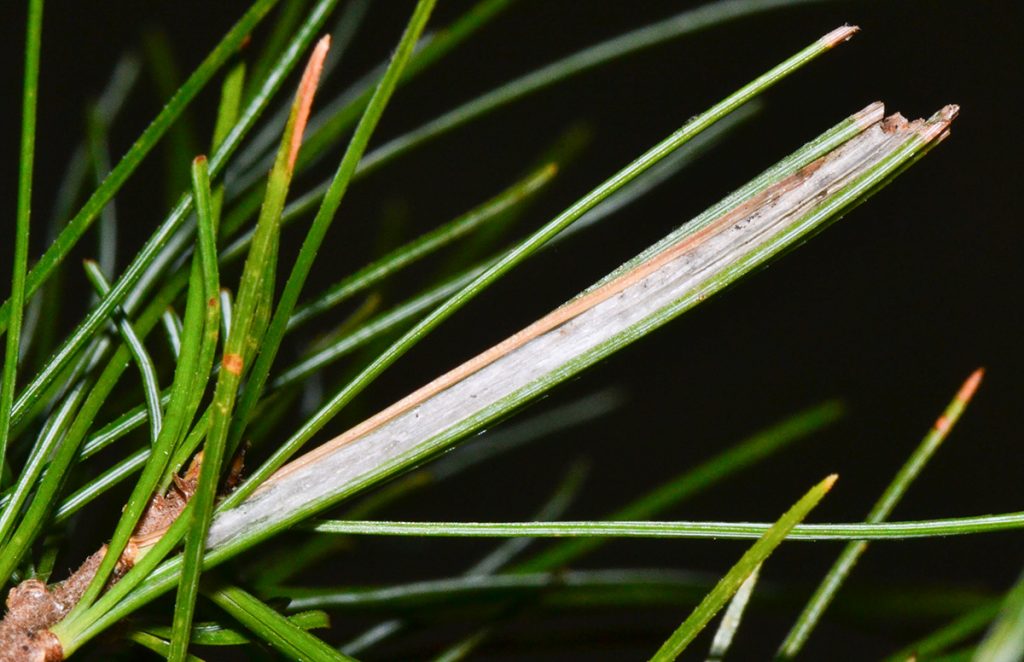
Not every tube of needles is occupied, since the caterpillars don’t mind moving and making new shelters. If, however, your pine tube moth shelter is occupied, you might be able to rear a pine tube moth since they overwinter in their tubes as pupae. You might beat me to it if you are successful at rearing one.
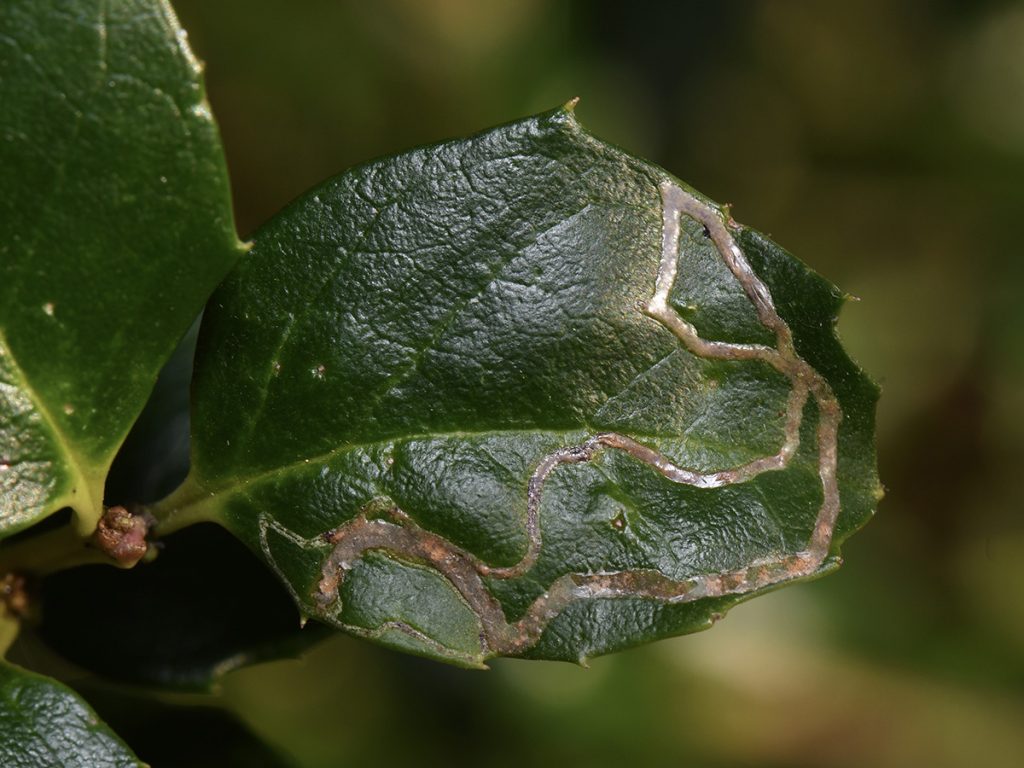
Another thing I spotted on the centerpiece was the feeding sign of leafminers on the holly leaves. Leafminers tunnel in leaves, feeding on the inner layers of the leaves as they go. Here is a photo of the serpentine mine of a holly leafminer. The larvae feed on the palisade layer just under the epidermis of holly leaves, and the mines can’t be seen from the underside of the leaves. The holly leafminer larvae (at least some species) overwinter inside their leaf mines. In the spring, they’ll emerge as flies to lay eggs on the young, tender holly leaves. If your holly leaves have some occupied leafmines, I’m afraid you’ll beat me to rearing an adult holly leafminer fly. That is because I don’t see any leafmines on our little holly bush.
If you look very closely at your winter decorations this year, you may find your leaves and branches are hosting some surprises. And if you wish to see some of those cute yellow rose-seed wasps, be sure to include some rosehips. Just remember, a natural centerpiece could host some gifts that keep on giving, and you might get more than you bargained for.