

Birding With Friends Second Place Winner
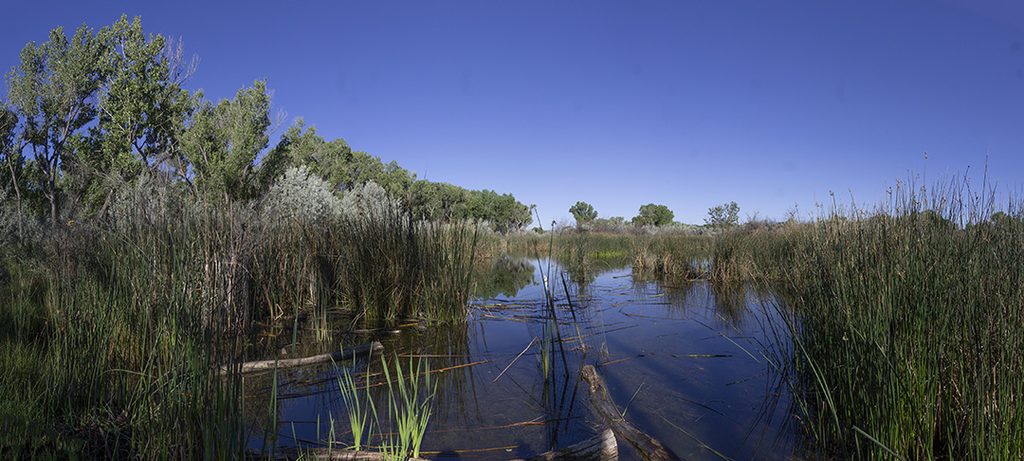
The early morning air was fresh and cool. Dark trees loomed around two gray forms moving silently along the trail. Last night’s rain had softened any dry grass or leaves which could rustle, giving the pair the advantage they needed…silence.
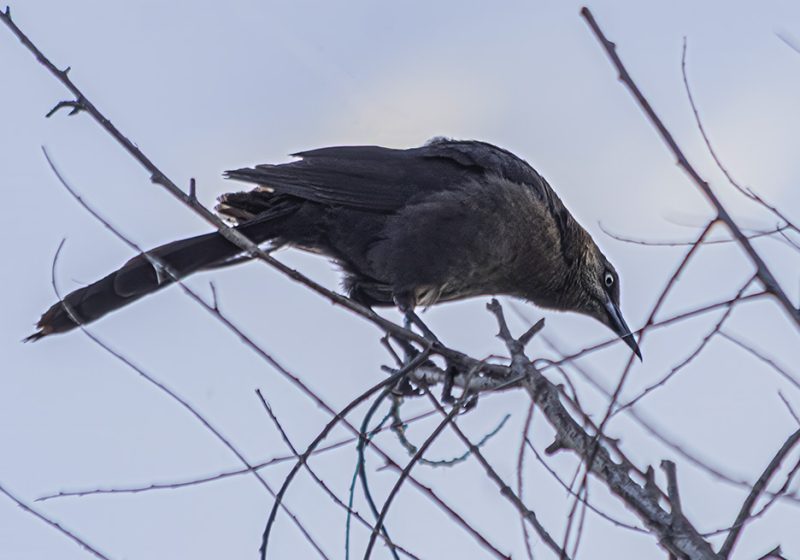
The sky, dotted with creamy clouds, was just beginning to brighten, as my brother Joseph and I got out of the truck and began our hike. Beyond the clump of stately cottonwoods and scraggly Russian olives lay our goal—a place overflowing with the musical, gurgling warble of Red-winged Blackbirds, and spiced with the unmistakable hoarse squawking of Great-tailed Grackles, quacking of ducks, honking of geese…the marsh.
There is a shallow pond surrounded by cattails. It is part of a low wetland area by a river where irrigation runoff water collects. It is known to us as “the marsh.”
We hoped to get some early-morning bird activity and see some other wildlife. We had just begun hiking when I noticed a tiny yellow bird flitting in a bush. I was pretty sure there was a black patch over its eye and head—a Common Yellowthroat! That’s an extremely rare bird for us!
We passed through an open “field” of sagebrush, and circled around the pond through a wooded area to get to the southeastern side.
In a tall tree to our left, a Yellow Warbler hopped around. A melody of twittering and warbling wafted to our ears from beyond the cattails, making me impatient to get to the pond. It’s a good thing we waited a bit, though, because suddenly Joseph hissed, “Elk!”
I whirled around, and, sure enough, not 150 feet (45 m) away was an elk walking calmly, oblivious to our presence!
We then skirted the edge of the pond to get to an open place in the cattails where we could sit down and have a nice view of most of the pond. Birds started to flit onto our list in earnest. Right away we saw the most obvious birds—Red-winged Blackbird and Great-tailed Grackle. Then we spotted a pair of Cinnamon Teals dabbling around at the far edge of the pond. As we neared a dense clump of cattails, the “clump” began to quack nervously, and four mallards burst out of it and quickly swam away!
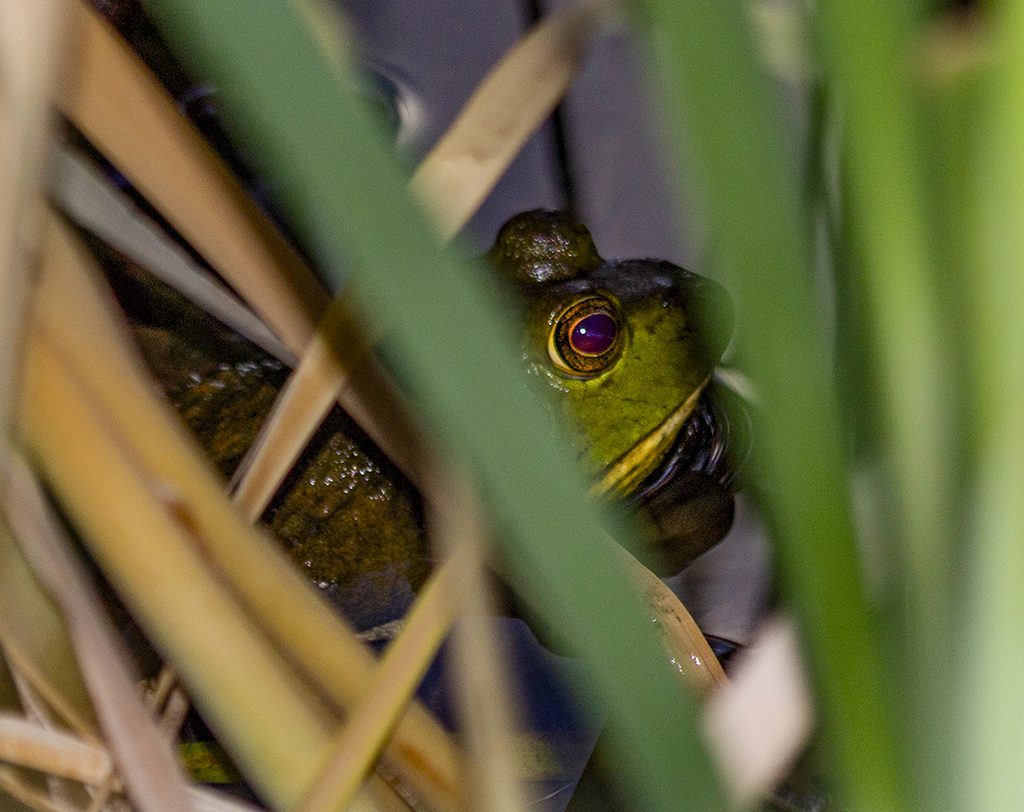
Suddenly a deep, hollow rumble penetrated the air. It was the weirdest sound we had ever heard, and we had no idea what it was. But later, when we described it to Mom, who had grown up in Pennsylvania, she knew exactly what it was. A bullfrog! (Remember that inhabitants of arid New Mexico have little to no knowledge of the sounds of frogs!) A little bit later Joseph motioned me ever to him. I looked where he was pointing, and there was a small green head peering at us through the cattails. So, this frog was the culprit for that weird noise!
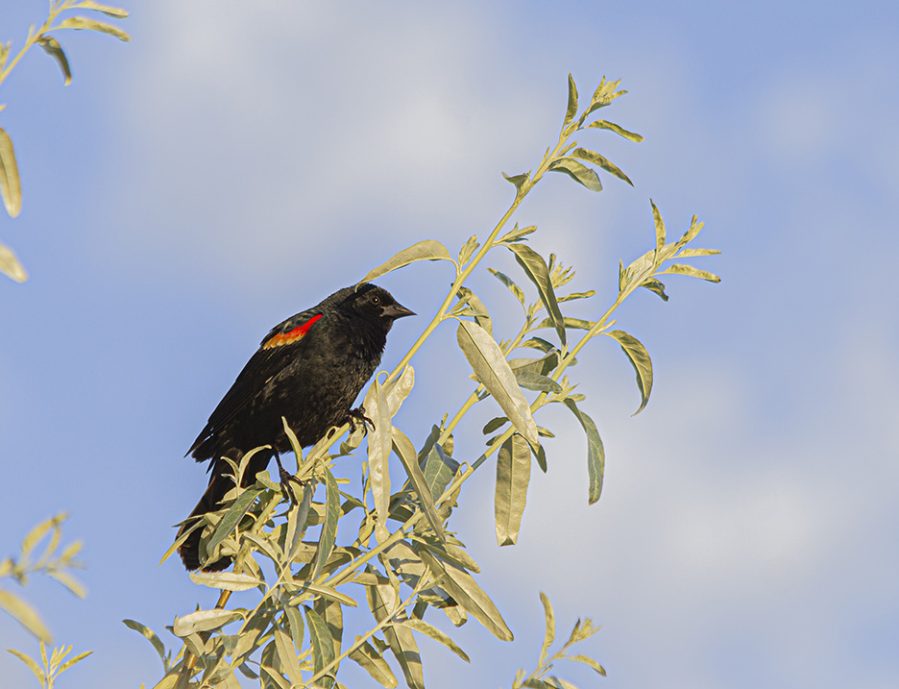
Soon after we sat down on the bank of the pond, the sun peeped over the horizon, and warm golden light flooded the pond. Not a moment too soon, for a Red-winged Blackbird landed on a Russian olive tree not 20 feet (6 m) away from us. It was a perfect pose, with the bird perched nicely at the very top of the tree, sunlight streaming all over him, and blue sky as a background. Then a female joined him, so we took her portrait too. We soon learned that this particular female had a very interesting personality. She wasn’t very scared of us, and could never stay at one place for very long. She would hop onto a cattail stalk, peck at a seed, flit back down, disappear into a cattail clump, then pop back out with a loud squawking chatter. Then she’d quiet down for a bit, then do another of her screeching squawks, when there was nothing to squawk at.
Suddenly a great squawking and chattering of Red-winged Blackbirds arose at the other end of the pond. Wonder what that was all about?!
On the far bank, a duck-like bird flew up from the ground to a tree. When it flew, it looked like a duck, but not when it landed. We investigated further with binoculars and cameras, and discovered it to be a small heron! At first, we both thought it to be the Black-crowned Night Heron we had seen on an earlier trip, but then I noticed it had a rusty red-orange chest. That certainly didn’t line up with the blue-black Black-crowned Night Heron! I had no idea that Green Herons live in New Mexico, but apparently this one does!
Time passed uneventfully for a while. Then we noticed a series of small splashes in the water close to the far bank. They almost looked like fish jumping, but the splashes were too small. Just then I was sure I saw a small bird flitting just above the water. Maybe it was some sort of flycatcher dipping into the water with its beak. So I peered through my binoculars to identify it. That’s how another rare bird found its way onto our list…Black Phoebe. Just a short bit later, our black-and-white friend flew right over our heads!
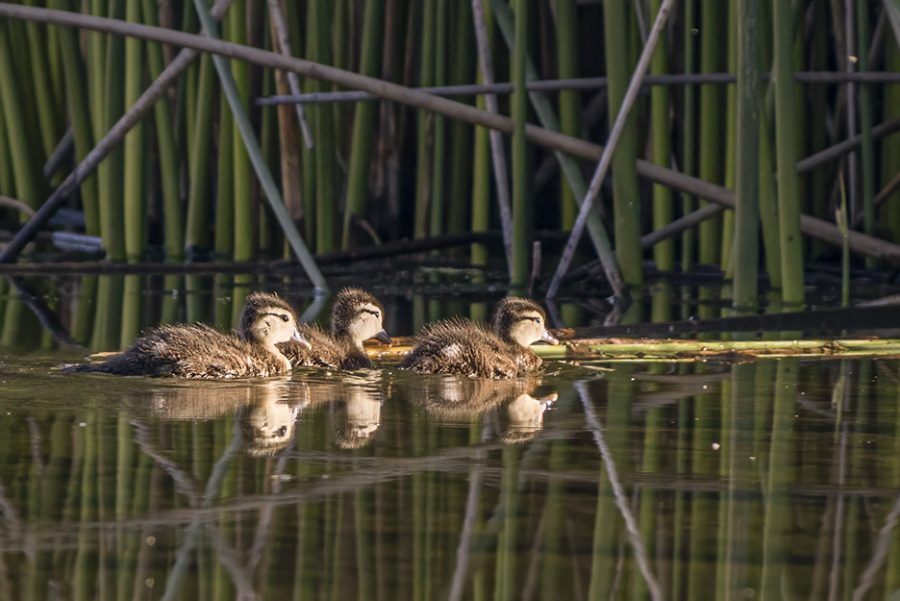
Not 40 feet (12 m) away, three peeping balls of fluff came into view. Three cute mallard ducklings paddled in front of us, the dark green cattail patterns making a backdrop for their sunlit dark brown down. Almost simultaneously, a tiny ball of yellow and black shot past and landed in some cattails close by. That Common Yellowthroat! Unfortunately, he was so fast that we couldn’t take any photos.
Joseph noticed a tiny speck on a distant tree, which he determined to be a hummingbird. Since there was nothing else to do, we decided to zoom in with our cameras to try to identify him. (He ended up being a Black-chinned Hummingbird.) I looked up from my camera to see a huge majestic Red-tailed Hawk gliding across the pond with about eight angry, scolding Red-winged Blackbirds in hot pursuit.
Earlier, a couple flocks of ducks had come in for landing, but had been scared off at the last minute. But Joseph came up with a solution to that problem. Instead of waiting to raise our cameras until they were gliding in for the final landing, in order to lessen any movement, he thought we should raise our cameras while the ducks circled around the pond. And here came a flock of ducks that we could test his theory on. We got our cameras ready while the ducks circled around. Here they came, with a whistle and swoosh of wings. Splash! Splash! Splash! Every last one of them landed! Sadly, the duck Joseph and I were following landed behind cattails, so we couldn’t photograph the big splash!
It was getting late in the morning—time to head home. We gathered our gear and began walking back around the pond. Just then, a chunky bird landed in a tree on the other side of the pond. It was a Belted Kingfisher! Another rare bird! We took some photos, then kept going.
Before we headed home, we decided to try to track down that elk we had seen earlier. We found its tracks and followed them into a dense forest of Russian olives. Then we lost them, but one good thing is that we saw a Spotted Towhee flitting around in some bushes. We finally headed home with our minds full of birds, and my mind was full of a story to write.
Bird List
- Common Yellowthroat
- Great-tailed Grackle
- Mourning Dove
- House Finch
- Yellow Warbler
- Cinnamon Teal
- Green Heron
- Black-chinned Hummingbird
- Red-winged Blackbird
- Mallard
- Black Phoebe
- Red-tailed Hawk
- American Robin
- Spotted Towhee
- Belted Kingfisher
- Northern Flicker