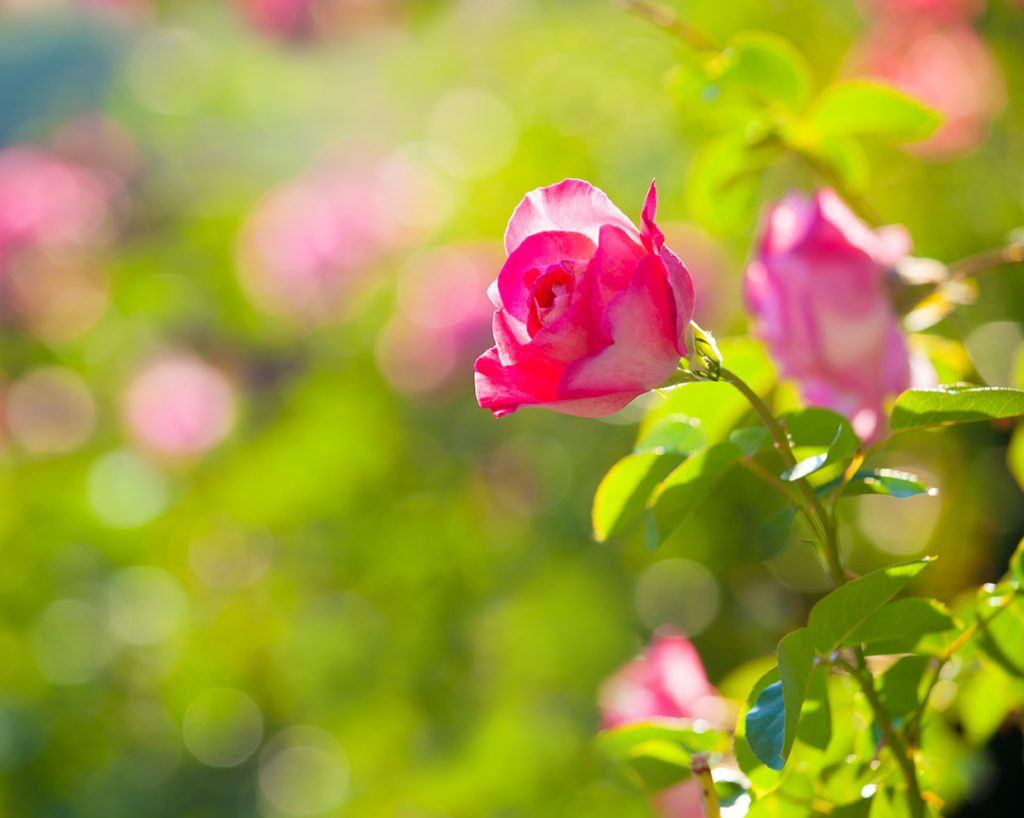
When I think of gorgeous, sweetly scented roses, my mind often goes to a dear friend who has raised roses for more than forty years. At one time, sixty roses adorned her yard. She has grown mostly tea roses, with a few floribunda, grandiflora, and climbing roses as well. The deep dark red ones that remind you of velvet are her favorite-colored ones. This morning she graciously allowed us to ask her how she cared for her beauties, and shared with us tips to pass along.
When Louise planted her roses, she loosened the soil in the planting area and applied rose fertilizer. She said horse manure would have been a good addition instead of the rose fertilizer, if she would have had some.
Spacing between plants should be enough to avoid crowding for the health of the plants. Also keep in mind your need to travel among the plants without the thorns grabbing you.
Roses need to be sprayed regularly with insecticide and fungicide to keep away insect pests and black spot. Black spot is a fungus that causes dark brown or black spots on the leaves. Eventually it causes the whole leaf to discolor and fall off. Spray every four to six weeks. In hot, rainy weather, which encourages black spot growth, spray every two weeks. Louise said all types of roses need spraying, though some are more disease-resistant and require less frequent spraying. Begin spraying the roses in the spring when they are full of leaves.
Also regularly feed roses with a rose fertilizer. Begin fertilizing in the spring when the leaves begin to come out. Water them in dry weather, though roses can take dry weather relatively well.
Roses also need pruning. Louise’s roses did not suffer a hard autumn pruning as some people’s roses receive. She preferred to just trim the large bushes back to about 2 feet (60 cm) tall to prevent them from breaking in winter ice storms. Some people prefer to cut the bushes back nearly to the ground in the fall.
In the spring when leaves begin to grow out, prune off any dead branches that froze during the winter. You can also prune any long straggly branches to keep the bush a reasonable shape.
Roses should be mulched in the fall. Established ones may not need as much, but new plants should be mulched well. Wrapping young plants with burlap also helps protect them from winter cold. With these precautions, Louise lost very few roses to the cold in northwestern Virginia.
And then come the rewards for your labors. In June, the roses showcase a rarest beauty. A few blossoms continue through July and August. Then in September, they rebloom, not so many flowers as in June, but with more intense color.
Louise has found great joy in sharing her roses. She said to cut the stems below at least two leaves. Then split the stems with your scissors so they take in more water. This helps preserve their beauty longer.
Roses don’t need a lot of care, she assured us, just regular care. Are you up to the challenge? Great! Take it. A couple of rose bushes might be a splendid addition to your flower garden…for your pleasure and for others.